

Expert Content & Resources

EXECUTIVE INTERVIEW - Plus Therapeutics: Advanced Drug Delivery Solutions
Dr. Marc Hedrick, CEO of Plus Therapeutics, discusses the company’s targeted radiotherapeutic platform for central nervous system and solid tumor cancers and why internal radiation therapy offers patients a more advanced drug delivery solution compared to traditional external radiation therapy.
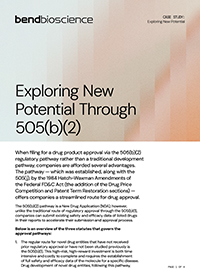
Exploring New Potential Through 505(b)(2)
When filing for a drug product approval via the 505(b)(2) regulatory pathway rather than a traditional development pathway, companies are afforded several advantages.

Ionizable Lipids in LNPs: A Selection Guide
Finding the right ionizable lipid is critical for optimal formulations. This guide helps navigate the wide range of ionizable lipids for specific therapeutic needs. Explore lipids by target or cargo type.
How to Choose the Right CDMO for Your Pharmaceutical Project
This guide outlines the fundamental considerations to ensure your CDMO selection aligns with your project goals.

Understanding the Foundation of LNP Formulation Success
Download our eBook and discover everything you need to know about lipids for developing LNP therapies, including:….
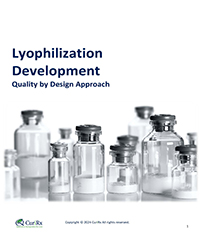
Lyophilization Development: Quality by Design Approach
Lyophilization, or freeze-drying, addresses stability challenges associated with complex APIs, biologics, microbiomes, gene therapies, viral vectors, liposomes, and nanoparticles……

Choosing the Right Particle for Your Nanomedicine Application
Nanoparticles are revolutionizing the landscape of nanomedicine, enabling significant advancements in early detection, targeted drug delivery, disease monitoring, and imaging. Due to their nanoscale size, these particles….

Join us for the inaugural Quotient Sciences Capability Expo, hosted at our state-of-the-art Garnet Valley facility.
This unique event offers a behind-the-scenes look at how we support molecules from preclinical stages through to commercial manufacturing…..

CLINICAL TRIALS - Need for Accessibility to Meet FDA Guidance for Decentralized Trials
Neil Vivian believes advances in electronic data collection and analysis are helping to make DCTs more accessible to broader and more diverse patient populations. Further innovations, particularly in artificial intelligence technology, are expected to accelerate these trends.

On-Demand Presentation: High Concentration Protein Suspensions: A Bevacizumab Case Study (>400 mg/mL)
Dr. Cindy Chung presents a case study demonstrating the development of high concentration bevacizumab suspension at up to 400 mg/mL for suitable subcutaneous delivery of the monoclonal antibody (mAb) therapy. Watch the presentation now to learn more.
DRUG-DEVICE DEVELOPMENT - Exploring the Complexities of Drug-Device Combination Products
Jeremy Guo, Senior Vice President at WuXi Biologics, and colleagues explain that many factors need to be taken into account when producing a Drug-Device Combination Product from development testing to fill/finish and assembly.
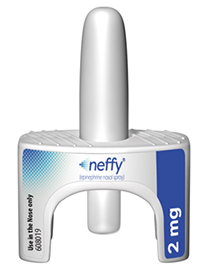
CPHI Annual Report 2024: Drug Delivery Trends & Insights From a Device Perspective
Significant growth in the drug delivery sector is predicted for many areas, with headliners including cell and gene therapies and the GLP-1 blockbusters. Small molecule-based formulations still dominate innovator pipelines, but advanced biologics are also….

Gelteq: A Breakthrough Ingestible Gel Drug & Nutrient Delivery System
Drug Development & Delivery recently interviewed Nathan Givoni, Co-Founder and CEO of Gelteq, to discuss challenges with traditional drug delivery and the company’s innovative ingestible gel platform designed for drug and nutrient delivery.
BASF Article - Should Developers Choose a Cosmetic or Pharmaceutical-Grade Excipient?
As regulations continue to change around cosmetic and pharmaceutical-grade excipients, the pharmaceutical industry has choices to make when investing in quality, risk, and public safety.

BASF VIDEO - Formulation Design for Tablets and an Introduction to Your New All-in-One Tableting Solution
In this video, learn what the formulation and parameter targets are to optimize direct compression formulations, and how to accelerate development with BASF’s new all-in-one fit-for-purpose tableting solution.
Who is AbbVie Contract Manufacturing?
As an embedded CMO, we leverage decades of scientific expertise, operational excellence, and best-in-class facilities to provide you with….
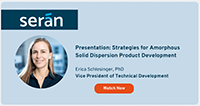
Presentation: Strategies for Amorphous Solid Dispersion Product Development
In this presentation, Dr. Schlesinger demonstrates how to leverage a combination of measured and calculated molecular properties, bio-performance modeling, and a strategic understanding of the product TPP to identify a technology to enable exposure and an appropriate drug product design…..
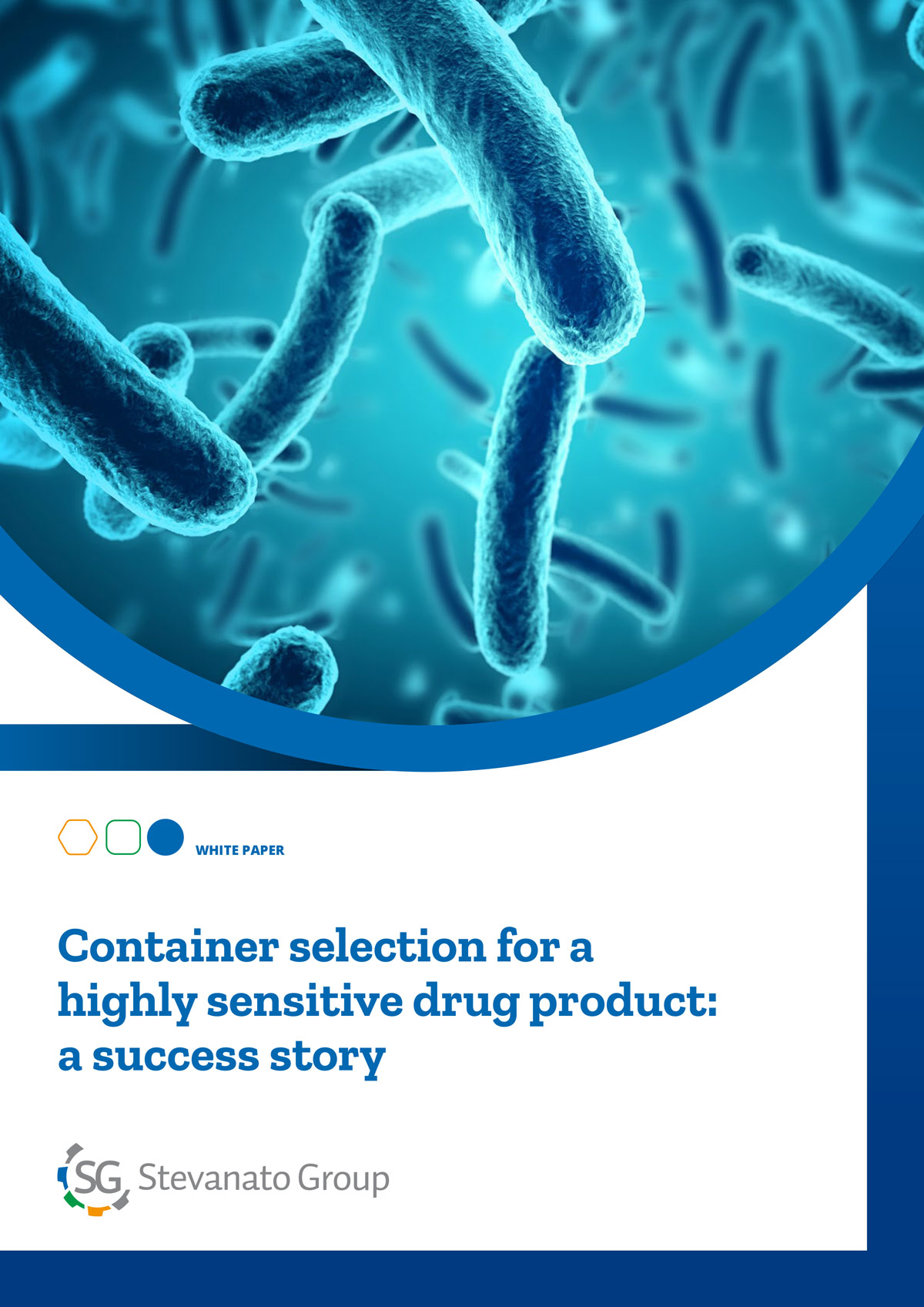
Container Selection for a Highly Sensitive Drug Product: A Success Story
For new drug products, it is essential that pharmaceutical companies utilize the experience of container suppliers as early as possible.
Meet Gaelic Laboratories, Your Trusted Testing & Manufacturing Partner
Gaelic Laboratories today announces its new website, which contains details about this world-class Beta-Lactam (penicillin) manufacturer’s….
How AbbVie Operations & Contract Manufacturing Has Prepared Global Parenteral Sites for the Annex 1 Compliance Requirement
This article explains the key changes that pharmaceutical companies and CMOs engaged in manufacturing and fill-finish need to consider, as well as what AbbVie Contract Manufacturing (AbbVie CMO) is doing to ensure its global operations and aseptic fill-finish sites are in compliance with the revised regulations….