

Issue:January/February 2026
FORMULATION FORUM - Solid Oral Dosages: Controlled Release of Drugs
Key Points
- KEYWORDS: controlled release, sustained release, extended release, matrix tablets, direct compression, co-processed excipients, coating polymers
INTRODUCTION
There is a continued interest in controlled release of drugs across all modalities. It is due, in part, to increase the safety risk associated with immature release or dose dumping to prevent drug overdose. As more molecules discovered are poorly soluble and less orally bioavailable, developing a solid oral dose form (SODF) poses further challenges associated with complex mechanisms for controlling the release of drug from a particular dosage.1 In spite of these challenges, drug manufactures and excipient manufactures alike are taking aim at different technologies for better understanding of mechanisms allowing the controlled release of drug to maintain the optimal concentration in systemic circulation.2
CONTROLLED DRUG DELIVERY SYSTEMS
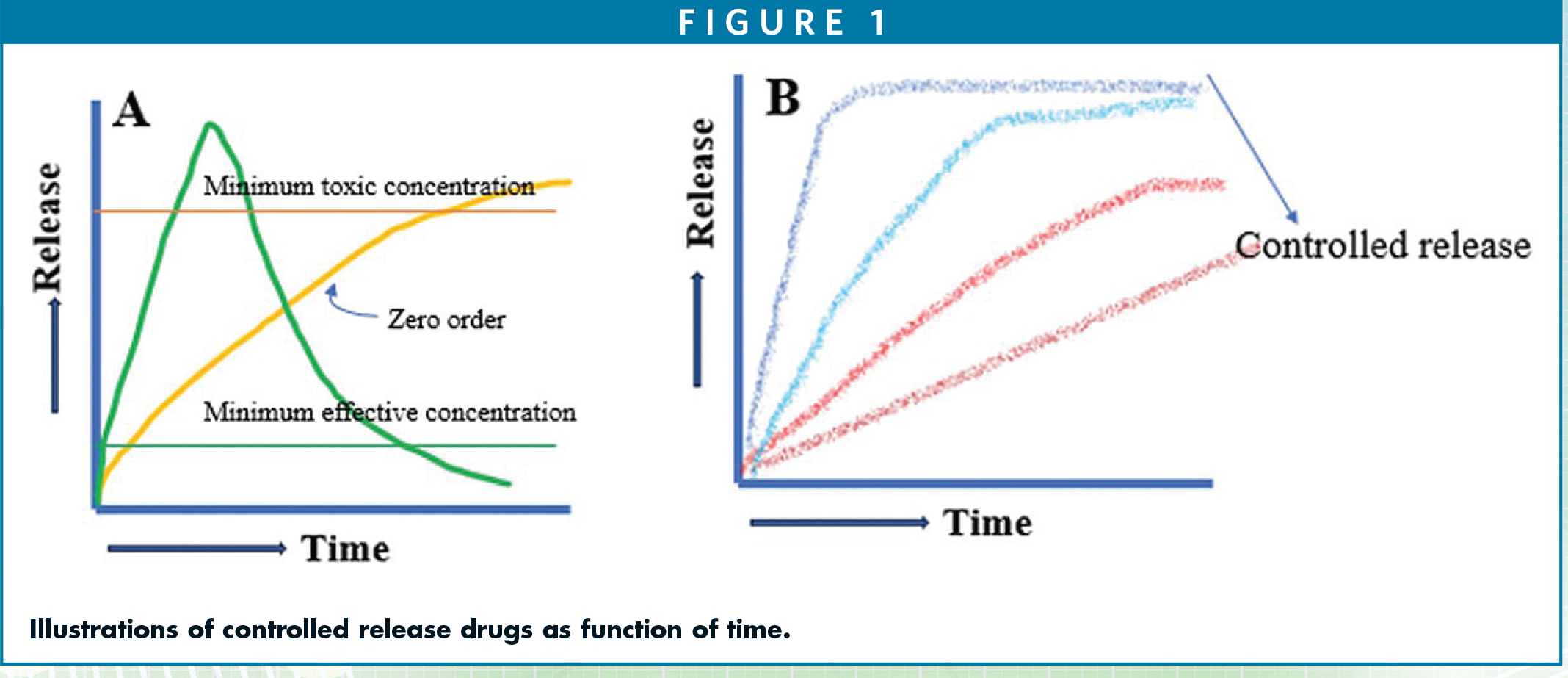
Figure 1 illustrates the immediate release and controlled release of single dose curves typically demonstrated by matrix tablets (A) and variations in release profiles of a drug preferably controlled by coating thickness of the coating polymer (B).
Controlled drug delivery systems based on the dissolution can be divided into matrix and reservoir or encapsulated dissolution systems.
Zero order release, for example, allows the release independent of concentration of drug; whereas first order release is directly dependent on the concentration of drug by achieving the desired minimum effective concentration (MEC) and minimum toxic concentration (MTC) (Figure 1A).2 Therapeutic Index (TI) is the safe amount of drug far below its toxic level. Therapeutic window is the concentration range of drug between efficacy and toxicity.
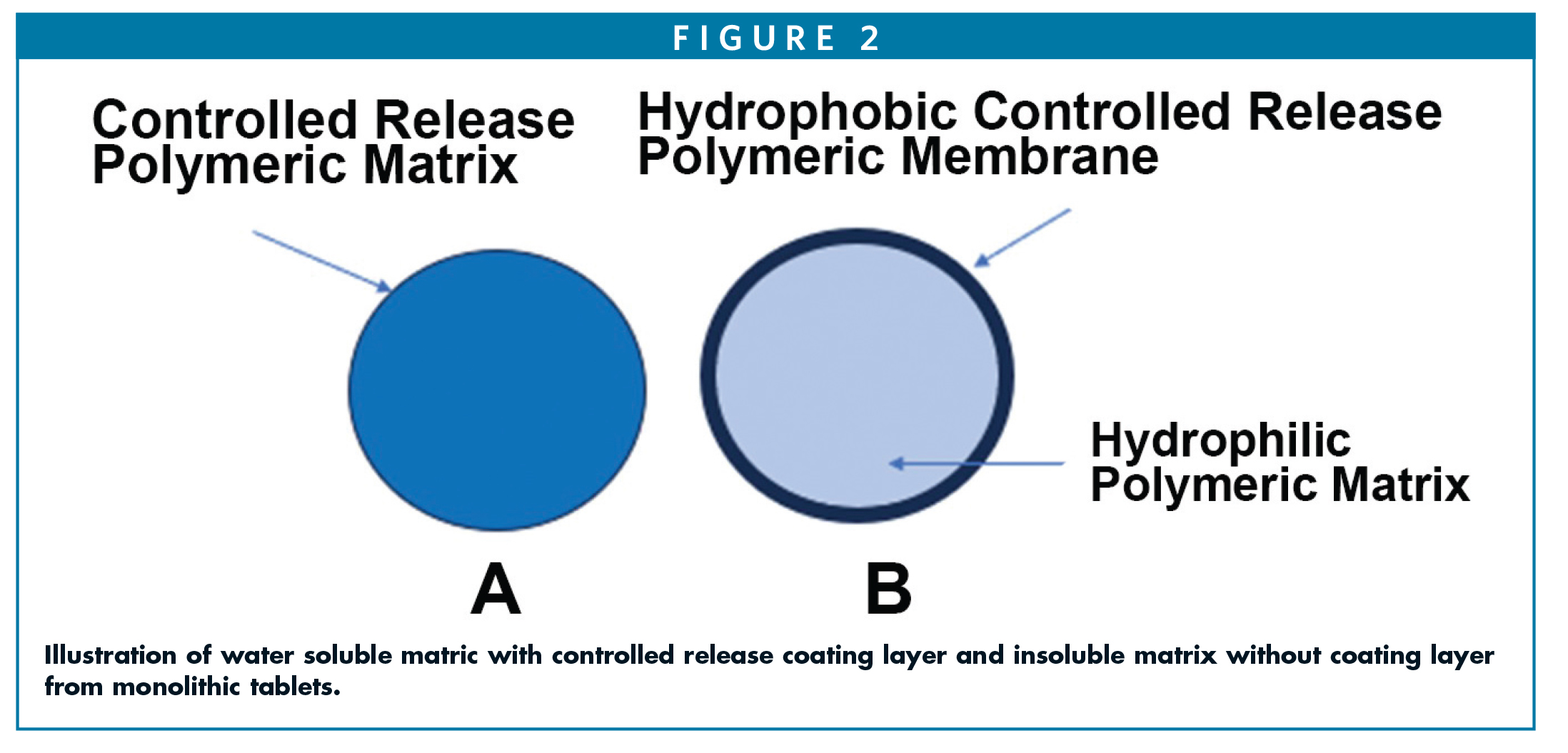
Figure 2 illustrates monolithic tablets derived from insoluble or hydrophobic polymeric excipients in the matrix and by membrane coating of hydrophilic water-soluble polymeric matrix with uniformly distributed drug molecules.3 In a diffusion-controlled release matrix, for example, the drug is trapped inside and released via diffusion through polymeric matrices (Figure 2A) or through inert water-insoluble polymeric membrane (Figure 2B) in which the rate limiting step is the diffusion of drug.4
Spansul® is a controlled/sustained release system that was used for Dexedrine® (dextroamphetamine) in which the core beads are coated with varying thickness of beeswax or glyceryl mono stearate for 12-hour release to treat narcolepsy. Contac® also used this platform technology for controlled release via a polymer coating.5 Over the years, controlled-release drug delivery remains the most widely used technology for a number of drugs with the goal to extended the release and to reduce dosing frequencies, making it patient centric. A few examples of earlier developed coated drugs include Compazine®, Dexedrine®, Ornade®, Thorazien®, Cardizem®, Diamox®, Plendil®, Procanbid®, among others.
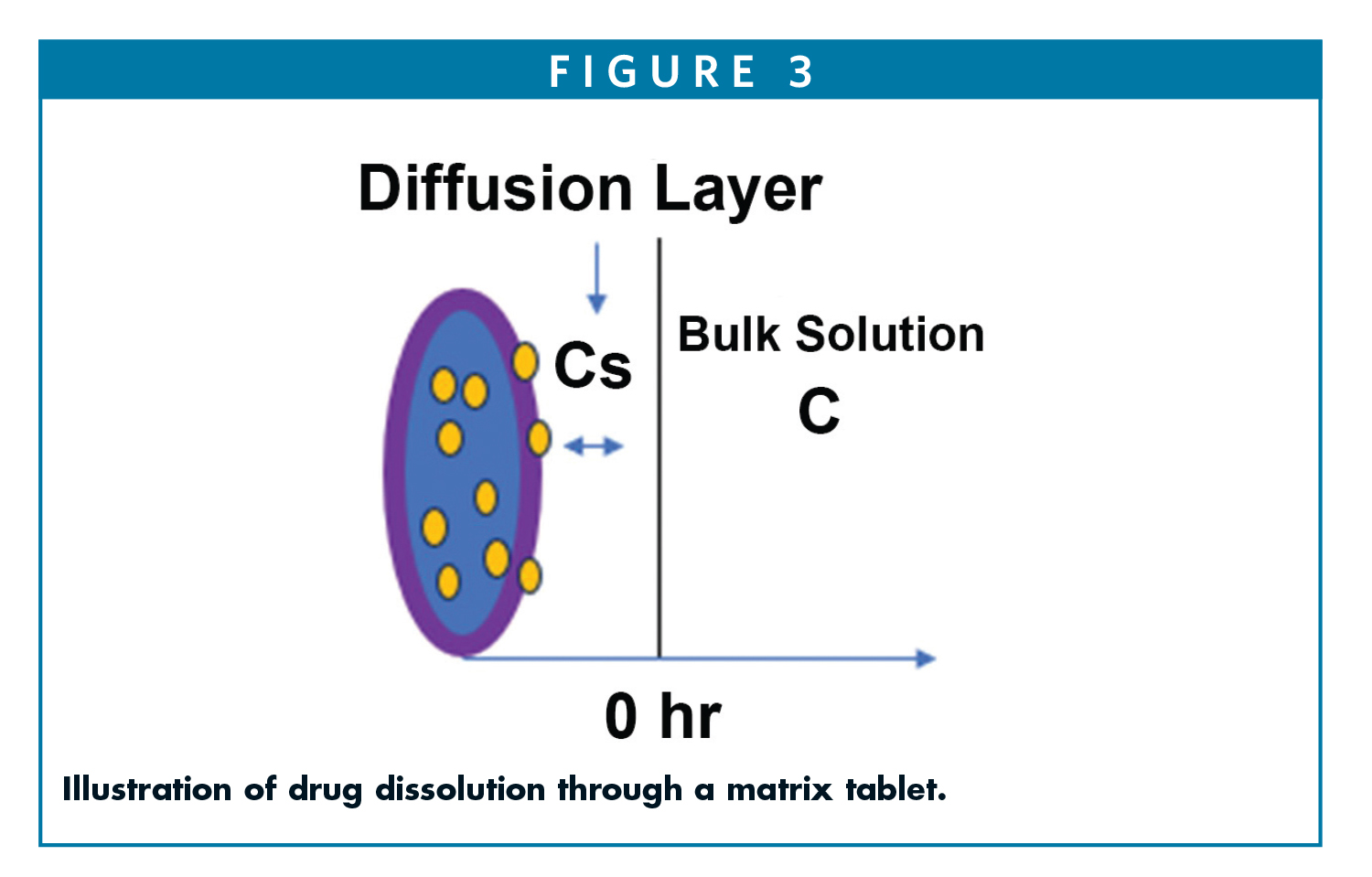
Matrix dissolution systems are controlled by polymeric excipients homogeneously distributed within a tablet or pellet. Dissolution or release of drugs through these dosages depends upon the nature of excipients and drugs, including their hydrophilic and/or hydrophobic characteristics. In a polymeric system, as the drug dissolves, it migrates to surface (Cs) from the core matrix to bulk solution (C), and is controlled by diffusion layer as shown in Figure 3, and by Noyes-Whiney equation below:
INSERT EQUATION HERE
Where, D is the diffusion coefficient, A is the surface area of the matrix, and m is the total amount of drug dissolved from the surface. The aqueous layer essentially acts as a barrier through which the drug molecules are diffused. Thus, the drug concentration in the diffusion layer is always higher than the bulk solution, and DC is the difference between Cs and C (shown in the equation and illustrated in Figure 3).5
Examples of commercially available controlled release drugs include Anpec® SR; Cordilox® SR; Imdur Durules, Isoptin® SR; Monodur Durules®; Nuelin® SR; Sinemet® CR; Theo-Dur®; Adalat® OROS; Adalat® tablets, Agon SR; Ceclor® CD; Felodur ER; Keflor® CD; Kinidin Durules®; MS Contin®; Naprosyn® SR; Plendil® ER; Tenuate Dospan®.6 Others include Tempule® as capsulea and Dospan®, Chronotab®, Repetab®, Extentab® Adalat®, among others. Adalat®, for example, an extended release nifedipine tablet coated with a water-soluble polymer, involves coating by a sustained release polymeric excipient.
EXCIPIENTS FOR CONTROLLED RELEASE FORMULATIONS
Excipients for controlled release applications are shown in Table 1. These excipients play an important role in deciding the dose selection for a particular drug, either insoluble or soluble, depending upon the delivery mechanisms, delivery period, or delivery route.
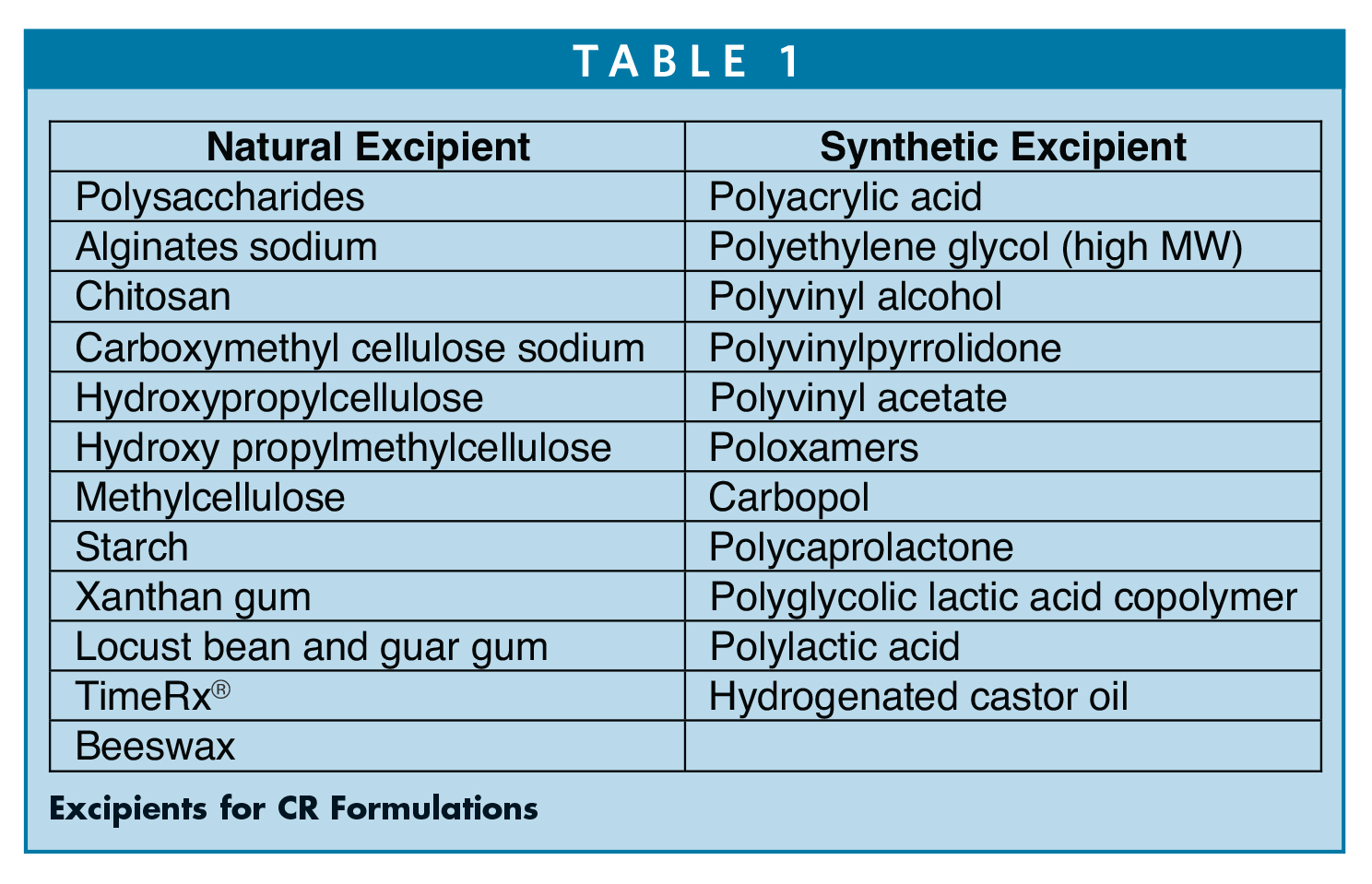
Many of these excipients are used in several technologies, including direct compression, wet granulation, roller compaction, melt extrusion, and spray drying among others. The key attributes required are quality, drug compatibility, particle size, flowability and thermal stability, and porosity. In addition, their compatibility with downstream processing could contribute to greater stability and shelf-life of the drug products on storage and packaging.
Majority of controlled released drugs are monolithic tablets or pellets, wherein the drugs are homogeneously distributed within the matrices, which are typically composed of water-insoluble and non-porous excipients. Matrix tablets, due to lack of coating, often require higher percentage of polymers depending upon the nature of drugs. For instance, if the drug is hydrophilic, higher percentages of polymers per dose are required to achieve the desired release characteristics or vice versa. Thus, there is a lesser chance of dose dumping from the matrix tablets. In contrast, coating polymers, if not applied in the appropriate amounts, the monolithic tablets can lead to dose dumping or uncontrolled release. In several cases, the polymers are highly compressible and prepared either by co-processing of multiple excipients “in one” to yield higher compatibility in direct compression at lower compression force or produced synthetically as co-polymer or mixture of copolymers or other ingredients with enhanced compactability and performances to minimize the premature drug release.
The following will cite a few examples of controlled release excipients and their attributes from monolithic matrix tablets and polymeric coated tablets.
POLYVINYL ACETATE-BASED EXCIPIENTS
Polyvinyl acetate-based controlled released polymer (Kollidon® SR, MW 450,000 D) is a spray dried powder composed of water-insoluble polyvinyl acetate and water-soluble PVP K-30 as a pore former. It’s highly compatible with many processing technologies, such as direct compaction, roller compaction, wet granulation, melt granulation, melt extrusion, and others. With its excellent flowability, <30° angle of repose, average particle size of 80-100 microns, and higher compressibility, low Tg (35°C-40°C), less hygroscopicity, Kollidon SR can be an excellent choice for directly compressible matrix tablets.7 For its unique composition, the controlled release of drugs depends upon their unique composition containing polyvinyl acetate (PVAc), a hydrophobic polymer and its PVP-K30, a pore former through diffusion mechanism. Because it’s pH independent, it is highly compatible to most drugs (either acidic or weekly basic).
In a highly water-soluble propranolol formulation with Kollidon SR, it showed an extended release over 16 hours at pH 2 (0-2 h) and PBS 6.8 (2-16 h) buffer from monolithic compressed tablets, each weighing 330 mg, 10 mm in diameter and composed of API: Kollidon SR (1:1) and compressed at 10 kN, 18 kN, 25 kN compression forces.8 The release data also suggests the release profiles were independent of compression forces. For insoluble drugs, the concentration of Kollidon SR could vary from low to medium range. Thus, typical recommendation for a water- insoluble drug, polymer concentration could range 15%-25%, while for water-soluble drugs, Kollidon SR counts could be 40%-50%. Because it is approved in several drugs and listed in the IID, the maximum amount of Kollidon SR could be a 564 mg maximum daily dosage.9
CELLULOSIC EXCIPIENTS – DIRECTLY COMPRESSIBLE GRADES
Ashland offers a range of excipients for controlled release tablets, including Benecel™ DC HPMC that offers good flowability and compressibility at lower compression force. Those DC grades include Benecel K4M PH DC, K15M PH DC and K100M PH DC with the nominal viscosity of 80-120 mPas, 200-300 mPas, and 562-1050 mPas, respectively, and typically used at 2% polymer concentration of each. Other controlled release HMPC grades include Benecel L100 V PH, K250 PH, K750 PH, K1500 PH, with the viscosity of 80-120 mPas, 200-300 mPas, 562-1059 mPas, and 1125-2100, mPas, respectively, and used at 2% polymer concentration of each.
Schwing et al. investigated Benecel K100M XRF in monolithic metformin HCl tablets, prepared by extra-granulation with HPMC K100M in direct compression, each weighing 600 mg, 11 mm in diameter, and compressed at 25 kN. The dissolution profiles of metformin tablet showed over 16 hours release and was independent of rotary speed either at 20 rpm or 40 rpm.10 In comparison with HPMC CR grade, the dissolution profile was consistent and showed over 16 h release.
IFF (Roquette) offers Methocel™, a cellulose-based excipient for controlled release. It is a water-soluble polymer composed of methylcellulose and hydroxypropyl methylcellulose (hypromellose) in different amounts. Depending upon the ratios of the two, one of the grades of Methocel™ K100M Premium, an HPMC, high molecular weight grade, is a preferred excipient for controlled release application.11
Kumar et al. used Kollidon SR and HPMC based Methocel K100M in combination for ondansetron matrix tablets (drug/polymer, 1:1) at pH 2 and pH 6.8. Both showed >90% zero order release over 24 hours, but the Kollidon SR showed the distinct shape and characteristic of tablets by the insoluble PVAc, while PVP acts as a pore former.12 Methocel K100M, when used as matrix without Kollidon SR, showed an immediate release as pH 1.2 but slower release at pH 6.8, suggesting that drug was soluble in acidic pH, but was less soluble at higher pH, with an extended 40% release over 12 hour period.
The matrix tablets composed of five individual controlled release excipients, such as Compritol® 888ATO, Eudragit® RS, Methocel® K100M, Polyox® WSR301, and Precirol® ATO5, were evaluated as placebos and with varied combinations of acrivastine and pseudoephedrine. In vitro dissolution data suggests that due to water-soluble API, none of the excipients used alone gave the desired sustained release over 8 hours, but the lipid-based Compritol combined with hydrophilic Methocel produced the optimal drug release showing an extended release over 8 hours for acrivastine and pseudoephedrine.13 In another study, Knarr and Rogers evaluated HPMC with different substitutions of hydroxypropyl (HP) moieties and found that gliclazide matrix tablets containing HPMC with higher HP substitutions could lead to desired controlled release over 10 hours.14
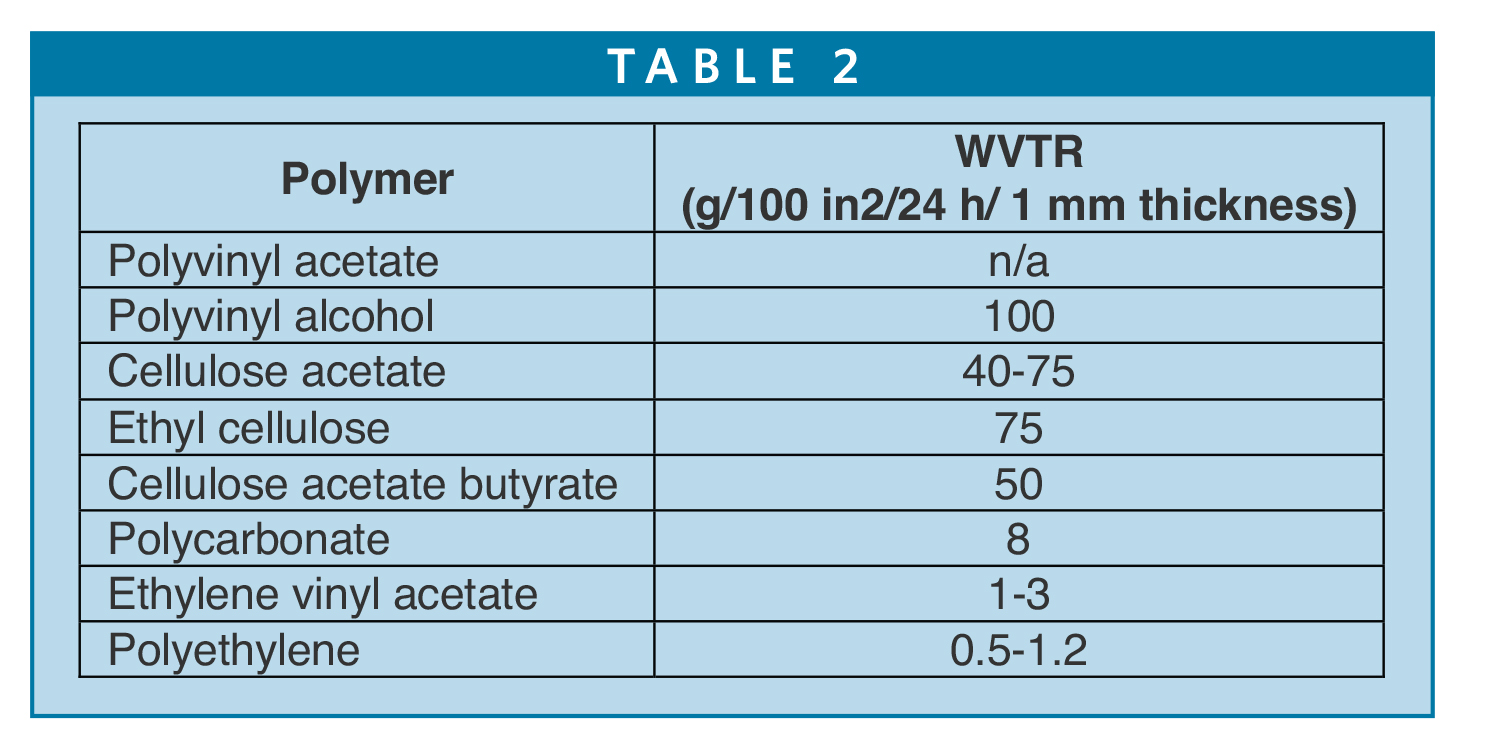
For monolithic matrix tablets, osmotically controlled polymers are also used. The mechanism by which the drug released requires the diffusion of water from high concentration from outside to lower concentration within the matrix, thus allowing the matrix to swell and push the drug to diffuse either through a pore in semipermeable membranes.5 Semipermeable membranes like resin membrane allows water to permeate inside from outside, which helps diffuse the drug by building the internal pressure within the matrix tablet. The porosity of the semipermeable membrane is critical and might be controlled by pore formers, such as hydrophilic polymers and solubilizers. Table 2 below lists a range of semipermeable polymers used in controlled release applications. Their water vapor transmission (WVTR) values are also listed.5
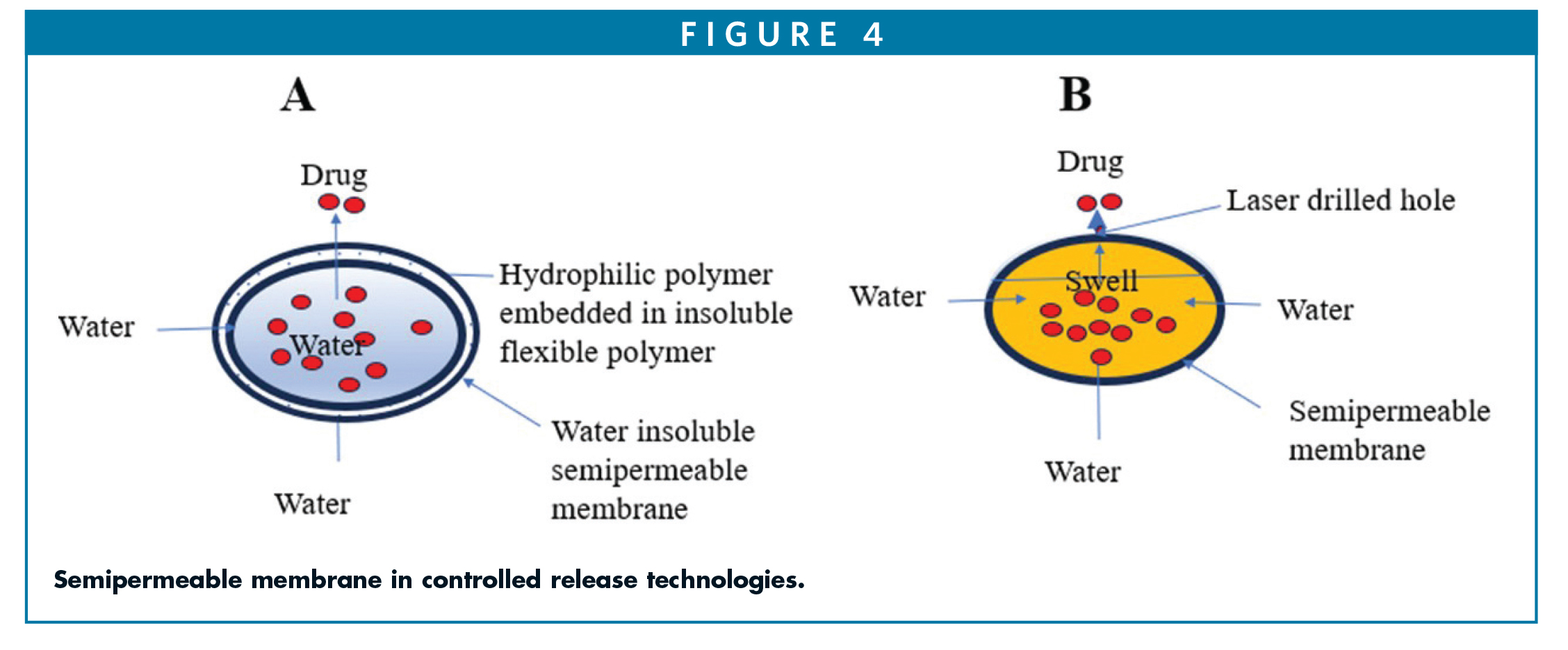
Kollicoat SR 30D, composed of polyvinyl acetate, acts as a semipermeable membrane and allows the controlled release of solute through diffusion.15 In a study, Ambroxol HCl pellets coated with Kollicoat SR 30D at 10% and 20% weight gains. The resulting pellets were compressed into tablets, each weighing 400 mg, 100N in hardness, and 10 mm in diameter. The drug release from pellets, compressed in tablets composed of 50% MCC and 1% magnesium stearate as lubricant in tablets, was relatively slower with 20% coating vs 10% polymer, and showed over 24 hours release in both cases.16 The controlled release of drug is a result of water permeation through polyvinyl acetate semipermeable membrane, which has tendency for greater elasticity and self-repairing mechanism, so that the release rate is maintained over an extended period without being ruptured (Figure 4A).
In an osmotic controlled release oral delivery system (OROS), however, the core tablet is composed of a matrix with two layers, an active layer with drug and a physiological inert push layer (Figure 4B).17 As the tablet absorbs water through the semipermeable membrane, the polyethylene oxide swells and pushes the active and exerts pressure against the active layer and releases the drug through laser drilled holes. If it was not drilled through with a laser, the semipermeable membrane can still allow water to permeate through osmosis, but the solute or drug can’t diffuse through. In OROS technology, the water-insoluble cellulose acetate membrane is most frequently used to control the release through a laser drilled hole as indicated in Figure 4B. The controlled release in the GI tract is independent of pH. Drug delivery through OROS follows zero order kinetics. The release of drug through a laser drilled orifice depends on the rate at which the water enters in the core matrix, thus, the release is independent on the pH outside in GI tract.
Thapa et al. evaluated ethyl cellulose-based Surelease®, a coating system composed of ethyl cellulose 20 cps, medium chain triglycerides, and oleic acid, for efficient coating of a model water-soluble and half-life of 2-6 h drug methimazole with a short processing time.18 The coating suspension was easily diluted with water and sprayed onto a pellet with the desired weight gain. The higher coating thickness resulted in slower and controlled release.
In an example, a carbamazepine coated tablet with and without 5% fine grade crospovidone, each composed of 200 mg drug, weighing 407 mg with 11 mm diameter and 136 N hardness and <0.1% friability, and with 12.5% weight gain, showed an extended release over 16 hours vs 20% release without crospovidone (Kollidon CL-M), suggesting this fine grade crospovidone helps as a pore former in the tablet.19
Mechanical stress on the polyvinyl acetate-based coated tablet was also assessed. For example, metoprolol tablet, each composed of 200 mg drug, 5 mg PVP K30 as pore former with dicalcium phosphate as soluble matrix, coated with Kollicoat SR 30D at 4.6-10 mg/cm2 weight gains, was subjected to stress test by friability and by puncturing a hole in the tablet. The dissolution data of all tablets with and without defects, was identical to freshly coated tablets, and showed an extended release over 16 hours. Taken collectively, the data suggests that polyvinyl acetate-based film around the tablet is highly flexible due to low Tg, and also possesses a self-healing mechanism that prevents dose dumping.
In another study, Ahmad et al. evaluated Kollicoat SR 30D for controlled release of diltiazem HCl from sugar pellets prepared by coating drug with a hydrophilic polymer, Kollicoat IR (PEG-PVA (1:3) graft copolymer) used as binder and pore former in different ratios with Kollicoat SR 30D (5:1 and 5:2). The authors demonstrated that using active layering and coating, the release was independent on drug/IR ratios over an extended period, but was dependent upon the concentration of SR30, as it showed slower release with higher coating weight gain and vice versa.20
EUDRAGIT® NE 30D
Polyacrylate based neutral co-polymers have been used in controlled release applications for coating of tablets and pellets.21 Eudragit® NM 30D, for example, is also available as an aqueous 30% dispersion for controlled release applications. It is highly flexible like Kollicoat SR 30D and may not require plasticizers for film coating of matrix tablets and multi-particulates.22 Eudragit NE 30D has a molecular weight of 750,000 D; whereas NM 30D has a molecular weight of 600,000 D. The glass transition temperatures (Tg) of NE 30D and NM30D, are 8°C and 11°C, respectively. Because both are neutral polymers, the release of drug is independent of the gastrointestinal pH. While there are no examples of NM 30D available, NE 30D has been used in controlled release coating of multi-particulate pellets and tablets and buccal films. In another study, Arno et al. evaluated Eudragit NE 30D in wet granulation of extended release of metformin and gliclazide tablets. The authors demonstrated that increasing the amount of polymer controlled the release over 6-8 hours.23 In a typical granulation, 1000 mg of metformin HCl and 160 mg of gliclazide were wet granulated with 348 g of NE30 D dispersion (104.4 mg of polymer content), with 100 mg of dibasic calcium phosphate, 17.4 mg of PVP K30, and 11.6 mg of colloidal silica. In vitro data from combo tablet showed 30%-40% release in the first hour and the complete release slowly over 8 hours.
In a study, Cuppock et al. evaluated a blend of highly flexible and hydrophilic Eudragit NE30 and hydrophobic Kollicoat SR30D. The authors concluded that release of drug involved diffusion through intact polymeric film coatings rather by diffusion followed by convection through water-filled cracks.24
SUMMARY & FUTURE PERSPECTIVES
With continued interest in drug delivery for challenging molecules, we find that controlled release remains at the fore front of innovators. With the need to reduce dosing frequencies and alleviate adverse effects, finding the appropriate excipients compatible to drugs and hence, the desired technologies, could be highly complex. As more new drug candidates are being discovered, drug manufacturers are open to adapting new technologies to expedite the development. As it is relevant to other dosages, the solid oral dosage form (SODF) continues to gain momentum for small and large molecules both for immediate and controlled release. The latter offers a significant advantage over former applications, due in part to better controlling abilities, reducing pill burden, and more so for affordability and meeting patient compliance. Ascendia offers a range of options for oral formulations. AmorSol®, for example, applicable to amorphous solid dispersions (ASDs), and EmulSol® for liquid microemulsion and nano-emulsions, can be widely used for a wide spectrum of small and large molecules across all modalities for immediate and controlled release. If extended release is required, these technologies can be further optimized to tailor formulations to achieve the desired extended release profiles. For example, SEDDS formulations requiring fluid bed coating of pellets with insoluble drugs in solid SEDDS can be extended to a range of water insoluble drugs and to further improve the stability of drugs like ramipril.25
REFERENCES
- S. Ali, K. Kolter and B. Fussnegger, Controlled release: A new paradigm with polyvinyl acetate polymer, Am. Pharm. Rev., 2015, May 31.
- S. Habet, Narrow Therapeutic Index drugs: Clinical pharmacology perspective. J. Pharm. Pharmacol. 2021, 73, 1285–1291.
- S. Adepu and S. Ramakrishna, Controlled drug delivery systems: Current Status and Molecules, 26, 5905.
- J. Siepmann, and F. Siepmann, Modeling of diffusion controlled drug delivery. J. Control. Release 2012, 161, 351–362.
- K. Park, Mechanisms of controlled release, Chapter 9, pp. 153-198.
- Controlled release approved drugs: https://www.fda.gov/drugs/information-drug-class/list-extended-release-and-long-acting-opioid-products-required-have-opioid-rems.
- Kollicoat® SR 30 – BASF Technical Information January 2019.
- V. Buhler, Kollidon® -Polyvinylpyrrolidone excipients for the pharmaceutical industry, Kollidon® SR Chapter, pp. 255-270.
- Kollidon® SR; FDA IID: https://www.accessdata.fda.gov/scripts/cder/iig/index.cfm?event= BasicSearch.page.
- Benecel™ – Ashland – Technical Brochure; https://www.ashland.com/industries/performance-specialties/adhesives-additives/benecel-a4c–methylcellulose.
- METHOCEL™ K100M Premium HPMC- IFF Technical Brochure; https://www.answercenter.iff.com/products/methocel-k100m-premium-hpmc.
- A. A. Kumar, T. E. G. K. Murthi and A. P. Rani, Influence of Kollidon SR on ondasetron HCl pH independent drug release from hydroxypropyl methyl cellulose matrix tablets, MAT Journals- Recent Trends in Pharm. Sci Res., vol. 1 Issue 2.
- X. Gu, D. J. Fediuk, F. Estelle, R. Simons and K. J. Simons, Evaluation and Comparison of Five Matrix Excipients for the Controlled Release of Acrivastine and Pseudoephedrine, Drug Dev. Ind. Pharm., 2004, 30 https://doi.org/10.1081/DDC-200040237.
- M. Knarr and T. L. Rogers, CONTROLLED RELEASE – How Advanced Excipient Knowledge is Shaping the Future of Controlled-Release Formulations, Drug Development & Delivery, 2024 October.
- V. Buhler, Pharmaceutical technology of BASF excipients, 2008 June.
- V. Buhler, Kollicoat® Grades- Functional polymers for the pharmaceutical industry, Kollicoat® SR30D Chapter, pp. 101-154.
- D. M. Bass, M. Prevo, D. S. Waxman, Gastrointestinal safety of an extended release, nondeformable, oral dosage form (OROS®), Drug safety, 2002, 25, 1021-1033.
- P. Thapa, R. Thapa, D. H. Choi and S. H. Jeong, Effects of pharmaceutical processes on the quality of ethylcellulose coated pellets: Quality by design approach, Powder Technology, 2018, 339, 25-38.
- Carbamazepine coating with Kollicoat SR30D with and without fine grade crospovidone (Kollidon® CL-M), Kollicoat® Grades- pp. 126-127.
- H. Ahmad, I. Khalifeh, B. Alkhalidi, K. Aiedeh and H. S. AlKhatib, Application of active layering and coating techniques in the development of a multiparticulate, controlled release dosage form of a high-dose, highly soluble drug, Pharm. Dev. Technol, Early Online: 1–9; DOI: 10.3109/10837450.2013.805778.
- Eudragit® NE30D, Evonik; https://www.evonik.com/en/products/hc/pr_52000190.html.
- C. N. Patra, R. Priya, S. Swain, G. K. Jena, K. C. Panigrahi and D. Ghose, Pharmaceutical significance of Eudragit: A Review, Future J. Pharm. Sci., 2017, doi:10.1016/j.fjps.2017.02.001.
- E. A. Arno, P. Anand, K. Bhaskar, S. Ramachandran, M. Saravanan and R. Vinod, Eudragit NE30D Based Metformin/Gliclazide Extended Release Tablets: Formulation, Characterisation and in Vitro Release Studies, Chem. Pharm. Bull., 2002, 50, 1495-1498.
- Y. Cuppok, S. Muschert, M. Marucci, Hjaertstam, F. Siepmann, A. Axelsson, J. Siepmann, Drug release mechanisms from Kollicoat SR: Eudragit NE coated pellets, Int. J. Pharm. 2011, 409, 30-37.
- A. A. W. Shahba, A. Y. Sherif, E. M. Elzayat, S. Ali, and M. Kazi, Physical isolation strategy in multi-layer self-nanoemulsifying pellets: Improving dissolution and drug loading efficiency of ramipril, J. Pharm. Sci., 2025, https://doi.org/10.1016/j.xphs.2025.01.017.

Dr. Shaukat Ali joins Ascendia Pharmaceutical Solutions as Senior Director of Scientific Affairs and Technical Marketing after having worked in the pharma industry for many years. His areas of expertise include lipid chemistry, liposomes, lipid nanoparticles, surfactant-based drug delivery systems, SEDDS/SMEDDS, oral and parenteral, topical and transdermal drug delivery, immediate- and controlled-release formulations. He earned his PhD in Organic Chemistry from the City University of New York and carried out his post-doctoral research in Physical Biochemistry at the University of Minnesota and Cornell University. He has published extensively in scientific journals and is inventor/co-inventor of several US and European patents.

Dr. Jim Huang is the Founder and CEO of Ascendia Pharmaceutical Solutions. He earned his PhD in Pharmaceutics from the University of the Sciences in Philadelphia (formerly Philadelphia College of Pharmacy and Sciences) under Joseph B. Schwartz. He has more than 20 years of pharmaceutical experience in preclinical and clinical formulation development, manufacturing, and commercialization of oral and parenteral dosage forms. His research interests are centered on solubility/bioavailability improvement and controlled delivery of poorly water-soluble drugs through nano-based technologies.
Total Page Views: 2704