


2026 Nasal & Inhalation Drug Development & Delivery eBook: Drug Repurposing Creates New Market Opportunities
By: Cindy H. Dubin, Managing Editor
The global inhalable drug market is expected to jump from $43 billion this year to almost $71 billion by 2033.1 The market is being driven by a rising prevalence in respiratory diseases such as asthma and COPD as inhaled drugs allow for direct delivery to the lungs. Additionally, inhalation drug delivery acts as a non-invasive route for biologics, mRNA therapies, and systemic drugs for diabetes management, pain control, and vaccines.
For its part, the global nasal drug delivery market was valued at almost $75 billion in 2023 and could more than double to $151 billion by 2033.2 Nasal drug delivery technology refers to the method of drug administration through the nose, which allows drugs to be rapidly absorbed into the bloodstream. This route of administration avoids the digestive system and the liver, where drugs may be degraded or metabolized. Since the nasal cavity is provided with a rich blood supply and has a great surface area, the rate of absorption for the drugs from the route is very fast, consequently acting quicker than that from oral delivery. Technology is used most in the administration of decongestants and pain relievers, and treatment for migraine and epilepsy among others. Nasal delivery shows promise for vaccines, hormone treatments, and pharmaceuticals for chronic diseases such as diabetes.2

Inhalation Delivery Could Rescue Orphaned Drugs
At the recent BIO International Convention 2026, the viability of inhalation delivery beyond respiratory disease was on full display. Researchers at the Wits Advanced Drug Delivery Platform (WADDP) are developing an inhalable nanosystem designed to deliver tuberculosis (TB) medications directly to the site of infection in the lungs. The technology uses a biocompatible nanocarrier to encapsulate the four standard TB drugs – rifampicin, isoniazid, ethambutol, and pyrazinamide – in a single formulation. By delivering medicine directly into the respiratory tract, the system is engineered to bypass the liver and bloodstream, reduce drug loss, and increase local concentration in the lung tissue. The research team is now working to translate these early results into real-world clinical use. The company is also developing inhaled treatments for Idiopathic Pulmonary Fibrosis (IPF), an inhaled GLP-1 formulation for diabetes and obesity, an inhaled synthetic cannabidiol (CBD) formulation for the aggressive brain cancer Glioblastoma, and has initiated a Phase 1 trial in January for an inhaled CBD candidate targeting Parkinson’s Disease Psychosis.
Transpire Bio is targeting its pitch to pharma partners with the potential to rescue struggling oral drug candidates. Poor absorption, rapid degradation in the liver, or the need for doses may prevent a viable therapy from moving forward. By reformulating a drug for inhalation, it may be possible to bypass these obstacles entirely. Delivering a compound directly to the lungs for systemic absorption can dramatically improve its bioavailability and safety profile. The concept has already been proven with products like MannKind’s Afrezza for inhaled insulin, and inhaled levodopa Inbrija for Parkinson’s disease.3
Primary inhalation delivery technologies include dry powered inhalers (DPIs), nebulizers, soft mist inhalers (SMIs), and pressurized metered-dose inhalers (pMDIs). The latter just reached a milestone. CDMO Kindeva introduced the first pMDI 70 years ago this past March, and the device inventors (Kindeva alumni George Maison, Irving Porush, and Charles Thiel) were inducted into the National Inventors Hall of Fame this past May.
At the recent RDD 2026 conference, Bespak explored one of the biggest challenges facing the industry today: how to reduce the carbon footprint of pMDIs while maintaining the performance. Tony Mallet, Platform Development Group Manager, says that while much of the industry focus to date has centered on the transition to low Global Warming Potential (GWP) propellants, Bespak is exploring how the pMDI valve has a significant role to play in a broader net-zero strategy. A central focus was Bespak’s BK357 valve, which has been developed to work with next-generation propellants while retaining dose consistency, low leakage and ‘drop-in replacement’ compatibility.
In this ebook, Bespak engineers explain that choosing a propellant is on the first step in developing pMDIs. They explain how the company is using computational simulation to reduce risk and accelerate decision-making across the full pMDI lifecycle. Also in this ebook, you will hear how Aptar Pharma is ensuring high-payload pulmonary delivery of complex and high-value therapies with its DPI platform.
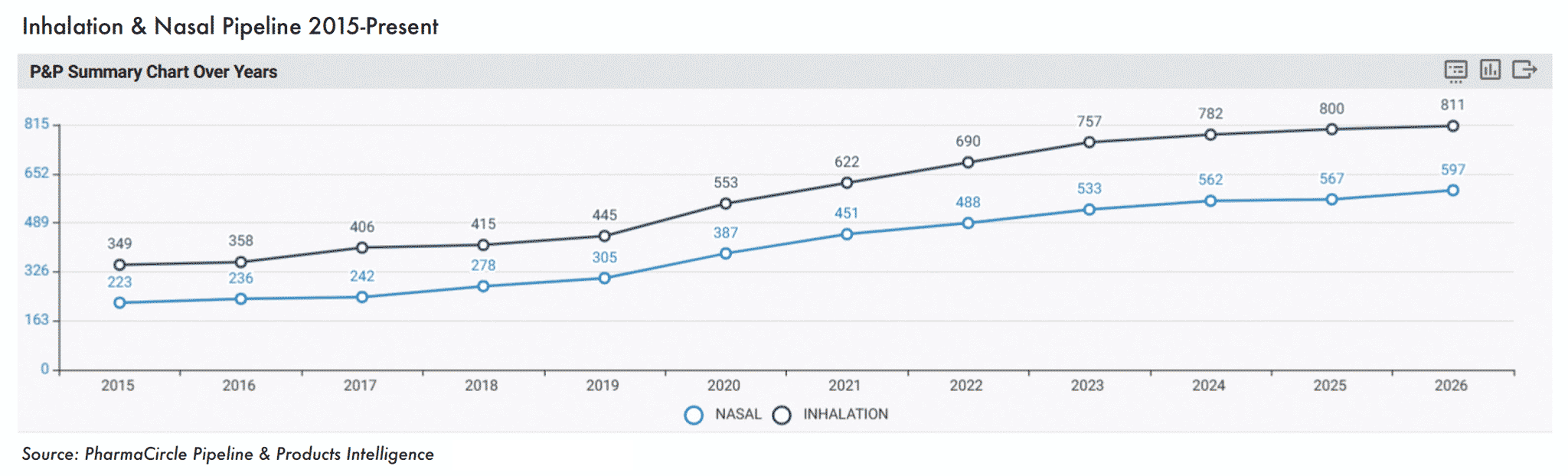
Reformulating Into Nasal Sprays
Nasal spray repurposing through the 505(b)(2) regulatory pathway has emerged as a way to give new life to existing drugs. According to LTS Lohmann Therapie-Systeme AG, reformulating existing drugs for intranasal delivery can unlock a range of benefits: improved patient compliance and convenience; enhanced efficacy and safety; and rapid onset of action. A prime example of the latter is Neffy, the first nasal spray approved by the FDA for severe allergic reactions.
A driving force behind the rise of nasal spray repurposing is the advancement of formulation technologies, such as penetration enhancers. By increasing drug absorption across the nasal mucosa, penetration enhancers can improve drug bioavailability and therapeutic potential. As a result, penetration enhancers are enabling the delivery of APIs that might have previously been considered unsuitable for nasal administration due to poor absorption or rapid clearance.4
However, there are hurdles to nasal drug delivery, such as low administrable volumes, rapid mucociliary clearance, and degradation of biologics by nasal enzymes.5 In this ebook, MedPharm discusses its strategies for overcoming such obstacles and developing successful nasal delivery formulations.
Successful intranasal administration is putting a spotlight on the difference between nose-to-brain delivery (N2B) versus blood-brain-barrier (BBB) transporter approaches. N2B is designed to achieve high, localized concentration peaks in the brain by leveraging short neural diffusion pathways and enabling rapid onset of action for highly potent compounds. According to Aptar, success depends on engineering the delivery system to consistently reach upper-nasal regions linked to the olfactory and trigeminal pathways. In this ebook, Aptar explores why N2B delivery is attracting renewed interest in CNS development.
References
- Global Inhalable Drugs Market Size and Share Analysis-Growth Trends and Forecasts (2026-2033), Coherent Market Insights, April 27, 2026.
- Global Nasal Drug Delivery Technology, Market Size, and COVID-19 Impact Analysis, Spherical Insights, July 2025.
- Transpire Bio’s High-Stakes Pitch: Inhaling the Future of Drug Delivery, BriefGlance.com, June 18, 2026.
- Repurposing approved therapies as nasal sprays, LTS Lohmann Therapie-Systeme AG, June 28, 2026.
- Editorial: Intranasal Drug Delivery: Challenges and Opportunities, Fortuna, Ana et. al., National Institutes of Health, March 2, 2022.
NeuroSpray™: A High-Precision Multi-Dose Nasal Pump Platform Engineered for Nose-to-Brain Performance

Quantified Upper Nasal Targeting, Reduced Technique Sensitivity, & Development Grade Reproducibility
By: Reenal Gandhi
CNS drug development is accelerating, and the delivery strategy is increasingly central to program success. Across CNS pipelines, developers continue to face constraints tied to the speed of onset, invasiveness, and limited CNS exposure via conventional routes. At the same time, healthcare systems and patients place rising value on non-invasive, fast, self-administered options, especially where real-world usability can influence outcomes.
At the same time, scientific understanding of olfactory and trigeminal transport pathways has matured, reframing intranasal delivery from “local/systemic” into a potential route for CNS-relevant access. This has shifted the conversation from an academic concept to a platform-and-evidence discussion, where developers increasingly evaluate not only the molecule but the delivery system’s ability to generate reliable deposition and consistent administration.
This evolution is also unfolding in a market environment that is becoming crowded and noisy, with limited differentiation between general nasal devices and solutions truly engineered for nose-to-brain requirements. In parallel, developers and regulators increasingly expect evidence that links device use, deposition, and clinical outcome interpretation, driving demand for platforms designed to reduce patient-use variability and support clinical reproducibility.

From Nasal Delivery to a Targeting & Reproducibility Challenge
Nose-to-brain (N2B) drug delivery is no longer just a “nasal spray discussion.” It is a challenge of targeting and reproducibility, and success depends on engineering the delivery system to consistently reach uppernasal regions linked to the olfactory and trigeminal pathways.
NeuroSpray™ was developed specifically for this reality: a purpose-built, multi-dose N2B configuration designed exclusively for CNS-focused applications, rather than for general nasal indications. It is positioned to support more precise and reproducible administration conditions, enabling clearer interpretation of CNS outcomes across development stages.
A Clear Performance Objective: Maximize Upper-Nasal/Olfactory Deposition Under Realistic Use Conditions
NeuroSpray™ is positioned around a direct and measurable goal: maximize deposition to the olfactory region – a critical target for N2B delivery – while maintaining reproducibility when administration conditions vary.
The platform is engineered to achieve up to 50% deposition under varied spray angles, compared with 1-5% for standard pumps. This defines a clear competitive posture: not “N2B-capable,” but quantitatively targeted delivery designed to remain effective even when angle and technique are not perfect.
Beyond targeting performance alone, the platform is built and assessed through a combination of performance characterization, preclinical evaluation, and human-factors studies, supporting its positioning as a development-ready solution grounded in measurable delivery behavior.
Device Architecture Built for Controlled Trajectory & Reduced Technique Dependence
NeuroSpray™ combines multiple design levers to control where the dose goes and reduce user-driven variance:
- Optimized spray geometry to support upper-nasal and olfactory targeting
- A narrower, more concentrated plume aligned with upper-nasal deposition objectives
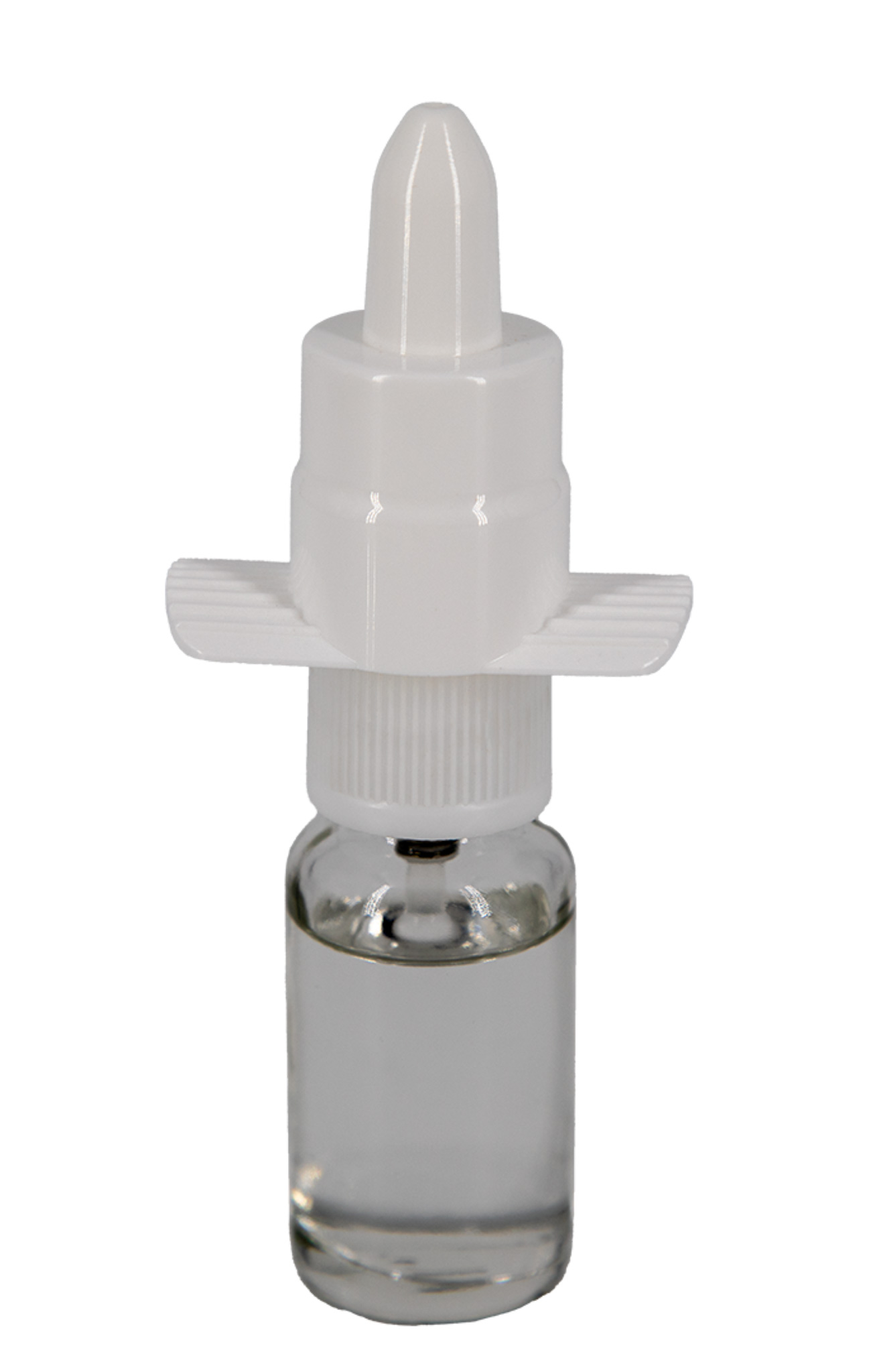
- Ergonomic nostril stop and adapted nozzle geometry to reduce variability in insertion depth and orientation
- Pre-compression actuation and one-hand operation to support controlled, repeatable dosing
- Metered dose volume of 100-110 µL per actuation (flexible)
- Bottle formats (3.5 mL, 5 mL, 10 mL) suitable for Phase I-II clinical supply
Design intent: constrain the degrees of freedom that typically undermine N2B delivery.
Performance Must Be Measured, Not Assumed
NeuroSpray™ is positioned in line with the parameters that matter in N2B development: spray pattern, plume geometry, droplet size distribution, shot weight, reliability, and regional deposition.
By anchoring positioning to measurable performance dimensions, the platform supports a development-grade logic that links device use, deposition behavior, and clinical interpretation. This reflects a broader shift toward evidence-driven N2B development, where delivery performance is evaluated alongside therapeutic effect.
Key Performance Takeaways NeuroSpray™, What the Design Delivers
- Upper-nasal targeting as a reproducible outcome
Developed to support consistent engagement of olfactory and trigeminal-associated regions, not broad nasal distribution. - Targeting performance expressed quantitatively
Capability to reach up to 50% olfactory deposition under varied spray angles, versus ~1-5% for standard pumps. - Lower sensitivity to real-world handling variability
Designed to reduce the impact of angle and insertion depth deviations, improving consistency across users and dosing events. - Aligned with CNS repeat-dose development needs
Supports controlled, repeatable administration where confidence across doses is critical. - Grounded in development-grade evaluation metrics
Framed around spray pattern, plume geometry, dose uniformity, reliability, and regional deposition, enabling evidence-based interpretation.
Independent Proof That Delivery Method Shapes N2B Outcomes
Independent imaging studies from Wake Forest using radiolabelled intranasal insulin demonstrate that the delivery approach and administration rigor directly influence measurable brain uptake. These findings reinforce that CNS outcomes depend not only on the molecule, but on how consistently and precisely delivery engages CNS-relevant regions.
This evidence dimension aligns with the broader development approach behind NeuroSpray™, where delivery conditions, formulation behavior, and user handling are considered together to reduce uncertainty and strengthen interpretation.
Why Multi-Dose Matters for CNS Programs
NeuroSpray™ is deliberately multi-dose, reflecting the reality that many CNS and neuro-active therapies require repeat dosing, where consistency across administrations directly impacts clinical confidence. The platform is designed to support a broad range of formulation and program requirements, including solutions and suspensions, repeat-dose regimens and preservative-free strategies, enabling alignment with safety, tolerability and regulatory expectations.
An Integrated, System-Level Approach to N2B Development
Effective N2B development extends beyond device mechanics. NeuroSpray™ is positioned within a broader Aptar Pharma ecosystem, integrating formulation support, usability engineering, performance characterization, and clinical development capabilities.
This enables a co-development approach, where device performance and formulation behavior are aligned early, helping developers:
- better understand deposition outcomes;
- optimize administration conditions; and
- reduce late-stage program risk.
In this context, Aptar Pharma acts not only as a delivery solution provider but as a strategic development partner, supporting a more informed and system-level approach to CNS delivery.
Conclusion
In an increasingly complex and competitive N2B landscape, NeuroSpray™ brings together quantified upper-nasal targeting, reduced technique sensitivity, and validated, system-level development support in a single purpose-built platform.
Rather than presenting nose-to-brain delivery as a solved challenge, it provides a structured, evidence-driven framework for advancing CNS programs while supporting reproducibility, interpretability, and development confidence as this therapeutic field continues to evolve.
 Reenal Gandhi is Global Business Development Director at Aptar Pharma’s Prescription division, focused on assessing new technologies. With over 15 years in drug delivery and pharma, she is passionate about developing combination products that balance formulation, device technology, and commercial potential. Prior to joining Aptar in 2020, she held roles in licensing and acquisitions at global pharma and device companies.
Orbital™: Advancing High-Payload Pulmonary Delivery Through Precision, Usability, & System Level Design
Enabling Consistent Delivery of Complex Therapies in an Evolving DPI Landscape
Pulmonary drug development is increasingly shaped by the need to deliver more complex and higher-dose therapies to patients with variable – and often compromised – lung function. In indications such as cystic fibrosis, bronchiectasis, pulmonary infections, or inhaled oncology, the therapeutic effect can depend on delivering large quantities of the active pharmaceutical ingredient directly to the lungs. In practice, that often means moving beyond the payload range that many conventional dry powder inhalers were originally built to handle. That is where the limitations of traditional DPI formats become more visible.
Established systems can work well for familiar applications, but they often become less practical as dose requirements rise. Many rely on single-breath aerosolization, repeated capsule reloading, or inspiratory effort that can be challenging for patients with impaired lung function to maintain. The result is not only a technical constraint; it can also become a usability issue, increasing the administration burden and making consistent delivery harder to achieve.
From Inhalation to a High Payload Delivery Challenge
As pulmonary therapies evolve toward greater complexity, the challenge extends beyond simply delivering powder to the lungs; it increasingly lies in achieving consistent high-payload delivery while maintaining usability under real-world conditions. In this context, inhalation becomes less a discrete actuation event and more a system-level process shaped by the interaction between formulation behavior, aerosolization performance, and patient handling across the full dosing sequence.
It is within this system-level context, where formulation, device performance, and patient use must be considered together, that Aptar Pharma’s Orbital™ Dry Powder Inhaler (DPI) platform was developed. Aptar Pharma positions the Orbital™ system as a high-payload inhalation platform intended for complex and high-value therapies, with an emphasis on reliable dosing, intuitive use, and flexibility from preclinical development through to commercialization.
A Clear Performance Objective: High Payloads, Delivered Differently
The Orbital™ DPI platform is built around a clear objective: enable controlled pulmonary delivery of high-dose formulations, typically in the range of 100 to 400 mg or more, while limiting the drawbacks traditionally associated with large-dose inhalation. That payload capability is a meaningful point of differentiation in itself. Equally important, however, is how the Orbital™ system from Aptar Pharma is designed to deliver that dose in practice.
Instead of asking the patient to generate a single strong inhalation to receive a full powder bolus, Orbital™ uses a progressive multi-breath delivery approach in which the dose is released over several gentle inhalations. This helps reduce dependence on peak inspiratory flow, makes the administration sequence easier to manage, and can lessen the risk of triggering a cough response associated with abrupt, high-mass delivery. For high-value therapies, that distinction can materially influence tolerability and adherence.
Platform Architecture Designed for Progressive Aerosolization
At the center of Aptar Pharma’s Orbital™ system is a powder dispersion mechanism designed to progressively de-agglomerate and release the formulation during inhalation. The Orbital™ DPI platform is also characterized by low inhalation resistance and by flexible configuration options that include single-use and reloadable formats. Taken together, these elements support a delivery profile intended to balance aerosolization performance with a more manageable and predictable patient experience.

Rethinking DPI Delivery: Beyond Single-Breath Systems
The distinction becomes clearer when compared with conventional DPI architectures. Traditional systems often depend on manually loaded capsules or multiple-dose units, high inspiratory effort to achieve adequate aerosolization, and single-event delivery of large powder quantities. By contrast, the Orbital™ DPI is designed to support high payloads without repeated loading steps and to distribute dose delivery across multiple inhalations rather than concentrate it into a single inhalation event. This represents a shift away from a single-actuation paradigm toward a more controlled and patient-adapted delivery process.
Key Performance Takeaways
Orbital™ — What the Platform Delivers
- High-payload pulmonary delivery capability
Enables controlled delivery of 100–400 mg+ formulations, addressing the limitations of conventional DPI systems for high-dose therapies. - Progressive multi-breath administration
Distributes dose delivery over several inhalations, reducing reliance on peak inspiratory flow and avoiding single-bolus delivery. - Improved delivery consistency under real-world conditions
Designed to support reproducible performance across patients with varying lung function and inhalation profiles. - Reduced administration burden for high-dose regimens
Eliminates repeated capsule loading steps and simplifies the dosing sequence. - Aligned with complex formulation and development requirements
Supports a broad range of programs, including high-dose small molecules, repurposed drugs, and emerging biologic therapies.
Evaluating Performance Across the Full Dosing Sequence
In high-payload pulmonary delivery, performance cannot be reduced to a single event; it must be evaluated across the entire administration cycle. This reflects a system-level view of performance, where delivery outcomes are determined by the combined interaction of formulation properties, device behavior, and patient use across the full dosing sequence. Relevant questions include how consistently the formulation disperses, how reproducibly the dose is transferred across successive breaths, and how device behavior interacts with formulation under realistic conditions.
Within this context, Orbital™ is positioned as a platform capable of supporting controlled, repeatable delivery across the full dosing event, helping to reduce variability associated with both formulation complexity and patient handling.
Supporting Complex Formulations & Development Pathways
The Orbital™ platform from Aptar Pharma is designed to support a broad range of formulation and program requirements, including high-dose small molecules, repurposed drug programs, and emerging biologic therapies. Flexibility extends across development stages, from early clinical evaluation through to commercialization, and compatibility with both single-use and reusable configurations further strengthens the platform’s adaptability to program needs.
An Integrated, System-Level Development Approach
Effective pulmonary delivery at this level rarely depends on hardware alone. The Orbital™ DPI platform is positioned within Aptar Pharma’s broader development ecosystem, bringing together formulation expertise, inhalation performance characterization, and human factors engineering. This enables a system-level co-development approach, where formulation behavior, delivery performance, and patient interaction can be aligned early in development. By addressing these elements together rather than sequentially, developers can better understand delivery outcomes, improve predictability, and reduce late-stage development risk.
In this context, Aptar Pharma acts not only as a delivery technology partner but as a strategic development partner, supporting a more informed and integrated approach to pulmonary drug delivery.
Conclusion
The pulmonary landscape is placing new demands on inhalation platforms – demands that extend well beyond what legacy DPIs were designed to address. Orbital™ responds to these demands through a combination of high-payload capability, progressive multi-breath delivery, and usability-driven design. By enabling controlled delivery of 100-400 mg+ formulations in a patient-adapted manner, and by embedding that capability within a coordinated development approach, the Orbital™ system from Aptar Pharma offers a structured and scalable route built on a system-level design that aligns formulation, delivery performance, and patient use.
 Jonathan Mulpas is Business Development Director for the Pulmonary Category Team at Aptar Pharma. Mr. Mulpas holds an engineering degree from École Centrale Paris (France) and a master’s degree in Aeronautics from Beihang University in Beijing (China). Having previously worked at Airbus (Toulouse, France), Mr. Mulpas joined Aptar Pharma in 2018 where he spent six years in the R&D team, holding various roles in the development of pulmonary products. In his current business development position in Aptar Pharma’s Pulmonary Category Team, Mr. Mulpas is responsible for Aptar’s DPI and NPLI programs.
De-risking the Green Transition: A Digital-First Approach to Low Carbon pMDIs

By: Tom Daly and Karl Bass
The inhalation industry’s shift to low Global Warming Potential (GWP) propellants is well underway. Regulatory phase-downs of existing hydrofluoroalkane (HFA) propellants, a shrinking supply base and corporate net-zero targets have made the move to HFA-152a and HFO-1234ze(E) a practical priority for most pharmaceutical developers. Major companies are already deep into development, with the first low carbon pressurized Metered Dose Inhaler (pMDI) products now reaching regulatory approval. For those following, the challenge is completing the transition efficiently and with acceptable risk.
But choosing a propellant is only the first step. Both next-generation alternatives have distinct physical and chemical properties that affect each stage of development. These differences affect how formulations behave as suspensions or solutions, how the system performs when combined with the valve, actuator and canister, and what infrastructure a filling site needs to operate safely at scale. Managing that complexity efficiently is a priority across the industry.
At Bespak®, the specialist inhalation CDMO, the answer has been a digital-first development approach: using computational simulation to reduce risk and accelerate decision-making across the full pMDI lifecycle.
Starting with the Formulation
The two propellants present different challenges from the outset. HFA-152a has a lower density and different molecular characteristics than current options, as well as dynamic viscosity, all of which affect suspension stability, droplet size and drug solubility. HFO-1234ze(E), with near-zero GWP, behaves more similarly to today’s HFA-134a, though its spray characteristics still require careful attention during development.
For developers reformulating existing products, this means verifying that aerodynamic performance — particle size, fine particle fraction and dose consistency — is preserved, alongside a clear understanding of how device geometry interacts with the new propellant.
Bespak’s formulation development capabilities span early feasibility work characterizing drug-propellant behavior through to in vitro aerodynamic performance testing, giving developers reliable data on formulation behavior before committing to full-scale development. That breadth of experience across both propellants substantially reduces the risk of costly late-stage reformulation.
Modelling Before Manufacturing
The metering valve refill is a less-studied area in pMDI development. After each actuation, propellant must refill the metering chamber before the next dose can be delivered, and inconsistent refill directly compromises dose consistency.
Bespak has applied computational fluid dynamics (CFD) to model this event across all four propellants currently in development or use. The data shows meaningful differences: by 300ms post-actuation, HFA-152a achieves 88.3% liquid fill compared to 75.9% for HFO-1234ze(E), a difference with direct implications for dose consistency. The modelling shows these differences can be compensated through adjustments to valve inlet geometry, tested virtually rather than through repeated physical prototypes. Engineers can explore process variables digitally and identify manufacturing-ready solutions before committing to a physical build.
Bespak also uses advanced statistical modelling to map the full design space of the metering valve, which has over 100 design inputs influencing more than 20 performance outputs. This allows critical variables to be identified and manufacturing tolerances optimized, without the time and material cost of large-scale physical trials. The approach has been validated to within 1% of real-world manufacturing data, and in one recent project it avoided the need for up to five tons of plastic in molding trials. The same framework is now being extended to model drug-propellant interactions alongside valve mechanics, moving towards an integrated formulation and device development approach.

Getting the Hardware Right
These simulation outputs inform real product decisions. The Bespak® BK357 valve platform is trusted across suspension and solution formulations in highly regulated markets worldwide, and it served as the proving ground for low GWP optimization. Transitioning to HFA-152a and HFO-1234ze(E) required careful materials work: HFA-152a’s molecular properties increase the risk of propellant leakage and moisture ingression through standard elastomers. The solution was a hybrid BK357 configuration with EPDM seals and a bromobutyl neck gasket, validated for near-zero leakage and formulation stability with both propellants.
Life Cycle Assessments (LCAs) run alongside the development process, ensuring material choices also contribute to reducing overall carbon impact. Decarbonization, in short, extends beyond propellant selection to the choice of hardware materials.
From Development to Patient Supply
Simulation de-risks development; manufacturing capability converts that work into patient supply. Bespak is the first CDMO to manufacture pMDIs at commercial scale with HFO-1234ze(E), with HFA-152a commercial capability following. Five low carbon pMDI lines are now operational or under construction at the Holmes Chapel site, providing an integrated pathway from feasibility through clinical supply to full commercial production.
In March 2026, Chiesi Group expanded its partnership with Bespak to advance its Carbon Minimal Inhaler program, selecting Holmes Chapel as a key manufacturing source on the grounds of shared sustainability values, technical excellence and supply chain resilience. For developers navigating the same transition, it underlines the value of a CDMO with proven digital development capability and the manufacturing infrastructure to match.
About Bespak
Bespak offers a fully integrated service for developing and manufacturing inhaled and nasal drug products, devices and components for the global pharmaceutical market. With a long history in the development and commercial supply of pressurized Metered Dose Inhalers (pMDIs), Bespak supplies a major proportion of the world’s pMDI valves and actuators. Built on established expertise but ready for the future, Bespak is a long-term innovation partner committed to driving sustainability in the industry. The company has both established capacity and ongoing expansions to enable the manufacture of pMDIs with low Global Warming Potential (GWP) propellants.
 Thomas Daly is a Development Engineer at Bespak, specializing in pMDI metering valve development. He holds a BEng (Hons) in Mechanical Engineering and is completing a PhD focused on modelling next-generation low GWP propellant systems. He is an Incorporated Engineer (IEng).
 Karl Bass is Principal Model-Based Systems Engineer at Bespak with over 10 years’ experience in pharmaceutical and medical device development. A Chartered Engineer with a PhD in Mechanical Engineering, he specializes in modelling, simulation, fluid dynamics, structural mechanics, and device optimization.
Unlocking the Potential of Nasal Drug Delivery: Strategies for Formulation Success

By: Dr. Jon Lenn, Dr. Charles Evans, and Dr. Jon Volmer
As pharmaceutical developers seek innovative ways to improve patient outcomes and adherence, nasal drug delivery has emerged as a versatile and increasingly important route. It offers opportunities for local and systemic therapies, including treatments for allergic rhinitis, CNS disorders, migraines, and even vaccines.
However, nasal delivery isn’t without challenges. The nasal cavity acts as a highly evolved barrier designed to keep foreign substances out. Overcoming these defenses requires a deep understanding of nasal anatomy, physiology, and formulation science.
At MedPharm, we have spent years refining strategies and tools to help developers navigate the challenges of topical drug delivery to help bring successful nasal products to market.
Why Nasal Drug Delivery Matters
The global topical drug delivery market was estimated to be worth $125–$150 billion in 2024, with the nasal delivery segment representing about 12%, and growing. The appeal of this route of administration lies in its several advantages:
- Rapid absorption through a highly vascularized surface
- Direct CNS access via the olfactory region, bypassing the blood-brain barrier
- Non-invasive administration, potentially improving patient compliance.
These benefits make nasal delivery an attractive route for a wide range of therapies – but to be successful developers must overcome unique biological hurdles.
Understanding the Nasal Barrier
The nasal cavity is equipped with multiple defense mechanisms including the mucus layer, which traps particulates and microbes; cilia, responsible for moving mucus and trapped particles toward the throat for clearance; and tight epithelial junctions, which maintain a robust barrier.
While these features protect the body, they accelerate clearance of formulations and reduce drug residence time and absorption. Successful nasal products must therefore be designed to counteract rapid mucociliary clearance and optimize drug delivery to the intended site.
Targeting the Right Nasal Region
From the perspective of drug delivery, it is helpful to consider the overall structure of the nose to comprise five regions of interest, each with its unique characteristics:
- Nasal vestibule (nostrils) has the easiest access, but expresses transitional epithelium that can complicate delivery.
- Nasal cavity, characterized by the turbinates, which are ideal for systemic absorption due to high vascularization.
- Olfactory cleft, densely packed with olfactory receptors and an enabler of CNS delivery; bypassing the blood-brain barrier.
- Nasopharynx: a common site for vaccine administration.
- Sinuses: a series of interconnected chambers that serve as targets for certain types of formulation.
It is the combination of API, formulation, and device that determines where a drug is deposited. Understanding the interactions of these components is critical to achieving therapeutic goals.
Formulation Strategies for Nasal Delivery
At MedPharm, our approach begins with preformulation studies to assess solubility, stability, and particle size. These insights guide whether a solution or suspension system is most appropriate, with drug-in-solution being simpler, but limited by solubility or drug-in-suspension, which allows for higher drug loading but requires precise particle size control to avoid irritation and ensure effective delivery.
Device compatibility is considered from the outset, as, for example, spray orientation and droplet size can significantly influence deposition patterns. Throughout development, MedPharm scientists perform rigorous characterization – covering mucoadhesion, rheology, osmolality, and particle/droplet size distribution – to select the ‘best few’ most promising prototypes for further testing.

De-risking Development with Advanced Nasal Models
Traditional nasal models using excised animal tissue have served the industry for decades, but they have limitations. MedPharm has pioneered next-generation preclinical tools, such as:
- Reconstructed Nasal Epithelium (RNE): Cultured from human cells at an air-liquid interface, reproducing the ciliated, mucus-producing barrier of the nose.
- The MedCast™ Nasal Cast: 3D-printed from CT scans, customizable for specific delivery strategies and constructed from materials tested for API adherence and extraction efficiency.
These models provide realistic, quantifiable insights into formulation performance and deposition, helping developers make informed decisions early in the process – saving time, reducing risk, and increasing confidence in clinical success.
Partner with MedPharm for Nasal Delivery Excellence
Nasal drug delivery offers immense potential, but success depends on overcoming complex anatomical and physiological barriers. MedPharm combines deep scientific expertise, innovative preclinical models, and end-to-end development capabilities that help its partners navigate these challenges.
Whether you are developing a CNS-targeted therapy, a vaccine, or a systemic treatment, our team can guide you from concept to commercialization with proven strategies and cutting-edge tools.
Read the full article here, and Explore all our specialist routes of delivery.
Ready to Explore the Possibilities?
MedPharm is an end-to-end CDMO that specializes in topical, transdermal and transepithelial drug product development and commercialization.
Speak to our experts to see how we can help you navigate formulation with ease.
 Jon Lenn is Chief Scientific Officer at MedPharm, where he leads global research and development for complex topical and transepithelial drug products. With more than 20 years of pharmaceutical experience, Jon has helped advance innovative biological models, novel test systems, and formulation strategies supporting challenging routes of delivery and product development.
 Charles Evans is Senior Vice President of Pharmaceutical Development at MedPharm, with more than 20 years of experience advancing complex drug products across topical, inhalation, transepithelial, and injectable delivery platforms. He leads global formulation development strategy and has played a key role in the development of MedPharm’s proprietary MedSpray® technology.
 Jon Volmer is Senior Director of Research Biology at MedPharm, with more than 15 years of experience in biotechnology and preclinical drug development. He leads MedPharm’s cross-functional Research Biology team, supporting the development of biological models, analytical approaches, and instrumentation for complex topical and transepithelial drug delivery applications.
Total Page Views: 1076