

Issue:October 2026
CONTROLLED RELEASE - Alginate Beads for Oral Drug Delivery: Formulation Strategies for Controlled Release & Enhanced Bioavailability
Key Points
- Alginate forms a hydrogel matrix that contracts in the acidic stomach, limiting premature drug release and protecting sensitive APIs such as peptides, proteins, probiotics, and poorly soluble compounds.
- Alginate composition, calcium concentration, crosslinking time, bead size, drying method, and polymer coatings determine the bead's porosity, strength, and release profile.
- By protecting the drug in the stomach and enabling controlled intestinal release, alginate beads may increase the amount of active ingredient available for absorption.
By: Vardan Ter-Antonyan, MS, LSSMBB, R&D Manager; Casey Kikendall, Engineer; and John Davis, COO, Mile High Labs
Introduction
Oral administration remains the preferred route for drug delivery because of its convenience, patient acceptance, and manufacturing scalability. However, many active pharmaceutical ingredients (APIs) – particularly poorly water-soluble compounds, peptides, proteins, and other biologics – continue to face significant challenges associated with gastrointestinal degradation, limited epithelial permeability, and inconsistent absorption. These limitations often reduce oral bioavailability and complicate the development of effective oral dosage forms.1
Among the numerous controlled-release technologies investigated over the past several decades, calcium alginate beads have emerged as a versatile and highly adaptable delivery platform. Derived from naturally occurring alginate extracted from brown seaweed, calcium alginate forms three-dimensional hydrogel matrices through ionic crosslinking with divalent cations such as calcium.2,3 This mild gelation process enables encapsulation of a broad range of active ingredients while preserving their structural integrity and providing opportunities to tailor release kinetics through formulation and process optimization.2
Unlike many polymer-based delivery systems that rely primarily on erosion or chemical degradation, calcium alginate beads exhibit pH-responsive behavior throughout the gastrointestinal tract. In the acidic gastric environment, the hydrogel contracts and limits diffusion of encapsulated compounds, providing protection against premature release and degradation. Upon transition into the near-neutral environment of the small intestine, the matrix swells, increasing pore size and enabling controlled release of the encapsulated payload.4,5 The extent and rate of release can be modulated through variables including alginate composition, molecular weight, calcium concentration, bead diameter, drying method, and secondary polymer coatings.2,4
This article reviews the formulation principles governing calcium alginate bead performance, discusses the relationship between bead structure and controlled drug release, summarizes current evidence supporting oral bioavailability enhancement, and highlights emerging pharmaceutical applications where alginate-based delivery systems may provide meaningful advantages for formulation scientists developing next-generation oral therapeutics.2,6-8
Alginate Chemistry and Gel Formation
Alginate is an anionic polysaccharide composed of linear chains of β-D-mannuronic acid (M) and α-L-guluronic acid (G) residues arranged in homopolymeric (MM and GG) and heteropolymeric (MG) blocks.1,2 The ratio and distribution of these monomers largely determine the physicochemical properties of the polymer, including gel strength, elasticity, porosity, and permeability, making alginate an attractive material for controlled drug delivery applications.
Gel formation occurs through ionic crosslinking when aqueous sodium alginate is exposed to divalent cations, most commonly calcium ions (Figure 1a). Calcium ions preferentially interact with guluronic acid residues, forming junction zones between adjacent polymer chains in a three-dimensional network commonly described as the “egg-box” model (Figure 1b).2,9 This mild gelation process occurs under aqueous conditions without elevated temperatures or harsh organic solvents, allowing sensitive therapeutic molecules including peptides, proteins, biologics, probiotics, and lipophilic compounds to be encapsulated while minimizing degradation during manufacturing (Figure 1c).10 The reaction follows the following path: 2NaC6H7O6 + CaCl2 → 2NaCl + C12H14CaO12.
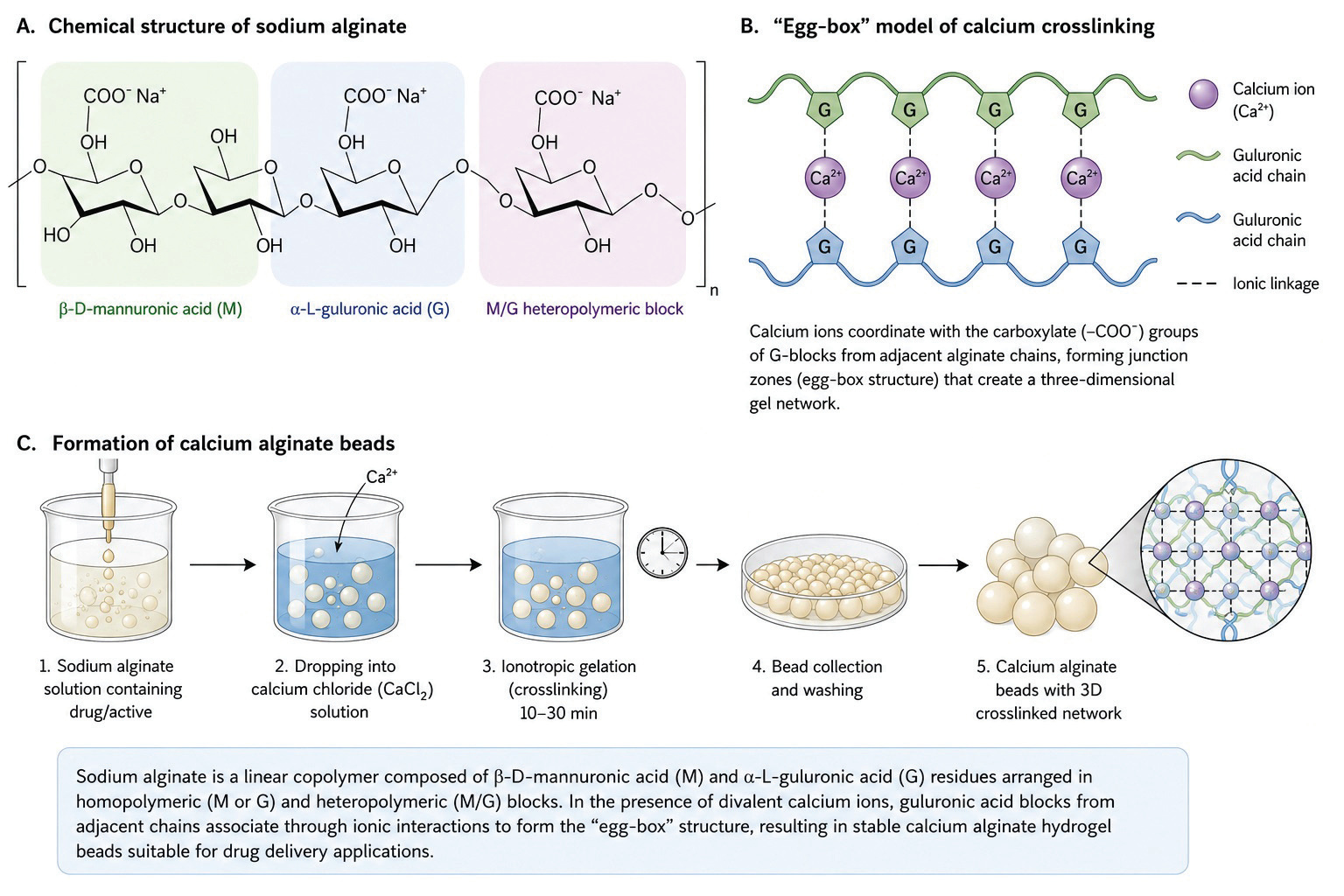
Figure 1: Chemical structure of sodium alginate and schematic illustration of calcium-mediated “egg-box” crosslinking leading to calcium alginate (C12H14CaO12) bead formation.
The resulting calcium alginate beads possess a highly hydrated porous structure whose transport properties can be tailored through formulation design. Variables including alginate molecular weight, G/M ratio, sodium alginate concentration, calcium chloride concentration, curing time, and bead diameter directly influence crosslink density, pore size, encapsulation efficiency, mechanical strength, and drug release kinetics.2,10 Additional processing steps, such as air drying, freeze drying, or secondary polymer coatings (e.g., chitosan), further modify internal microstructure and enable release profiles ranging from immediate to sustained release.10,11
Because these formulation parameters can be systematically optimized using well-established manufacturing processes, calcium alginate beads represent a flexible platform capable of accommodating diverse active pharmaceutical ingredients while providing reproducible control over stability, gastrointestinal protection, and oral drug release.
Critical Formulation Variables
The performance of calcium alginate beads is governed by a combination of polymer composition, formulation parameters, and manufacturing conditions. Careful optimization of these variables enables formulators to tailor encapsulation efficiency, mechanical strength, gastrointestinal stability, and drug release kinetics for a wide range of active pharmaceutical ingredients (APIs).1,2,4,5,12
Among the most influential factors is the mannuronic acid-to-guluronic acid (M/G) ratio of the alginate polymer. Alginates containing a higher proportion of guluronic acid form stronger, more highly crosslinked networks with smaller pore sizes, resulting in improved mechanical stability and slower diffusion of encapsulated compounds. Conversely, alginates rich in mannuronic acid generally produce softer, more elastic gels with faster release characteristics.1,2
Crosslinking density is primarily controlled by sodium alginate concentration, calcium chloride concentration, and curing time. Increasing any of these parameters generally produces tighter polymer networks with reduced porosity, higher encapsulation efficiency, and more sustained drug release. However, excessive crosslinking may impede release of high-molecular-weight therapeutics or reduce loading efficiency.4
Bead diameter also influences release behavior by altering the diffusion path length. Smaller beads typically exhibit faster hydration and drug release, whereas larger beads provide prolonged release due to increased diffusion distances (Tables 1 and 2). Drying methods further modify internal bead architecture. Freeze-dried beads develop a highly porous structure that rapidly rehydrates and promotes faster drug release, while air-dried beads collapse into denser matrices that swell more slowly and provide extended release profiles.5
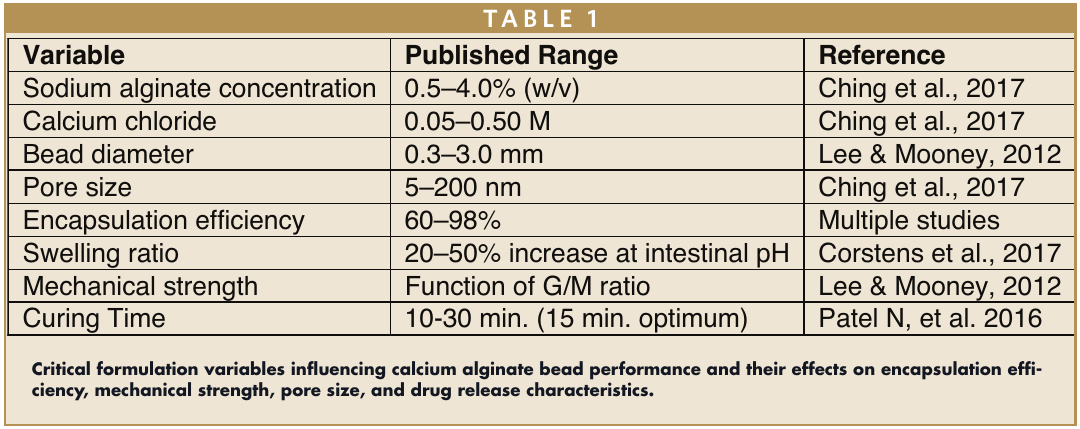
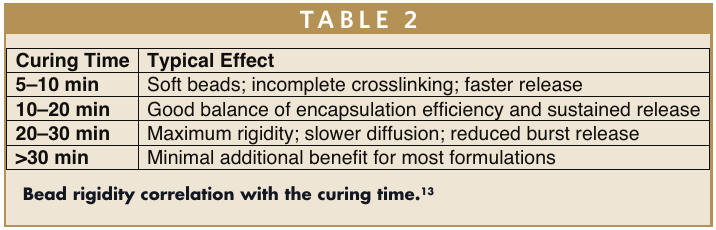
Additional formulation strategies, including secondary polymer coatings such as chitosan, permit further modulation of permeability, mucoadhesion, and gastrointestinal residence time. Collectively, these formulation variables provide a versatile design space for developing oral delivery systems with immediate, delayed, or sustained release profiles while maintaining protection of sensitive therapeutic molecules throughout gastrointestinal transit.1,2,4,5,12
Gastrointestinal Behavior and Controlled Release
One of the most attractive features of calcium alginate beads is their pH-responsive behavior within the gastrointestinal (GI) tract. Unlike many conventional oral delivery systems that release their payload immediately upon hydration, calcium alginate matrices undergo predictable structural changes in response to the physiological conditions encountered during GI transit.1,4
Following oral administration, alginate beads are exposed to the highly acidic gastric environment (pH 1.5–2.0). Under these conditions, protonation of carboxylate groups within the polymer network causes the hydrogel matrix to contract, resulting in reduced pore size and decreased permeability. This shrinkage limits diffusion of encapsulated compounds and provides protection against premature release and degradation of sensitive active pharmaceutical ingredients (APIs), including peptides, proteins, probiotics, and lipophilic compounds.6
Many bioactive compounds face challenges associated with degradation during storage and gastrointestinal transit, reducing the amount of active ingredient ultimately available for absorption. Similar stability challenges have been reported for amino acid-based actives in acidic formulations, highlighting the importance of formulation strategies that protect sensitive compounds until delivery at the desired site of action.14
Upon transfer into the small intestine, where pH values typically range from 6.5 to 7.4, the polymer network undergoes substantial hydration and swelling. Increased ion exchange and relaxation of the crosslinked structure enlarge pore dimensions and facilitate diffusion of the encapsulated payload into the surrounding environment (Figure 2). The magnitude and rate of swelling depend on formulation variables including alginate composition, crosslink density, bead size, and drying method.4,5
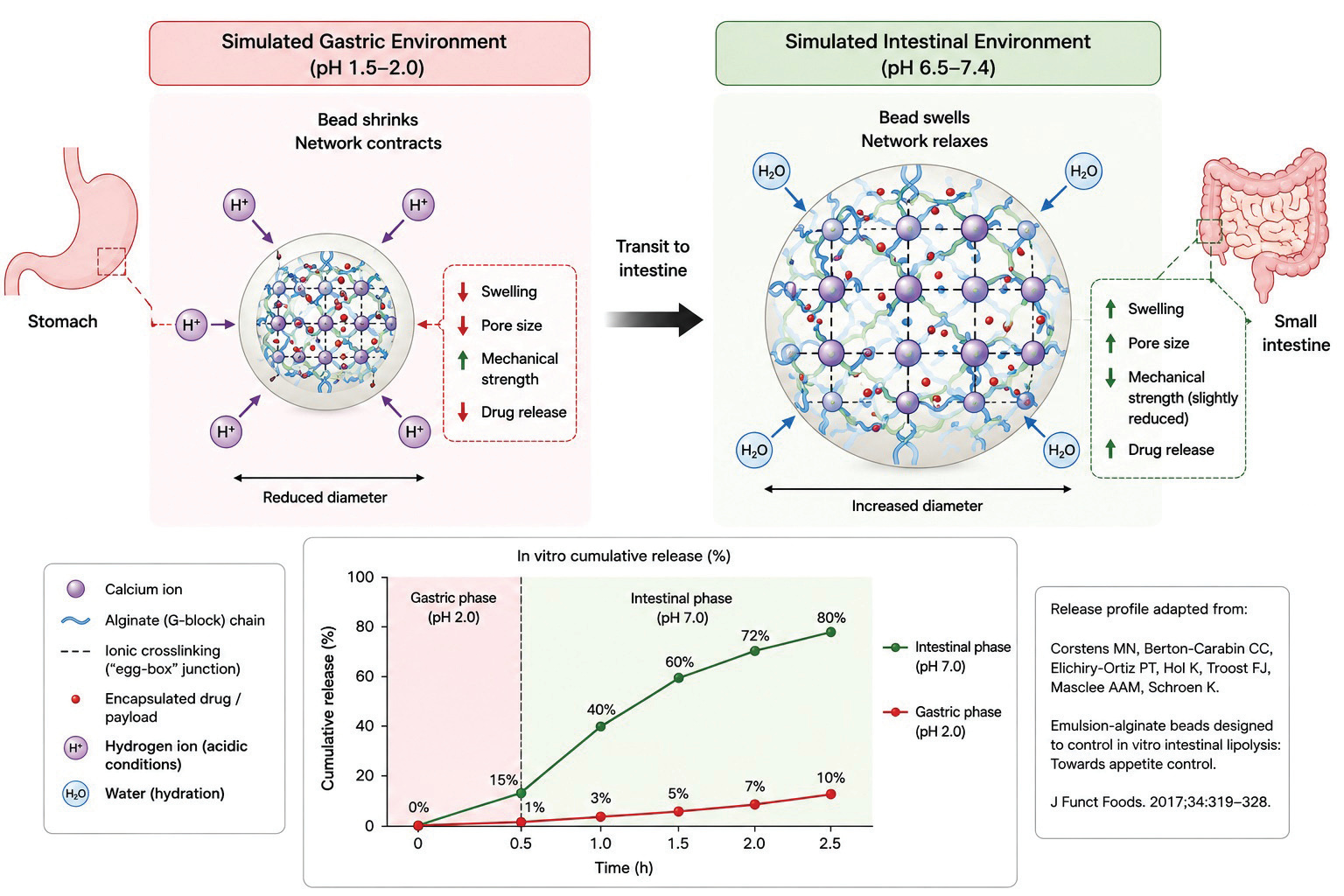
Figure 2: pH-dependent behavior of calcium alginate beads in simulated gastric and intestinal environments.5
Controlled release from alginate beads is governed primarily by diffusion through the hydrated polymer matrix and, to a lesser extent, by gradual matrix erosion or dissociation. Depending on formulation design, release profiles may range from rapid intestinal release to extended release over several hours. Smaller beads, lower crosslink densities, and highly porous structures generally accelerate release, whereas larger beads, higher calcium concentrations, and denser matrices promote sustained delivery.4,5 These characteristics provide formulation scientists with a versatile platform for tailoring drug release profiles to meet specific therapeutic objectives while maintaining protection during gastric transit.
Drug Release Mechanism
Drug release from calcium alginate beads is governed primarily by diffusion through the hydrated polymer matrix, although swelling, erosion, and matrix relaxation may also contribute depending on formulation composition and environmental conditions.1,2,4 The relative contribution of each mechanism is influenced by polymer characteristics, crosslink density, bead size, and the physicochemical properties of the encapsulated active pharmaceutical ingredient (API).
Following exposure to aqueous media, water penetrates the bead and hydrates the polymer network. In acidic gastric conditions, calcium alginate beads remain contracted and highly crosslinked, limiting diffusion of encapsulated compounds and minimizing premature release. Upon transition to intestinal pH, the matrix swells, increasing pore size and facilitating diffusion-driven transport of the API into the surrounding medium (Figure 3).5
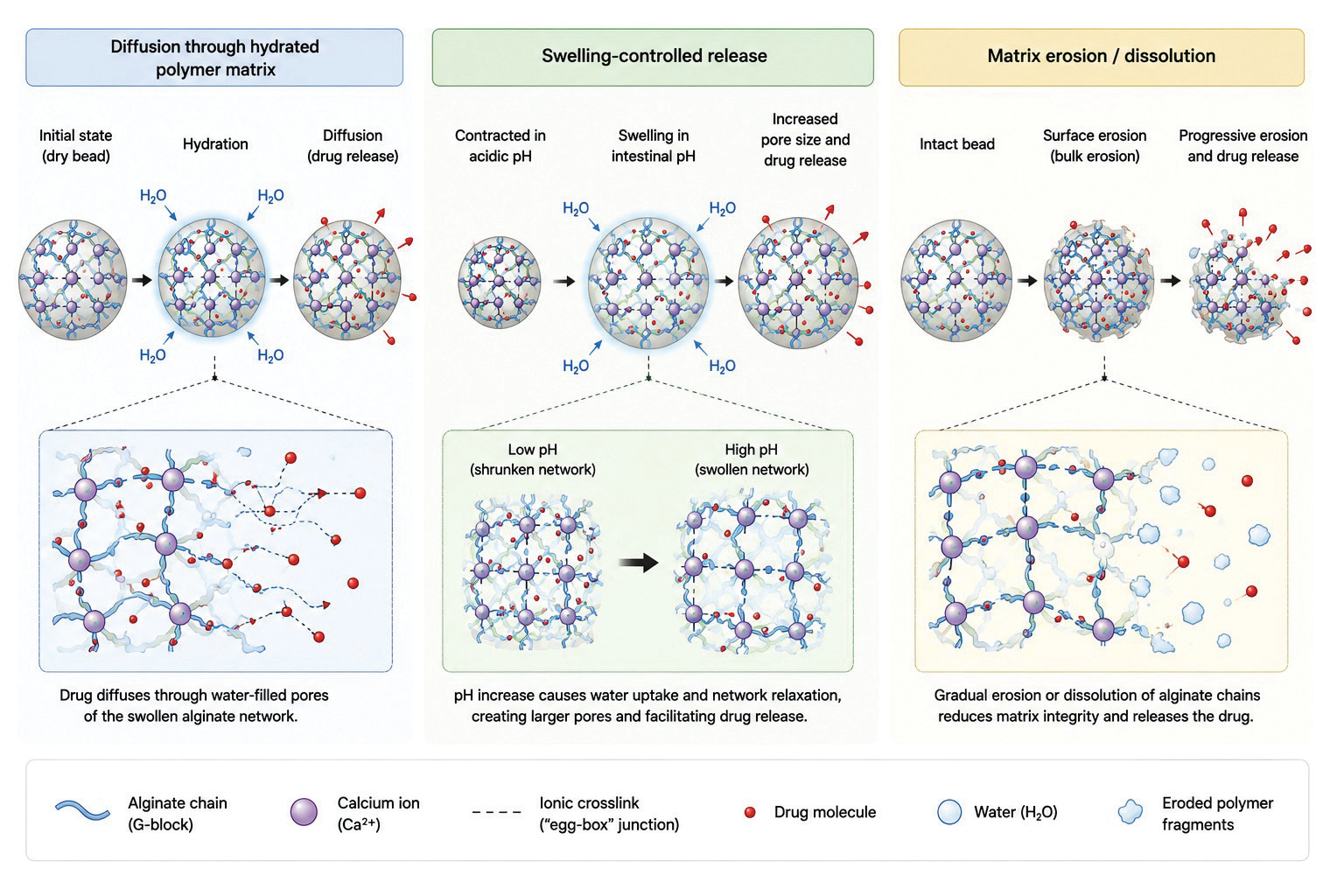
Figure 3: Representative drug release mechanisms from calcium alginate beads, including diffusion, swelling-controlled release, and matrix erosion.
Matrix erosion and gradual dissociation of ionic crosslinks can further influence release kinetics, particularly during prolonged exposure to intestinal fluids. Additional formulation strategies, including multilayer coatings and chitosan surface modification, may be employed to further regulate permeability and delay release.12 Through optimization of these formulation variables, calcium alginate beads can be engineered to provide immediate, delayed, or sustained release profiles suitable for a wide range of oral drug delivery applications.
Oral Bioavailability Enhancement
Poor oral bioavailability remains a significant challenge for many active pharmaceutical ingredients (APIs), particularly peptides, proteins, probiotics, and poorly water-soluble compounds. Limited stability in the gastrointestinal tract, enzymatic degradation, and inadequate absorption often restrict therapeutic effectiveness following oral administration. Calcium alginate beads offer a promising strategy to address several of these barriers simultaneously.1,2,4
A key advantage of alginate-based delivery systems is their ability to protect encapsulated compounds during gastric transit. Under acidic stomach conditions, the alginate matrix contracts and reduces permeability, limiting exposure of sensitive APIs to gastric acid and digestive enzymes. This protective effect helps preserve drug integrity until the formulation reaches the small intestine, where absorption primarily occurs.1,4,6
Upon exposure to intestinal pH, calcium alginate beads swell and increase pore size, facilitating controlled release of the encapsulated payload. This site-specific release can improve the amount of drug available for absorption while minimizing premature losses in the stomach (Figure 4). In addition, alginate beads may be combined with mucoadhesive polymers such as chitosan to prolong gastrointestinal residence time and enhance contact with the intestinal epithelium.2,4,7,12
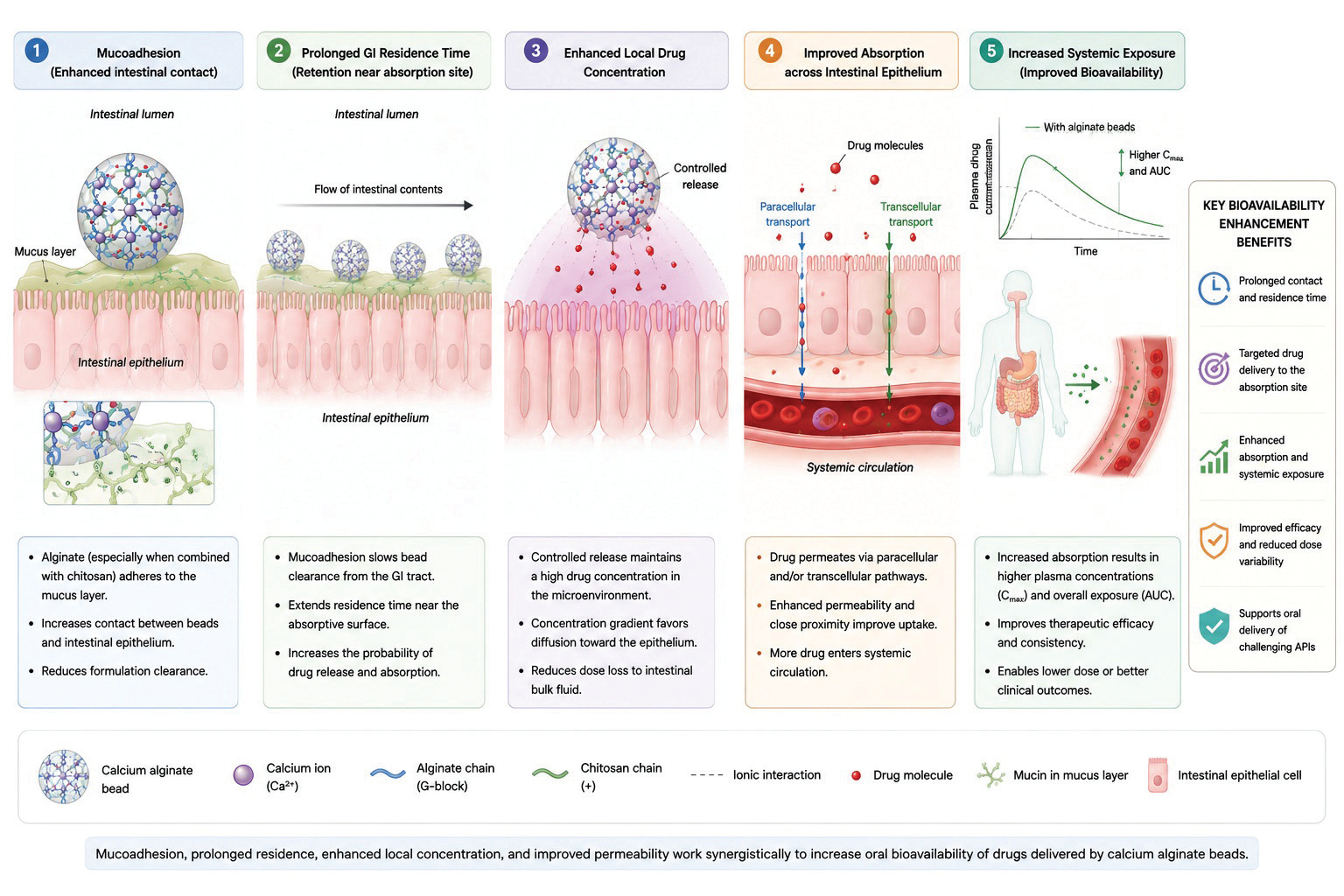
Figure 4: Mechanisms by which calcium alginate beads enhance oral bioavailability, including gastric protection, targeted intestinal release, mucoadhesion, and improved absorption.
Although alginate beads do not directly overcome all permeability limitations associated with biologics, they provide an effective platform for protecting sensitive compounds and enabling targeted intestinal delivery. As interest in oral delivery of peptides, proteins, cannabinoids, probiotics, and other complex therapeutics continues to expand, alginate beads remain a versatile formulation approach for improving oral bioavailability and therapeutic performance.1,2,7
Industrial Case Study: Development of Calcium Alginate Spherification Technology (CAST)
Mile High Labs has developed a proprietary Calcium Alginate Spherification Technology (CAST) platform for the delivery of cannabinoids, vitamins, minerals, and other bioactive ingredients. The platform utilizes the pH-responsive properties of calcium alginate to protect encapsulated compounds during gastric transit while enabling controlled release within the small intestine. Current development efforts include dry calcium alginate pearls for capsules, beverage-compatible swollen pearls, flavored chewable pearls, and animal supplement formulations.
To evaluate release performance, Mile High Labs conducted in vitro dissolution studies using simulated gastric fluid (pH 2.0, 37°C) followed by simulated intestinal fluid (pH 7.0, 37°C) (Figure 5). Both Air-Dried Calcium Alginate Pearls (A-D CAP) and Freeze-Dried Calcium Alginate Pearls (F-D CAP) containing approximately 200mg of Cannabidiol were exposed to gastric conditions for two hours before transfer into intestinal media.
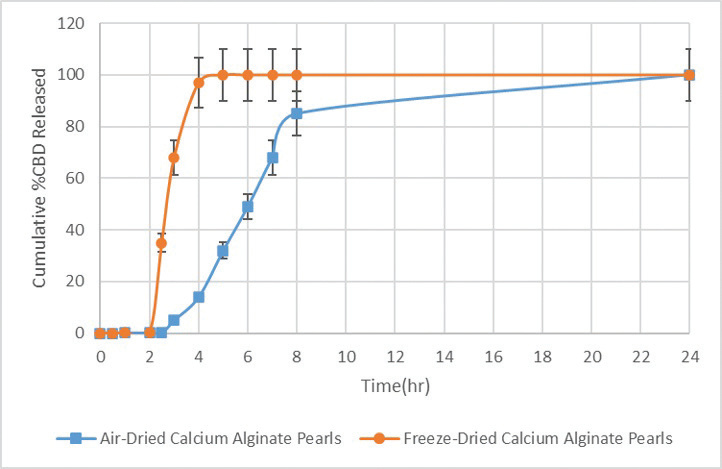
Figure 5: In vitro release profile of Cannabidiol from air-dried (blue squares) and freeze-dried (red circles) calcium alginate pearls developed using the CAST platform. The first 2 hours of the study the pearls were in a pH=2 simulated gastric liquid.
Both formulations demonstrated negligible Cannabidiol release during gastric exposure, with cumulative release remaining below approximately 0.2% after two hours. This finding is consistent with the contraction of the calcium alginate network under acidic conditions, which reduces pore size and restricts diffusion of the encapsulated payload. Following transfer into intestinal media, distinct release profiles were observed. Freeze-dried pearls exhibited rapid swelling and complete Cannabidiol release within approximately two hours, producing an immediate-release profile. In contrast, air-dried pearls released Cannabidiol gradually over approximately twenty-four hours, demonstrating a sustained-release profile. Figure 6 represents appearance of swollen, freeze-dried, and air-dried calcium alginate pearls.
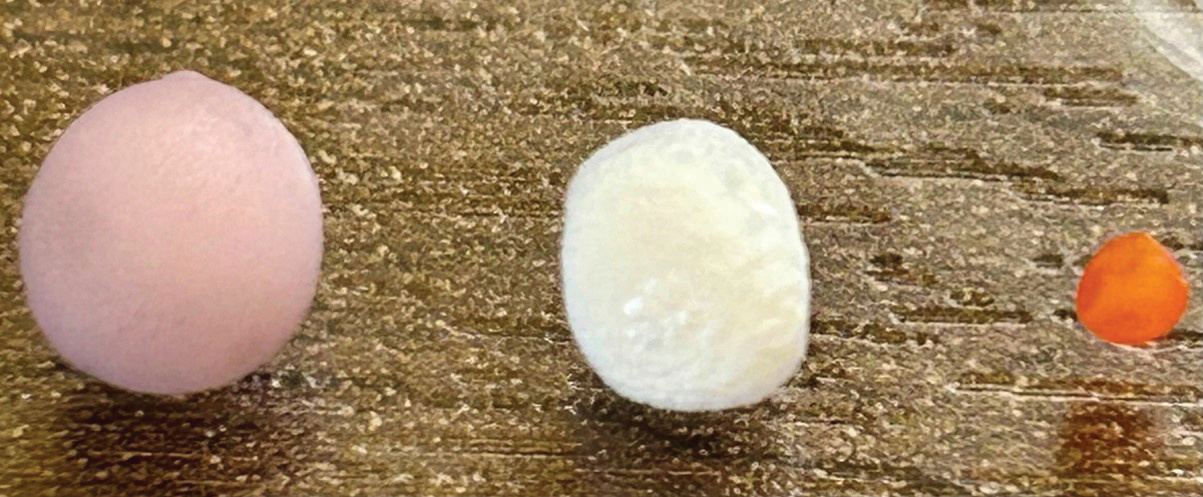
Figure 6: Swallen CAP (purple), Freeze-Dried CAP (white), Air-Dried CAP (orange)
These results demonstrate that drying methodology alone can significantly influence release kinetics by altering internal pore structure and matrix density. The CAST platform therefore provides a flexible approach for developing immediate-release or sustained-release oral delivery systems using a common calcium alginate formulation platform.
References
- Lee KY, Mooney DJ. Alginate: Properties and Biomedical Applications. Progress in Polymer Science. 2012;37(1):106–126.
- Abka-khajouei R, et al. Structures, Properties and Applications of Alginates. Marine Drugs. 2022;20(6):364.
- Khajouei RA, et al. Extraction and Characterization of an Alginate from the Iranian Brown Seaweed Nizimuddinia zanardini. International Journal of Biological Macromolecules. 2018;118;1073–1081.
- Ching SH, Bansal N, Bhandari B. Alginate Gel Particles—A Review of Production Techniques and Physical Properties. Critical Reviews in Food Science and Nutrition. 2017;57(6):1133–1152.
- Corstens MN, et al. Emulsion-Alginate Beads Designed to Control In Vitro Intestinal Lipolysis: Towards Appetite Control. Journal of Functional Foods. 2017;34:319–328.
- Kósa D, et al. Oral Bioavailability Enhancement of Melanin Concentrating Hormone: Development and In Vitro Pharmaceutical Assessment of Novel Delivery Systems. Pharmaceutics. 2022;14(1):9.
- Banerjee A, Lee J, Mitragotri S. Intestinal Mucoadhesive Devices for Oral Delivery of Insulin. Bioengineering & Translational Medicine. 2016;1:338–346.
- Park CG, Huh BK, Kim SN, et al. Nanostructured Mucoadhesive Microparticles to Enhance Oral Drug Bioavailability. Journal of Industrial and Engineering Chemistry. 2017;54:262–269.
- Haider S. Hydrogels. In: Hydrogels. IntechOpen; 2018.
- Lee KY, Mooney DJ. Alginate: Properties and Biomedical Applications. Progress in Polymer Science. 2012;37(1):106–126.
- Shalapy AAA, Zhao S, Zhang C, et al. Adsorption of Deoxynivalenol (DON) from Corn Steep Liquor (CSL) by the Microsphere Adsorbent SA/CMC Loaded with Calcium. Toxins. 2020;12:208.
- Coppi G, Iannuccelli V, Leo E, et al. Chitosan-Alginate Microparticles as a Protein Carrier. Drug Development and Industrial Pharmacy. 2001;27:393–400
- Patel N, Patel J, Shah S, et al. Development and Evaluation of a Calcium Alginate-Based Oral Ceftriaxone Sodium Formulation. Journal of Pharmaceutical Investigation. 2016;46:565–575.
- Ter-Antonyan V, Kikendall C, Harris C, Davis J. L-Theanine Amino Acid Thermo-Oxidative Degradation Kinetics in Acidic Formulations for Shelf-Life Prediction Using the Arrhenius Equation. J Traditional Medicine & Applications. 2025;4(2):1-7.
BIOGRAPHIES

Vardan Ter-Antonyan, MS, LSSMBB, is the R&D Manager at Mile High Labs and has over 20 years of experience in pharmaceutical and dietary supplement R&D focusing on drug product lifecycle from concept to commercialization. His drug product formulation expertise ranges from solids to liquids and semi-solids particularly focusing on nano-emulsions, liposomes, SNEDDS, and other types of bioavailability enhancement technologies.

Casey Kikendall is an engineer at Mile High Labs who has 10 years of experience in drug substance R&D and engineering. His work is focused on natural compound extraction, isolation, purification, and crystallization.

John Davis, MS, is the Chief Operations Officer at Mile High Labs. He leads operational strategy and execution overseeing manufacturing, quality, supply chain, logistics, R&D/Innovation, and engineering on a global scale, with a foundation built at General Mills and nearly 20 years in food and beverage manufacturing.
Total Page Views: 280