

Issue:October 2026
DRUG DELIVERY - Powder to Patient: Advancing Reconstitutable Injectables Through Integrated Aseptic Powder Filling & Next-Generation Dual Chamber Delivery
Key Points
- Advances in spray drying, precision powder filling, and dual-chamber delivery systems are converging to give drug developers a more flexible and potentially scalable way to turn challenging dry-powder formulations into practical injectable products.
- Spray drying can produce engineered powders quickly while allowing developers to control characteristics such as particle size, density, moisture, flowability, and dissolution.
- using an integrated platform from feasibility through commercialization can give developers more formulation flexibility, earlier identification of technical problems, and a clearer path to scalable manufacturing and patient delivery.
By: Laxman Halleppanavar and David Phasey
Introduction
As drug delivery evolves, developers have an opportunity to reconsider how complex and sensitive therapies are formulated, manufactured, packaged and administered. Novel modalities, more sophisticated delivery devices and advances in pharmaceutical processing are converging to make product concepts possible that were once considered too difficult to commercialize. These advances in technology are enabling new pathways to patients for promising therapies where formulation and drug-delivery challenges might otherwise have prevented commercialization. Powder-liquid dual-chamber systems sit at the center of this opportunity because they can combine the stability advantages of dry storage with the convenience of reconstitution and delivery at the point of use.
Dual-chamber systems have long been associated with lyophilized products. Today, progress in particle engineering, aseptic powder handling and precision fill-finish is broadening the possibilities for products in which a preformed powder and a sterile diluent are stored separately in one delivery system. This evolution matters not only for manufacturing efficiency, but also for the patient experience. A well-integrated system can reduce preparation steps, limit handling and create a more intuitive route from stored product to delivered dose.
The central development question is therefore no longer limited to whether a powder can be placed into a syringe. The challenge is to establish a connected pathway in which formulation properties, powder-generation technology, filling accuracy, contamination control, device functionality and user needs are considered together. In this discussion we present the work from a Design of Experiments (DoE) analysis that explores the acceptable design space and identifies ranges of drug characteristics that are addressable via powder filling into advanced dual chamber systems.
This article provides focused perspective on connecting formulation, particle engineering, aseptic manufacturing, device design and patient use within one scalable development pathway, as well as data from a Design of Experiments study which demonstrates the capability of filling a series of powders with a representative number of key characteristics using 3P equipment into Credence Dual Chamber Syringes.
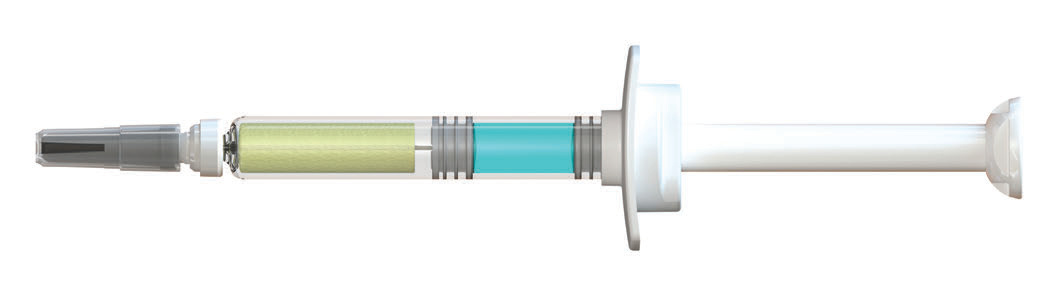
Figure 1: Credence Dual Chamber Powder and Liquid Reconstitution Syringe
Spray Drying as an Alternative to Traditional Lyophilization
Many injectable therapies cannot remain sufficiently stable as liquids throughout their intended shelf life. Peptides, proteins and other biologics may be vulnerable to hydrolysis, oxidation, aggregation, deamidation and other degradation pathways in solution. Converting the formulation to a dry state can reduce molecular mobility and help protect product quality, provided that the drying process and resulting powder are appropriately designed for the molecule.
Lyophilization has traditionally been the conventional approach. It is effective, but it also introduces long cycles, high energy use, specialized equipment and complex scale-up requirements. The freezing step can itself stress sensitive products through ice formation, freeze concentration, pH shifts and interfacial effects. Formulation strategies can mitigate these risks, but the final container must still function as a lyophilization vessel, requiring consideration of heat transfer, freezing behavior, sublimation pathways and stopper configuration.
Spray drying and other particle-generation technologies offer a different route. The therapeutic is converted into a dry powder before it is filled into its final container. As a result, the primary package and delivery system can be optimized around storage, reconstitution and injection rather than also having to perform as a freeze-drying vessel. When that powder is combined with a separately stored sterile diluent in a dual-chamber syringe, the product can retain dry-state stability during storage while enabling reconstitution immediately before administration.
Spray Drying as a Formulation & Manufacturing Tool
The potential of powder-liquid dual-chamber systems becomes particularly compelling when considered alongside recent advances in spray drying. Unlike lyophilization, which depends on freezing followed by sublimation and secondary drying (a very long process), spray drying converts a liquid feed into particles within minutes through atomization and solvent evaporation. This is a much quicker continuous batch process. Powder handling and aseptic filling are still required downstream, but the rapid drying step can support efficient and scalable manufacturing strategies. It can also provide an alternative for products that are sensitive to freeze-thaw stresses or programs facing constraints in lyophilization capacity.
Its broader value lies in particle engineering. Process parameters can influence particle size, density, morphology, porosity, surface area, residual moisture and dissolution behavior. For an injectable product, these attributes affect more than the appearance of the powder: they can influence flow through a filling system, dose repeatability, storage stability, wetting and reconstitution time. Properly engineered particles may dissolve rapidly and may preserve the characteristics required for reliable filling and administration.
This is why powder generation, filling and device selection should not be treated as independent decisions. A highly stable formulation that flows poorly may be difficult to dose. A powder that fills accurately may still reconstitute too slowly for the intended use case. A device may transfer diluent reliably but require chamber dimensions that affect the available powder volume. The development space is interconnected, and DoE provides a practical framework for understanding those relationships.
The Credence Dual Chamber Syringe (DCS) Platform as an Enabler
Advanced powder formulations create value only when an appropriate delivery system exists that can store the powder separate from the diluent, while still enabling patients and users to safely and effectively reconstitute the drug and administer it. In a typical powder-liquid configuration, the dry formulation is stored in the distal, or front, chamber nearest the needle, while sterile diluent is stored in the proximal, or rear, chamber nearest the plunger rod. Device activation transfers the diluent into the powder chamber, where the components are mixed before injection.
The Credence Dual Chamber Syringe (DCS) Platform (Figure 1) with the proprietary needle assembly enables reconstitution or sequential delivery using any industry-standard prefilled-syringe formats without needing an external bypass. The platform combines chamber separation with intuitive operation, passive integrated needle safety and end-of-dose cues. In this way, the complexity of reconstitution can be addressed within the drug-device system while supporting a straightforward, safe and user-friendly administration experience for the user. Use of existing prefilled syringe barrels allows a range of chamber volumes and configurations that can provide flexibility while API concentration, powder loading, powder-to-liquid ratio and delivered volume are still being optimized. Figure 2 provides some suggestions for the relationship between barrel size and injected volume.
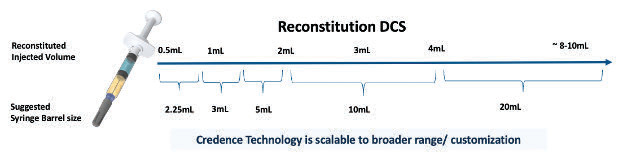
Figure 2: Credence DCS Reconstitution Syringe — Suggested Relationship between Barrel size and Injected Volume
This platform approach can create continuity from feasibility studies and DoE through clinical development and commercialization. Rather than selecting one device for early experiments and transferring later to a materially different device for scale-up, teams can generate learning on the actual device platform. That continuity may reduce avoidable redesign and help formulation, manufacturing, device and human-factors work make progress in parallel.
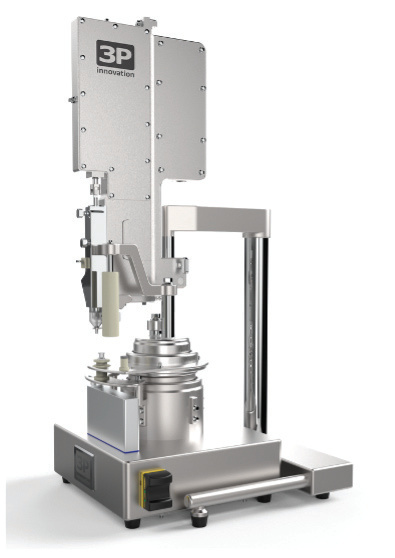
Figure 3: Powder Filling & Stoppering Equipment
Addressing the Manufacturing Challenge
Manufacturing has historically been a perceived barrier to powder-liquid dual-chamber products. Powders behave differently from liquids and can present poor flowability, low bulk density, hygroscopicity, electrostatic charging or sensitivity to compaction. Some emerging therapies are also highly potent, making dose accuracy critical even when only small quantities of material are available. These attributes complicate transfer, dispensing and clean placement into the narrow front chamber of a syringe.
Precision gravimetric systems such as 3P innovation’s Fill2Weight technology illustrate how filling equipment can respond to these challenges. Real-time weighing provides feedback during dosing and can support control across powders with different physical characteristics. Ionization can reduce electrostatic effects, while controlled nozzle positioning can place material closer to the base of the chamber and help limit powder deposition near the first stopper. Gentle handling is particularly important when the powder’s engineered structure contributes to its performance.
A flexible filling platform (Figure 3) also allows developers to explore multiple fill weights, chamber sizes and powder-to-liquid ratios before the final product profile is fixed. This is a practical necessity: device and process development cannot always wait for the formulation to be completely finalized. Early integration allows teams to identify incompatibilities sooner and make trade-offs using experimental evidence rather than assumptions.
A DoE Focused on Accuracy & Clean Filling
To explore the operating space, Credence MedSystems and 3P Innovation conducted a filling DoE using powders with differing physical properties and three target dose weights spanning a range relevant to parenteral applications. The study first dispensed powder into vials to evaluate repeatability under controlled conditions. A second set of runs placed powder into Credence Dual Chamber 5mL Syringes to observe behavior and collect data within the device geometry and around the needle assembly.
The selected materials are seen in Table 1, with target relative standard deviation (RSD) on the fill weights of <5% to enable comparison of the data sets. The powders represent a range commonly seen for parenteral applications and provide meaningful variation in particle size distribution, bulk density and relative flowability. Recipes, target weights and tolerances were configured through the system’s human-machine interface.
The work was performed on a Fill2Weight gravimetric powder filler at 3P innovation’s facility in Warwick, UK (Figure 4). The study configuration accommodated both vials and syringes. A weigh cell beneath the filling position supported in-process weight control and check weighing; a bulk feeding arrangement supplied powder directly to the filler; and an ionizer lowered into the syringe was used to manage static before filling.
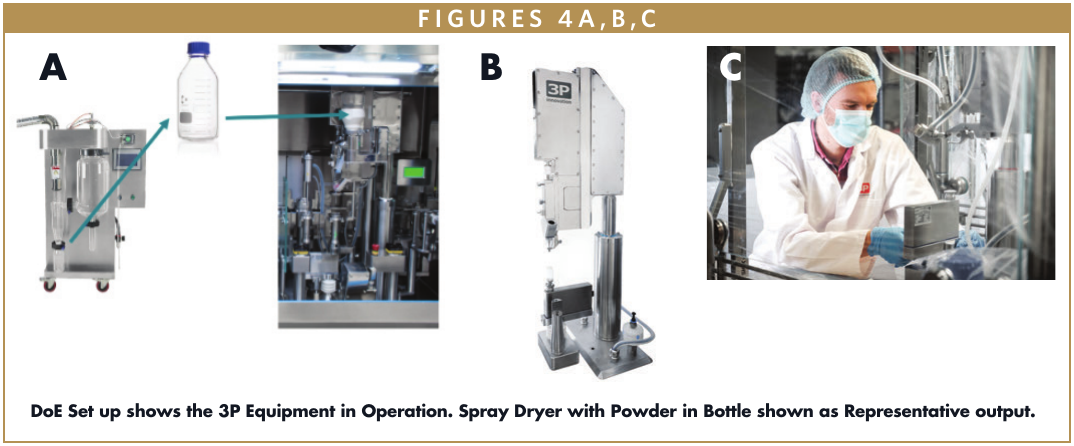
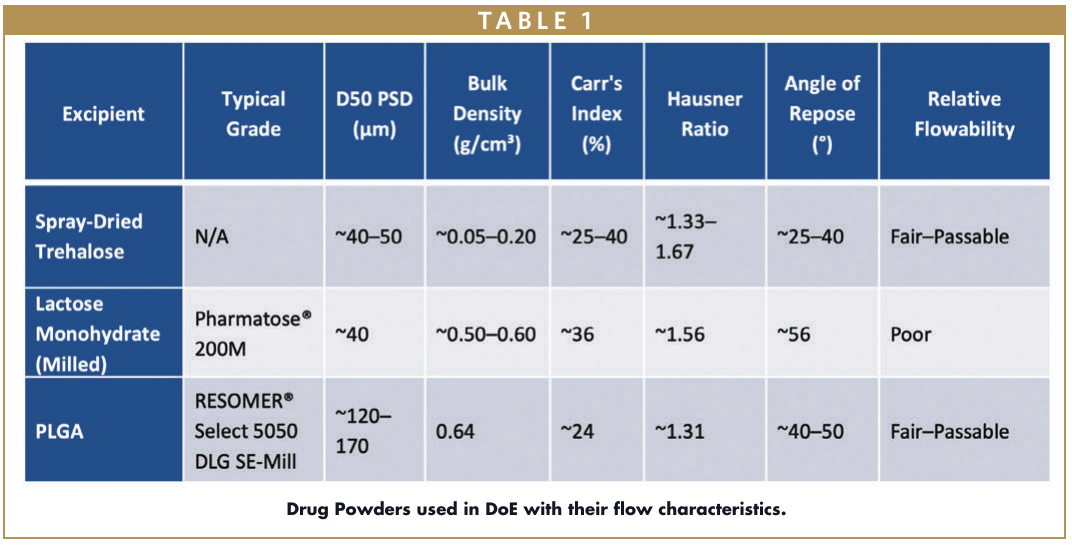
The vial phase established the fill weight consistency before proceeding to Dual Chamber Syringe filling to evaluate cleanliness of the fill. For the 5mL syringe phase, the nozzle was lowered into the barrel to deliver powder close to the base of the front chamber. Ionization helped minimize particle accumulation near the first stopper. For example, Figure 5 illustrates the effect of ionizing on the Credence syringe. In the left image, where ionizing was NOT used, powder particles can be seen above the harpoon in the stoppering region. In the right image, particle powders are eliminated with ionizing.
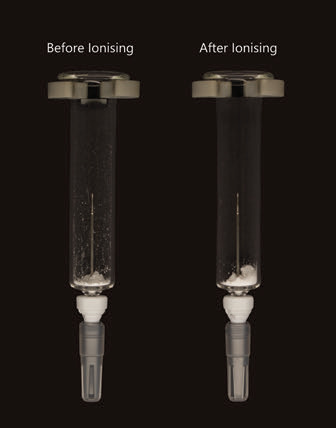
Figure 5: The effect of ionization to achieve desired results
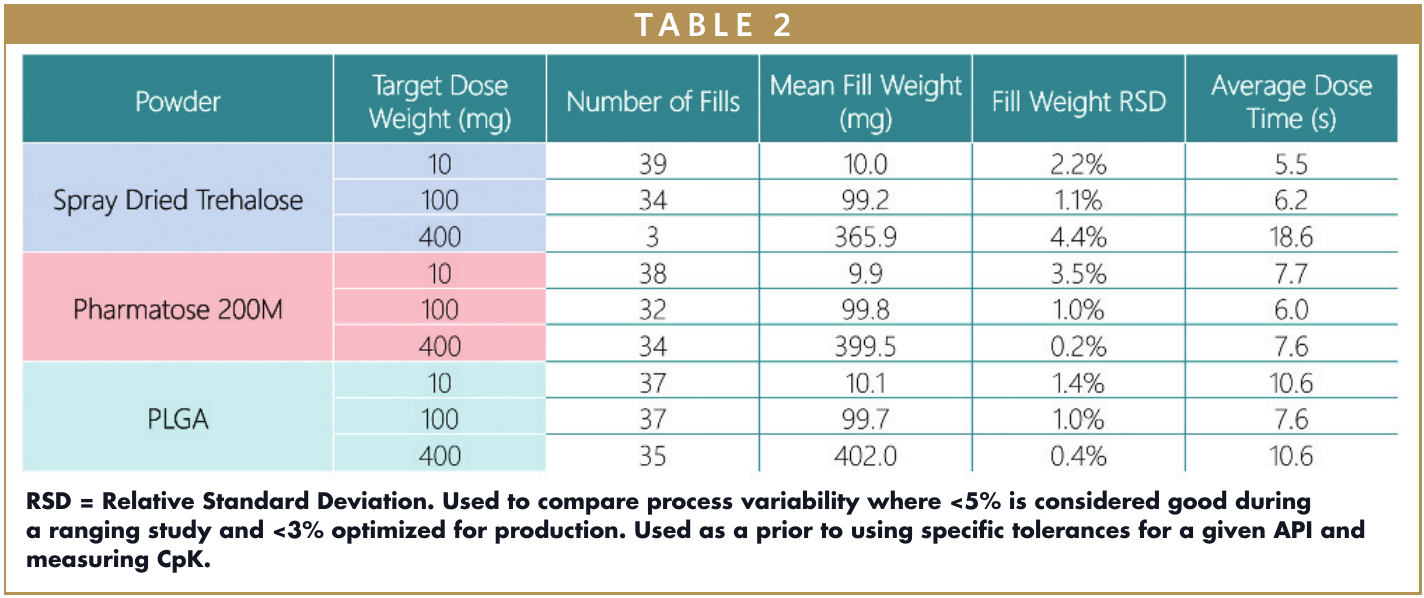
Table 2 demonstrates that across the evaluated combinations, and for the range of fill weights and powders, all could be dosed into the Credence Dual Chamber syringe with the required accuracy. Trehalose presented the greatest powder-feeding challenge because its low density and correspondingly high bulk volume, combined with its tendency to accumulate static charge. As a result, the 400 mg target fill exceeded the available capacity of the powder chamber in the 5mL dual-chamber syringe. Therefore, low density or highly charged powders may require additional filling process development to optimize, or a larger front chamber may be required, either by increasing the barrel size or a higher front stopper position. Both options are available due to the flexibility of Credence’s Dual Chamber Platform.
Multiple approaches to ionizing can be used to ionize (Figure 6) – the inside of the barrel before filling, the outside of the barrel during filling, the bulk powder and the stoppering region after filling; these can be leveraged for a specific drug product. The 3P innovation filling system also allows the filling nozzle to descend into the syringe for a range of fill heights for each powder and weight and ensuring potent powders are filled at the base of syringe.
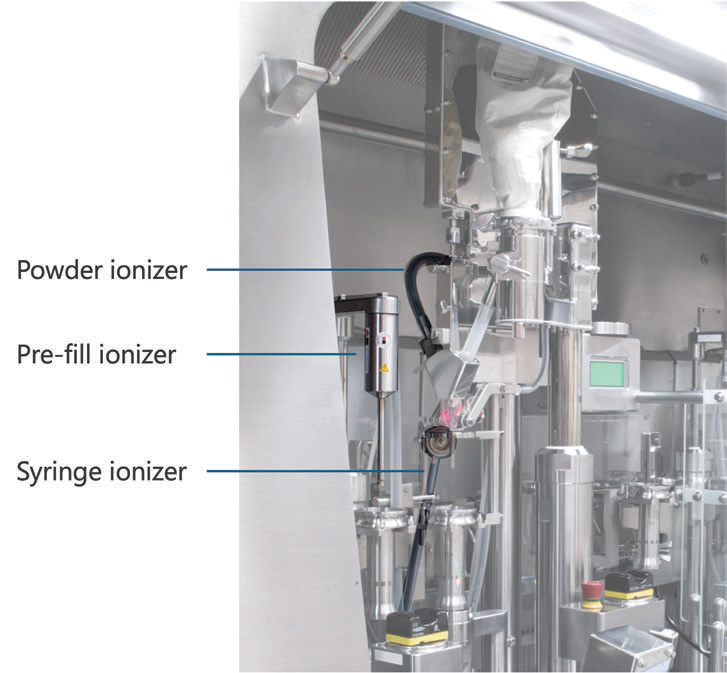
Figure 6: 3P Powder Filling Equipment with multiple Ionizers
For the PLGA and Pharmatose 200M, the dose was a much lower volume, below the harpoon and the stopper region in Credence DCS syringes was seen to be free from powder particles. In the upcoming studies further chemical analysis will be conducted to verify that the diluent chamber is indeed free from any cross contamination.
A structured feasibility study can connect powder properties, target dose, electrostatic control, nozzle position and device geometry – turning separate technical questions into one integrated development strategy. This DoE demonstrates that a series of powders with a representative set of key characteristics can in fact be filled using 3P equipment into Credence Dual Chamber Syringes with no cross contamination between the filled chambers.
Building an Integrated Supply Chain
Device innovation alone cannot enable wider adoption. Developers need confidence that the full supply chain can manage the product reliably. Formulation scientists must control flowability, hygroscopicity, dissolution and stability. Manufacturing teams must address aseptic powder transfer, fill-weight accuracy, contamination control and validation. Device engineers must confirm activation, fluid transfer, reconstitution and dose delivery. Human-factors specialists must evaluate preparation steps, mixing behavior, user comprehension and foreseeable use error.
Bringing these disciplines together early expands freedom to formulate. Instead of adapting the molecule to a fixed manufacturing constraint, teams can evaluate drug loading, particle architecture, diluent volume and reconstitution performance within a realistic device and process context. The goal is not an unlimited design space, but a better-characterized one – supported by equipment, data, delivery systems and a credible route to scale.
From Feasibility to GMP Aseptic Fill-Finish
A successful laboratory DoE is an important milestone, but it is not a complete manufacturing process. Commercial readiness requires the integration of upstream powder preparation, aseptic handling, filling and stoppering, inspection, device assembly and downstream packaging. The advantage of the proposed pathway is that its core operations are recognizable to manufacturers experienced with prefilled syringes, even though powder handling introduces additional controls.
Ready-to-use syringes can be introduced to the filling line, filled with powder and vacuum-stoppered or vent tube stoppered to close the first chamber. Under continuous Grade A conditions, the diluent can then be added and the second stopper placed using established vent-tube stoppering principles, helping avoid displacement of the first stopper. The process can be implemented at different levels of automation and throughput, supporting development and clinical supply before transitioning to higher-volume commercial equipment.
Credence has invested in 3P semi-automated equipment intended to support GMP aseptic fill-finish through a specialized CDMO collaborator with aseptic spray-drying capabilities. This creates a bridge between experimental learning and a broader manufacturing ecosystem, with GMP For Human Use (FHU) production on the short-term horizon. As product demand increases, further automation can be introduced to expand throughput while retaining the core powder-filling and dual-chamber process principles established during development.
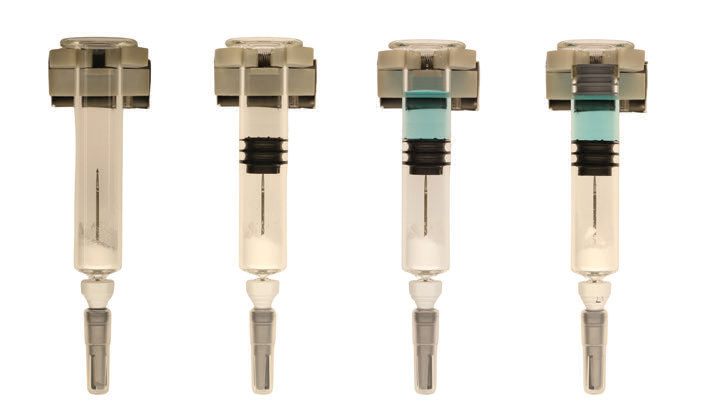
Figure 7: Shown L-R: Powder fill, 1st stopper (place above the harpoon for illustration), liquid fill, 2nd stopper. Syringe was a Credence Dual Chamber Syringe in 5mL barrel with 1.5mL of diluent for demonstration purposes
The Horizon: A Practical Powder-to-Patient Pathway
As powder engineering technologies are maturing and dual-chamber systems become more sophisticated and readily available, drug developers can now shift their mindset. Instead of questioning whether these approaches are feasible, they can begin evaluating how they can best be deployed.
For drug developers, there is great value in the increased formulation freedom. Rather than adapting a molecule to fit manufacturing constraints, teams can explore different drug loadings, particle designs, reconstitution characteristics and stability strategies with greater confidence that suitable device and manufacturing solutions are available. The greatest value, though, comes from the new pathway provided to developers to get critical therapies with challenging formulations to the patients that need them.
This approach reflects the Credence philosophy of Innovation Without Change® – advancing drug delivery while working with proven primary components and established pharmaceutical manufacturing processes wherever possible.
The convergence of spray-drying science, 3P innovation’s precision gravimetric filling in aseptic environment and a scalable dual-chamber platform is changing the starting point. Developers can now utilize the broader ecosystem to explore the field with representative tools and a clearer line of sight to commercialization – moving not only from ‘powder to syringe’, but also from ‘powder to patient.’

Laxman Halleppanavar is the Head of Portfolio Strategy and Management at Credence MedSystems, leading the Injectable Device Portfolio Strategy and Management team for internal and external customer endeavors. Laxman has over 25 years of experience in Medical Device and Pharmaceutical industries. Before joining Credence MedSystems, Laxman was the Director & PharmSci Technical Team Lead at Pfizer. He came to Pfizer upon its acquisition of Hospira where Laxman was responsible for combination product development from early-stage development, manufacturing scale up, leading to commercial launch of various drug products. Prior to Pfizer, Laxman was the Program Manager at GE Healthcare Monitoring Solutions leading development, manufacturing, service engineering and commercialization of multiple medical devices/patient monitoring platforms namely, patient worn devices telemetry devices, blood pressure cuffs, bedside monitoring devices, networked central & remote monitoring workstations.

David Phasey is the Innovation Director at 3P innovation Ltd. supporting clients in the development of manufacturing processes and automation equipment for new medical devices and pharma/biotech projects. Over his 15 years with the business, David has delivered machines for the assembly of auto-injectors, testing of inhalers, filling of aseptic powders for reconstitution and many others. David is an active member of the ISPE Midlands region committee in the UK and training officer on the PDA chapter UK board, supporting industry events, technical publications and presentations.
Total Page Views: 17