


Issue:September 2026
DELIVERY SYSTEM DEVELOPMENT - Supporting Earlier Delivery-System Decisions in Injectable Drug Development Through a USP <382>-Aligned System-Level Approach
Key Points
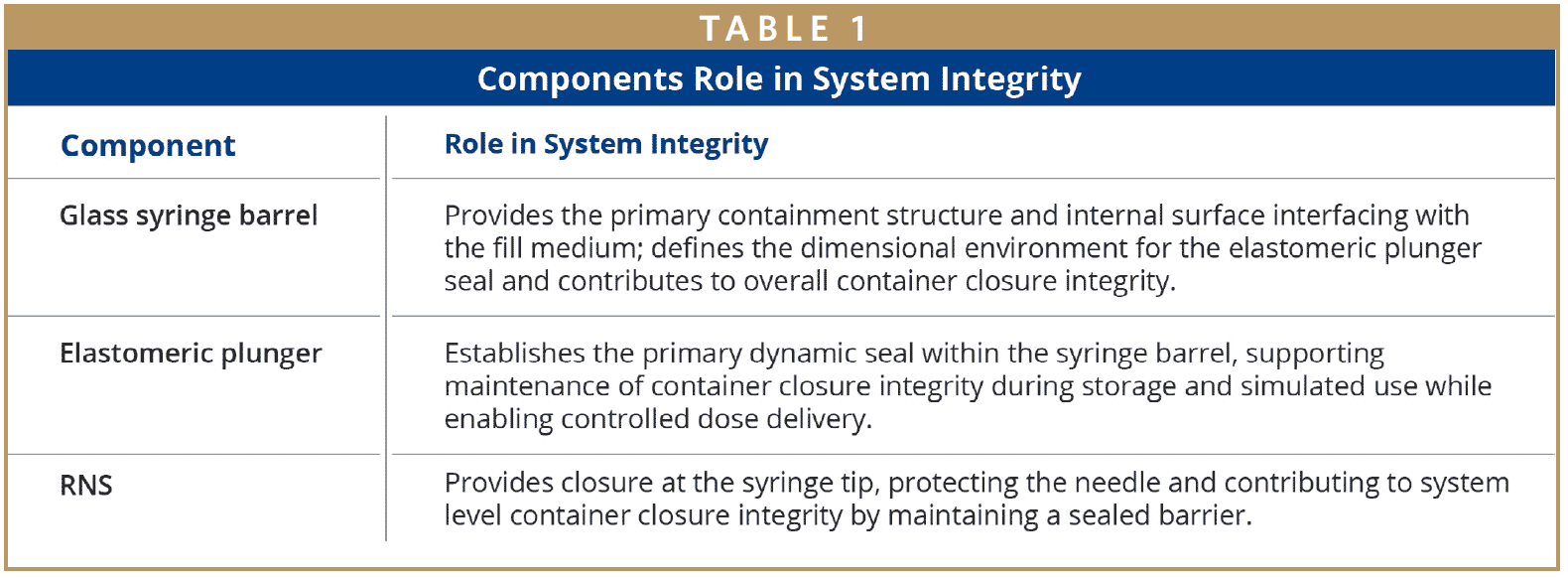
- Prefilled syringes should be evaluated as an integrated system, not as individual components.
- System-level testing can identify performance advantages that matter for usability and complex biologics.
- Evaluating PFS components together under USP <382> provides pharmaceutical developers with practical early-stage data to reduce technical risk, improve device usability, and select container-closure configurations
By: Sara Masucci and Crystal Salvans
INTRODUCTION
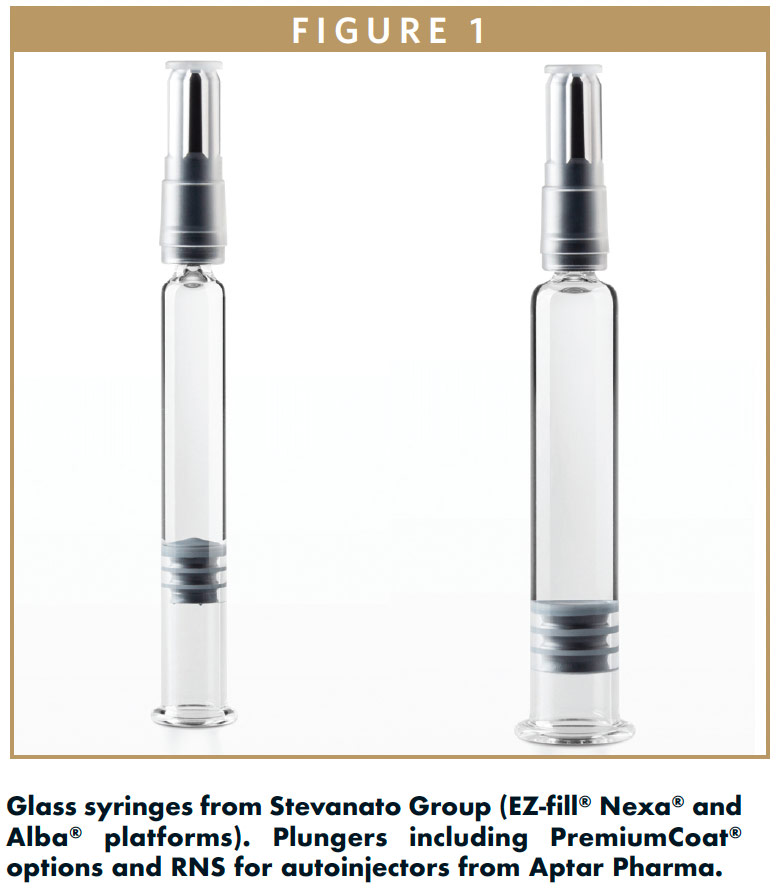 Injectable therapy development is increasingly shaped by the need for patient-centric delivery, reduced administration burden, and flexibility across clinical and commercial programs. As biologics and sensitive vaccine formulations become more complex, the packaging and delivery system play an important role in protecting product quality throughout the product lifecycle. In prefilled syringe (PFS) applications, the glass syringe, elastomeric plunger, rigid needle shield (RNS), and related interfaces must work together as an integrated container closure system.
This system-level perspective is aligned with USP <382>, Elastomeric Component Functional Suitability in Parenteral Product Packaging/Delivery Systems, which addresses functional suitability of parenteral packaging and delivery systems that include elastomeric components. Rather than focusing only on individual component properties, USP <382> supports evaluation of how component interfaces contribute to functional performance, container closure integrity, and intended use.
To support this evolving approach, the Aptar Pharma Injectables division and Stevanato Group developed a pre-evaluated package aligned with USP <382> for PFS configurations, combining glass syringes, elastomeric plungers and RNS as an assembled container closure system.
The objective is to assess how the assembled system performs and provide data that pharmaceutical developers can use during early-stage feasibility, component screening, and risk assessment activities.
A dedicated technical Data Package supports the summarized findings presented in this article and is available at both Aptar Pharma and Stevanato Group. This article provides a high-level overview of the pre-evaluated package, with the Data Package serving as the detailed evidence base for technical review.
A COLLABORATIVE SYSTEM-LEVEL APPROACH BUILT AROUND PRACTICAL DEVELOPMENT QUESTIONS
System Overview
The evaluated container closure system represents a PFS primary container configuration consisting of commercially available syringe, plunger, and RNS platforms. These components are assembled to evaluate functional performance and container closure integrity independently of any specific drug product.
To evaluate component interactions without making claims for a specific drug product or commercial lifecycle conditions, testing was performed with a placebo medium. This enabled the assessment of critical functional interactions and integrity-related behavior at system level, as a first step in the evaluation of USP <382> principles. The studies compiled in the data package characterize the baseline functional and integrity performance of the evaluated configurations and provide early-phase, non-product-specific information to support development and de-risking activities.
The evaluated configurations are based on commercially available syringe, plunger, and RNS platforms already used in pharmaceutical development and commercial applications, including both 1mL long and 2.25mL syringe formats, allowing assessment across multiple system configurations within a common pre-verified package approach.
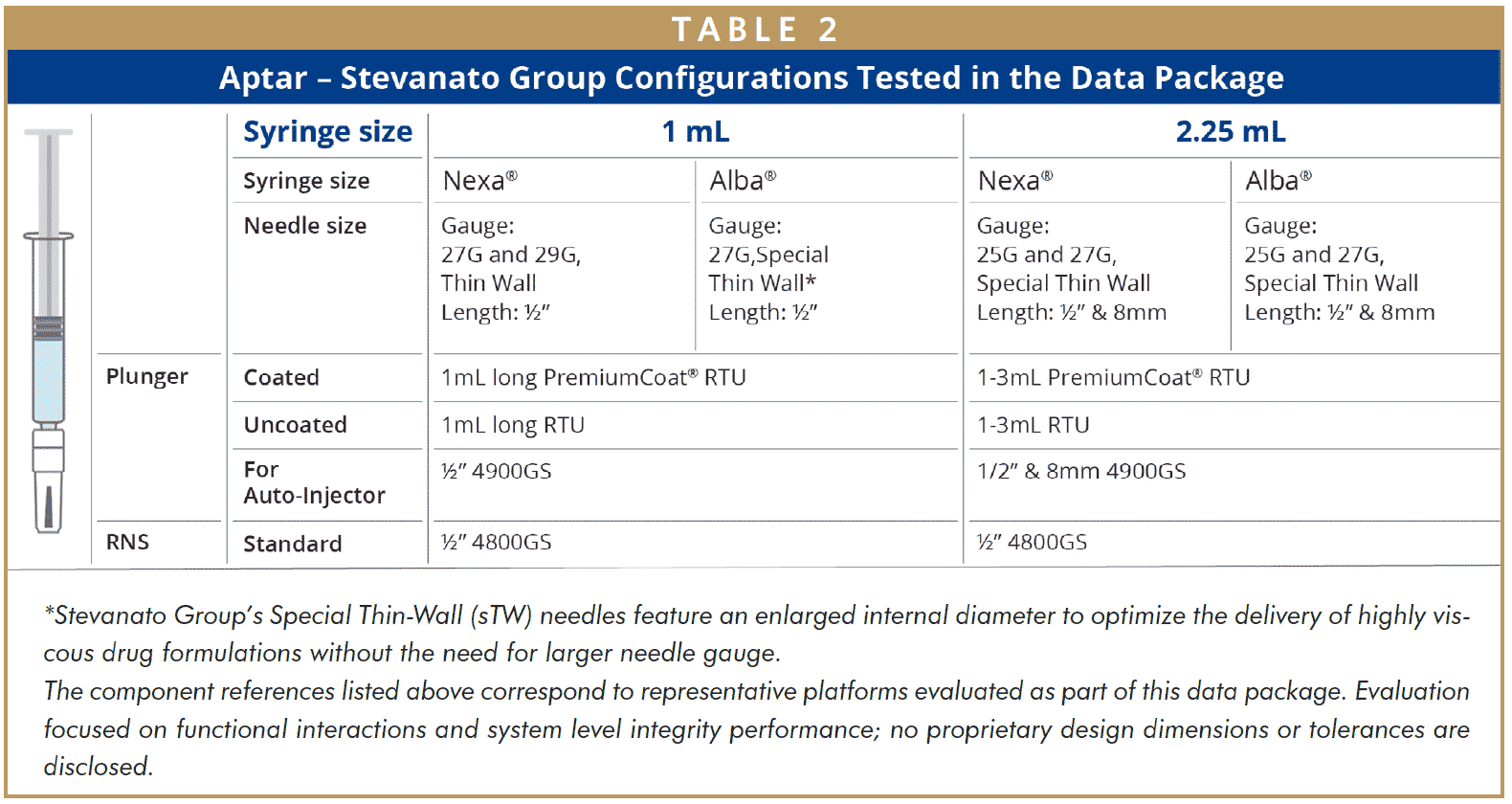
Because the final drug product, formulation, and processing conditions were not known at this stage, Water for Injection (WFI) was used as a neutral medium. The testing program includes:
- Pull-Off Force (PoF)
- Break-loose and Extrusion Force (BLEF)
- Container Closure Integrity Testing (CCIT)
- Seal Integrity
1. PULL-OFF FORCE (PoF)
In staked-needle PFS, the RNS must protect the needle, support closure of the syringe tip during storage, transportation and handling, and remain removable in a controlled, predictable way. This is especially important for self-administration or autoinjector integration. Pull-off force is a critical functional attribute for PFS systems equipped with RNS, reflecting the force required to remove the RNS prior to injection. If the pull-off force is too high, the user or device may struggle to remove the RNS; if too low, retention during handling, transport, or device assembly may be affected.
Test method
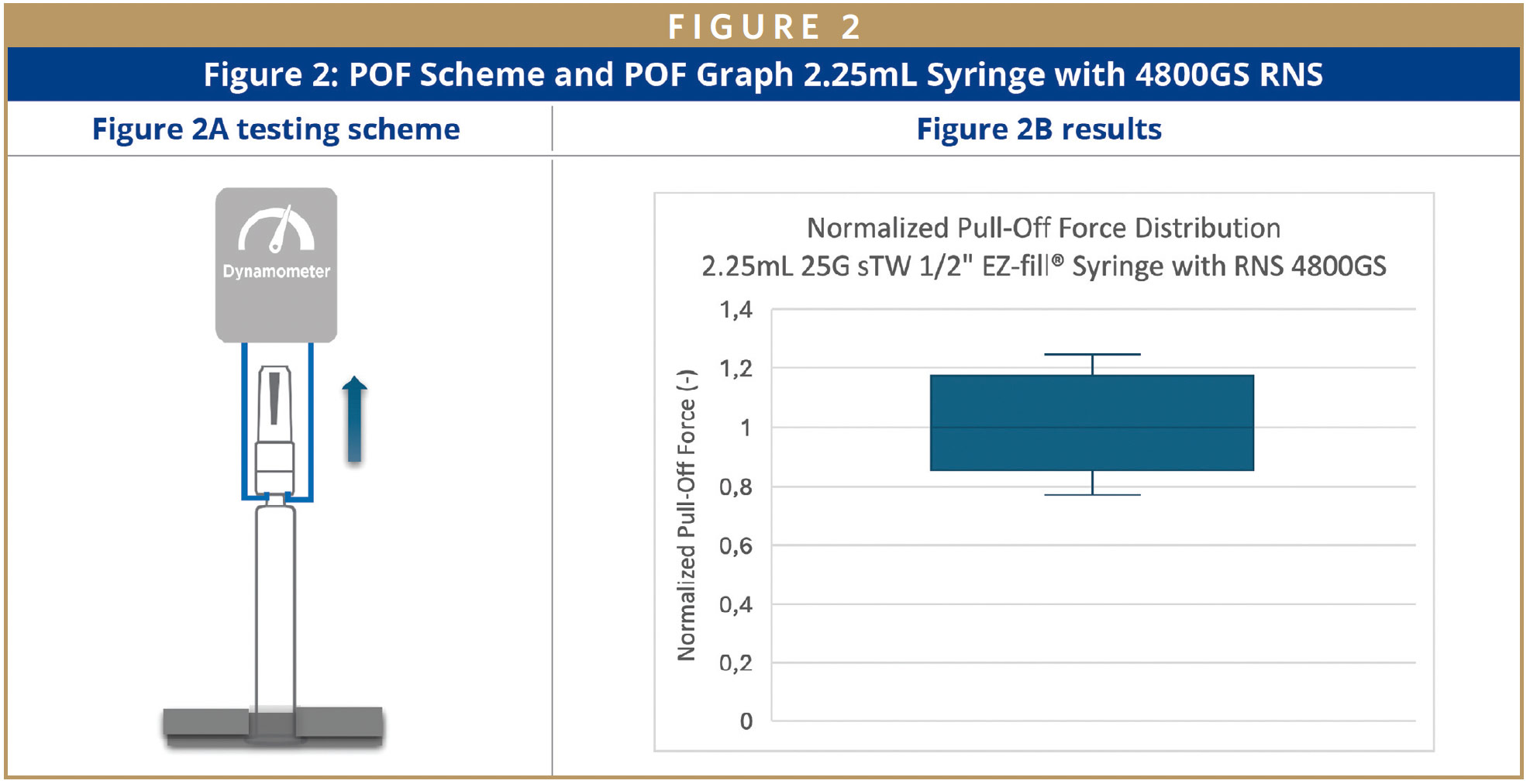
Aptar Pharma RNS were assembled onto Stevanato Group PFS and sterilized using Ethylene oxide (EtO). The pull-off force was measured using a dynamometer in which the syringe was fixed while an axial displacement was applied to the RNS at a constant speed of 500 mm/min. Force is continuously recorded, and the maximum value is reported as the PoF. The method is performed according to an internally validated procedure aligned with USP <382>, Section 7 (Tip Cap and Needle Shield Functional Suitability Tests), Procedure A.
Results
Within the evaluated configurations, pull-off force testing demonstrated consistent performance across EZ-fill® syringe platforms with Aptar Pharma RNS 4800GS. The representative results from the broader testing program illustrate observed system-level performance trends. Pull-off force values are reported as normalized values relative to the median of the tested population (median = 1.0).
The results indicate robust compatibility between the tested Stevanato Group syringe platforms and Aptar Pharma RNS configurations, supporting reliable shield retention without introducing excessive removal forces. Because pull-off force reflects the combined interaction between syringe, needle and RNS, system-level testing provides a more realistic indication of functionality under intended-use conditions than isolated component testing separately.
2. BREAK-LOOSE AND EXTRUSION FORCE (BLEF)
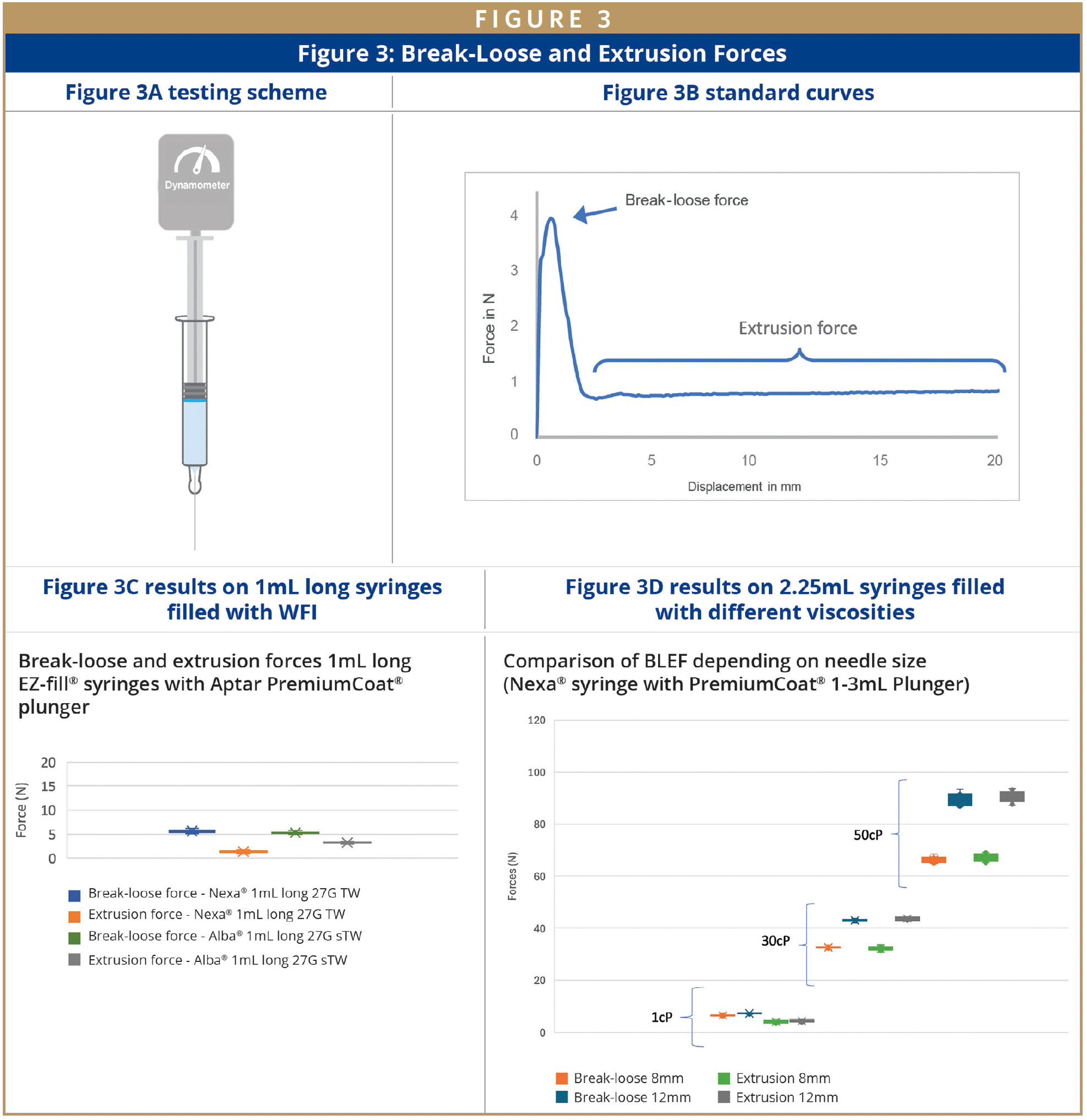
In PFS, the plunger must close the barrel and protect the drug during storage, transportation and handling, while delivered the dose upon activation. Break-loose force represents the force required to initiate plunger movement, while extrusion force reflects the force needed to maintain plunger travel during injection. Together, these parameters influence both functionality of the delivery system and user experience.
Aptar Pharma offers a broad range of plungers designed for compatibility with syringes and devices using ultrapure formulations. For sensitive drug products, PremiumCoat® plungers combine a fluoropolymer (ETFE) film coating applied at the drug-contact surface with Aptar Pharma’s 6720GS formulation and manufacturing process.
For this evaluation, Stevanato Group’s Nexa® and Alba® PFS platforms were considered. In combination with these syringe platforms, Aptar Pharma’s PremiumCoat® plunger was selected as a representative solution for biologic applications due to its ETFE barrier film, designed to help minimize direct drug-elastomer interactions and support reduced extractables profiles.
Representative examples from the broader testing program included coated and uncoated plunger variants to assess break-loose and extrusion force performance across system configurations.
Test method
Break-loose and extrusion force performance was evaluated on fully assembled syringes filled with Water for Injection (WFI) as medium. Syringes were mounted in a dynamometer while controlled axial displacement was applied to the plunger at 240 mm/min, as defined by the USP <382>. Force was continuously monitored throughout medium extrusion to determine break-loose force, average extrusion force, and potential stick-slip behavior.
The method was executed using an internally validated procedure aligned with USP <382>, Section 6.1, Plunger break-loose and extrusion force performance.
Results
Representative break-loose and extrusion force performance results were generated for selected 1mL long configurations with Aptar Pharma PremiumCoat® plungers.
When used with Alba® and Nexa® syringes, the PremiumCoat® 1mL plunger demonstrated improved consistency and reduced variability. These results are supported by the interaction between the syringe barrel surface and the proprietary three-rib plunger design, which maintains continuous contact with the barrel and supports smooth force profiles during injection.
As injectable therapies become more concentrated and potentially more viscous, actuation performance becomes increasingly important. Break-loose and extrusion force performance can significantly affect usability. The speed was set at 300mm/min. The 8mm needle demonstrated a mechanical advantage over the 12.7mm configuration across the viscosities tested. At 50 cP, injection forces were reduced by approximately 25%, supporting the suitability of the 8mm needle for higher-viscosity drug products. While these measurements represent mechanical performance characteristics rather than clinical outcomes, they illustrate how system-level evaluation can identify configurations that support functionality and usability objectives in combination products.
3. CONTAINER CLOSURE INTEGRITY TESTING (CCIT)
Container closure integrity remains a critical requirement for injectable packaging systems. A delivery system must maintain sterility and protect product quality throughout its lifecycle while remaining capable of delivering the drug safely and effectively. As regulatory expectations and industry focus continue to shift toward deterministic container closure integrity testing (CCIT), helium leak detection has emerged as a powerful analytical tool for investigating packaging system integrity.
Test method
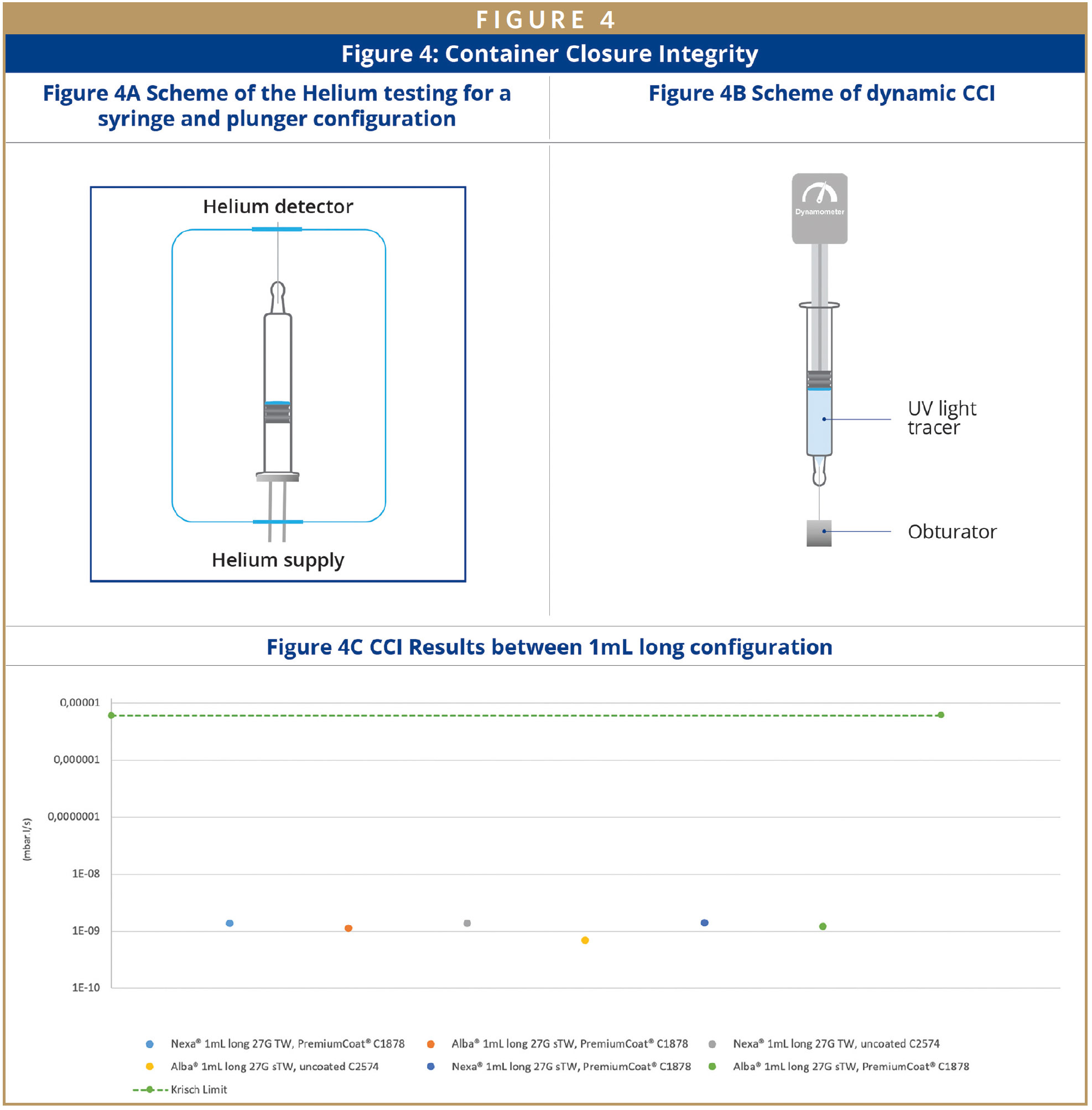
Container closure integrity was evaluated using helium mass spectrometry operated in accumulation mode. Test samples were exposed to helium tracer gas, and helium transmission through potential leak pathways was measured using a calibrated high-sensitivity detector. This approach enabled assessment of sealing performance at glass-elastomeric component interfaces or assembled-system levels, providing quantitative information on integrity performance across the evaluated configurations. Testing followed deterministic tracer-gas leak detection principles described in USP <382> Packaging/Delivery System Integrity Tests, with reference to USP <1207>, and was performed using an internally validated procedure.
Results
The results remained substantially below the reference limit reported within the study framework from the USP <382> guideline, supporting the assessment of container closure integrity performance for the evaluated configurations.
4. SEAL INTEGRITY
As injectable drug products become more complex and delivery systems evolve toward patient-centric designs, maintaining functional seal integrity during administration is increasingly important. USP <382> introduced dedicated functionality tests to evaluate the ability of elastomeric closure components to maintain sealing performance under conditions representative of use. Through the collaboration between Aptar Pharma and Stevanato Group, coated and uncoated plunger technologies were assessed within Nexa® and Alba® prefillable syringe platforms under challenging functional conditions. This system-level evaluation supports a broader understanding of dynamic seal integrity across representative component combinations.
Test method
Syringe systems were filled with a fluorescent tracer solution and challenged under controlled pressure conditions designed to simulate stresses experienced during drug administration. An axial force corresponding to an internal pressure of 300 kPa was applied and maintained for 30 seconds at a crosshead speed of 20 mm/min. Following testing, samples were inspected under UV light for evidence of tracer migration across critical sealing interfaces. The absence of fluorescence outside the sealing area was considered evidence of maintained seal integrity.
The method was executed using an internally validated procedure aligned with USP <382>, Section 6.2 (Plunger Seal Integrity), Procedure A.
Results
For all evaluated configurations, including coated and non-coated plunger variants, no infiltration events were observed. All tested samples achieved 0/10 infiltration results.
Although plunger seal integrity testing is a pass/fail assessment, the results provide additional confidence in sealing performance and consistency across the evaluated component combinations.
CONCLUSION
USP <382> represents an important evolution in the evaluation of injectable packaging and delivery systems. By focusing on functional suitability at system level, it reflects combination product development realities, where performance depends on the interaction of multiple integrated components.
The collaborative study conducted by Stevanato Group and Aptar Pharma illustrates how USP <382> principles can be applied in practice. Across the evaluations, the combined prefillable syringe, plunger, and RNS generated consistent system-level performance data across the evaluated configurations.
The findings highlight the value of generating system-level data early in development to support more informed packaging decisions as formulation complexity continues to increase.
For further details, contact Aptar Pharma or Stevanato Group to access the data package summarizing the system evaluation findings.

Sara Masucci is Product Manager at Stevanato Group, focusing on syringe container solutions. Sara holds a Master’s degree in Business Administration from the University of Padua. She has over three years of experience in the pharmaceutical packaging and medical device industry, having built expertise in both Product Development and Product Management.

Crystal Salvans is the Product Line Manager for PFS at Aptar Pharma’s Injectables division. She earned an Engineering degree in Packaging from ESIREIMS and began her career as a Packaging Engineer at Johnson & Johnson (now Kenvue), before joining Aptar Pharma Injectables in 2015. With expertise in injectables packaging, she has held roles in Technical Support, Project Management, and Sterile Gamma Irradiation, managing a Technical Product Management team. Currently, she leads a team managing the project and product life cycles for plungers, RNS, and tip cap components.
Total Page Views: 14