


Issue:May 2026
TKIS - Next-Generation BCR-ABL TKIs for CML: The Allosteric Era
INTRODUCTION
The history of chronic myeloid leukemia (CML) is often viewed as a triumph of biomedical science and a successful model for precision medicine. Throughout the twentieth century, CML was a progressive and often fatal cancer. However, the introduction of a first-generation active-site tyrosine kinase inhibitor (TKI) in 2001 dramatically improved outcomes, transforming CML from a life-threatening cancer to a chronic yet manageable disease for many patients. Since then, annual mortality in CML has decreased from 10%-20% to only 1-2% in the U.S.1
Click to enlarge file
Click to enlarge file
Click to enlarge file
There are approximately 10,000 new cases of CML diagnosed in the U.S. annually, accounting for 15% of all new leukemia cases,1 and with more patients living longer, the CML population is expected to triple by 2040. Most patients require lifelong therapy, and as a result, they often develop drug intolerance or resistance, prompting frequent switching of therapies. Despite the impact of the first active-site TKI and approval of multiple improved second- and third-generation active-site TKIs over the last two decades, there remains a significant unmet need for new innovative options that offer better efficacy, safety, and tolerability. This article explores the current CML treatment landscape, ongoing clinical challenges, and the potential of next-generation TKIs currently in development, offering hope for the growing CML community.
BEYOND SURVIVAL: UNMET NEEDS IN CML
CML originates within the bone marrow, where a genetic abnormality called the Philadelphia chromosome (a translocation between chromosomes 9 and 22) creates a new fusion protein called BCR-ABL that is not found in healthy cells.2 The BCR-ABL fusion protein is a constantly active, or signaling, kinase that transforms cells within the bone marrow into cancer cells, which produce abnormal, immature white blood cells. The continuous signaling from the BCR-ABL kinase causes these cells in the bone marrow to multiply rapidly and become malignant. CML is often diagnosed with lab results showing very high white blood cell count with many abnormal immature cells circulating in the blood stream along with associated symptoms such as fatigue and fever.3
In 2001, the U.S. FDA approved imatinib, a first-generation TKI that binds to and blocks the active site of the BCR-ABL protein, stopping the primary driver of abnormal cell proliferation and eliminating BCR-ABL positive cells from the marrow. While imatinib significantly improved clinical outcomes in CML and improved survival of patients with CML, it is not a silver bullet. Since its approval, several second- and third-generation active-site TKIs have been approved, such as dasatinib, nilotinib, bosutinib, and ponatinib. But the nearly 10,000 patients diagnosed with CML in the U.S. each year will, by and large, face challenges in achieving long-term disease control due to eventual drug resistance or intolerance. Only a small number of patients are eligible to attempt TKI discontinuation. Of those, only half remain cancer-free.4 While most of these patients respond once TKI treatment is reinitiated, they may remain trapped in the cycle of rotating TKI therapies – potentially for the remainder of their lives.
Treatment year after year can become very burdensome. While TKIs are oral pills or capsules, different drugs have different dosing requirements. Some have short half-lives and need to be taken twice daily. Others require strict fasting up to three hours before and one hour after daily treatment. While these may seem like minor inconveniences, they occur daily and can negatively impact quality of life by serving as a constant reminder of one’s status as a person living with cancer.
For many CML patients, active-site TKIs are also not well tolerated and often present the risk of serious side effects such as pleural effusion and life-threatening cardiovascular issues.5 For example, in global Phase 2 and Phase 3 trials assessing long-term use of dasatinib (a second-line TKI), more than half of the treated patients developed pleural effusion, with a median onset of approximately 20 months.6 Additionally, long term follow up in patients treated in Phase 2 and 3 randomized trials of nilotinib and ponatinib showed increased risk of cardiovascular adverse events over time.7
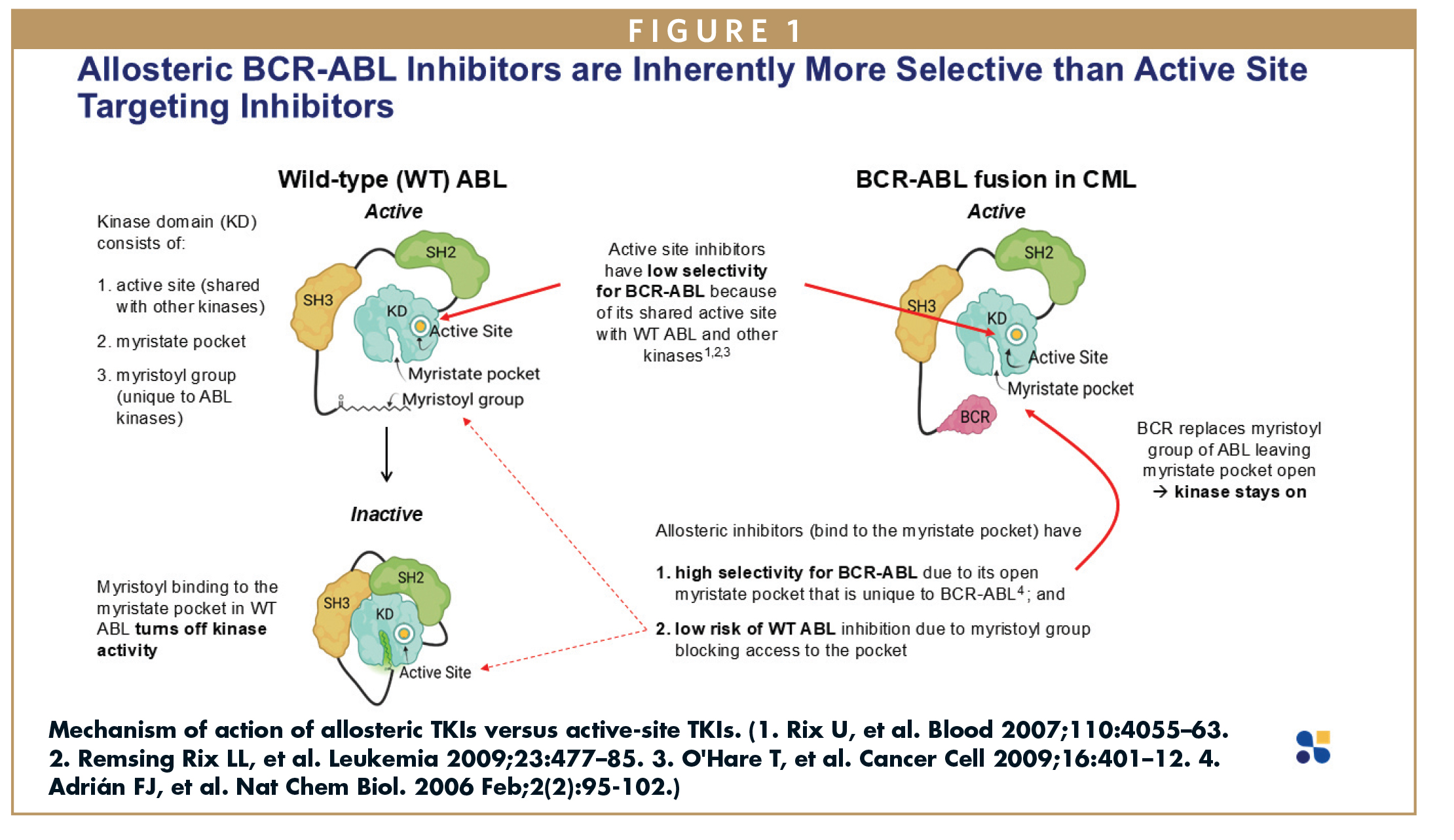
These side effects can often be attributed to off-target effects due to a lack of specificity. TKIs are intended to be as specific as possible for their particular kinase target, but there is significant homology across the hundreds of kinases within the human genome. To prevent downstream signaling activity, many TKIs (such as imatinib) are designed to target the ATP-binding pocket, which is very similar in structure across many different kinases, making cross-reactivity with unintended kinase targets possible. In fact, many of the common side effects experienced with ATP-site binding TKIs can be linked directly to this design feature. For example, imatinib is known to inhibit KIT and PDGFR (other key kinases), and suppression of the pathways regulated by these kinases has been shown to lead to fluid retention and gastrointestinal complications.8 Similarly, inhibition of VEGF, SRC, and other kinases by active-site TKIs such as ponatinib and nilotinib are thought to contribute to the risk of cardiovascular adverse events.7
Finally, drug resistance remains a recurring issue for many CML patients. Chronic use of first- or second-generation active-site TKIs often leads to the development of treatment-resistant disease or long-term toxicity and intolerance. With current treatments, approximately 40% of patients are forced to switch therapy within five years due to waning treatment response or side effects.
The most prevalent resistance mutation impacting TKI efficacy is T315I.9 Often referred to as a gatekeeper mutation, T315I directly changes the structure of the ATP-binding site of the BCR-ABL kinase protein, rendering TKIs that target this pocket ineffective. T315I accounts for 15-20% of acquired mutations in CML.10 There is an unmet need for a new generation of TKIs that can effectively combat this mutation by regulating BCR-ABL outside of its ATP-binding site and that offer superior therapeutic potential compared to active-site TKIs.
THE NEXT GENERATION OF TKIS
Second- and third-generation therapies were developed to address the resistance and tolerance issues seen with first-generation active-site TKIs. They are designed to more strongly bind to the active site of the BCR-ABL kinase protein or directly overcome some commonly acquired mutations in CML patients treated with imatinib (with T315I being an important exception). But given that most CML patients cycle through approved first-, second-, and even third-generation active-site TKIs over the course of their lifespans, there is a high demand for more and better therapeutic options.
The next generation of TKIs took a different approach known as allosteric inhibition. Instead of binding to the ATP-binding pocket allosteric inhibitors target a different region of BCR-ABL kinase called the myristoyl pocket to change the protein’s shape and inhibit its activity. Specifically, allosteric inhibitors appear to lock BCR-ABL in an inactive state, preventing it from accessing ATP and other proteins for activation and effectively shutting it off.11
The first allosteric BCR-ABL TKI for CML (asciminib) was approved by the U.S. FDA in 2021 and demonstrated significant improvements in efficacy, safety, and tolerability compared to all active-site TKIs.12 Asciminib has had rapid uptake in the market since gaining approval, rapidly becoming the preferred therapy of choice in CML, including achieving 22% of “new to brand” share in frontline and 52% share in second-line treatment. Although asciminib is better than any other approved CML therapy today, as a first-in-class allosteric, there remains meaningful opportunities for improvement across efficacy, safety, and convenience.
TERN-701: AN EMERGING, POTENTIAL BEST-IN-DISEASE ALLOSTERIC TKI
TERN-701, an investigational therapy, is part of the next generation of allosteric TKIs currently in clinical development that offers promise to patients for new and improved treatment options. It is a proprietary, oral, potent, small molecule allosteric BCR-ABL TKI that has been granted Breakthrough Therapy and Orphan Drug Designations by the U.S. FDA for the treatment of CML. TERN-701 is designed to target the myristoyl pocket (unique to ABL kinases) and inactivate the BCR-ABL kinase. In preclinical cell proliferation assays TERN-701 demonstrated numerically greater potency than asciminib against several BCR-ABL variants,13 including active-site and myristoyl site mutations, supporting its differentiated and potential best-in-disease profile. These preclinical data were presented at the 30th European Hematology Association Congress (EHA) in June 2025.
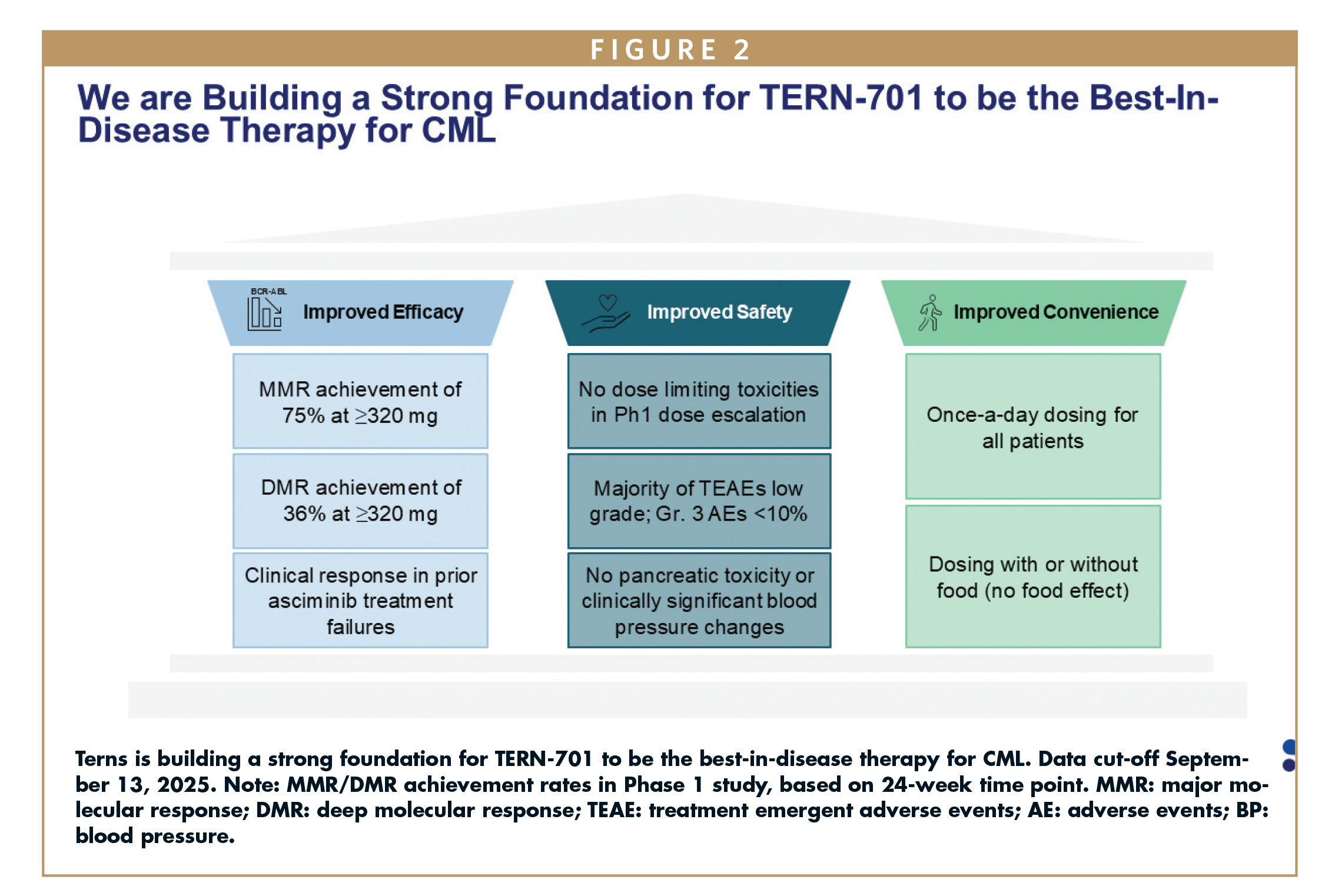
TERN-701 is currently being assessed in the Phase 1 CARDINAL trial, a global, multicenter, open-label, two-part study to evaluate the safety, pharmacokinetics, and efficacy of TERN-701 in patients with relapsed or refractory Philadelphia chromosome-positive (Ph+), chronic phase CML with or without BCR-ABL resistance mutations who were previously treated with at least one prior TKI and who experienced treatment failure, suboptimal response or treatment intolerance. Early interim data released in December 202414 from the TERN-701 dose-escalation portion of the CARDINAL trial showed compelling molecular responses in heavily pre-treated CML patients with high baseline BCR-ABL levels, including those previously treated with asciminib, starting at the lowest doses. Early results showed an encouraging safety profile, with no dose-limiting toxicities, adverse event-related treatment discontinuations, or dose reductions at any dose. Data also showed that TERN-701 can be dosed with or without food, a key differentiator within the allosteric BCR-ABL class, with no clinically significant difference in exposure when patients fasted or had a high-fat meal.
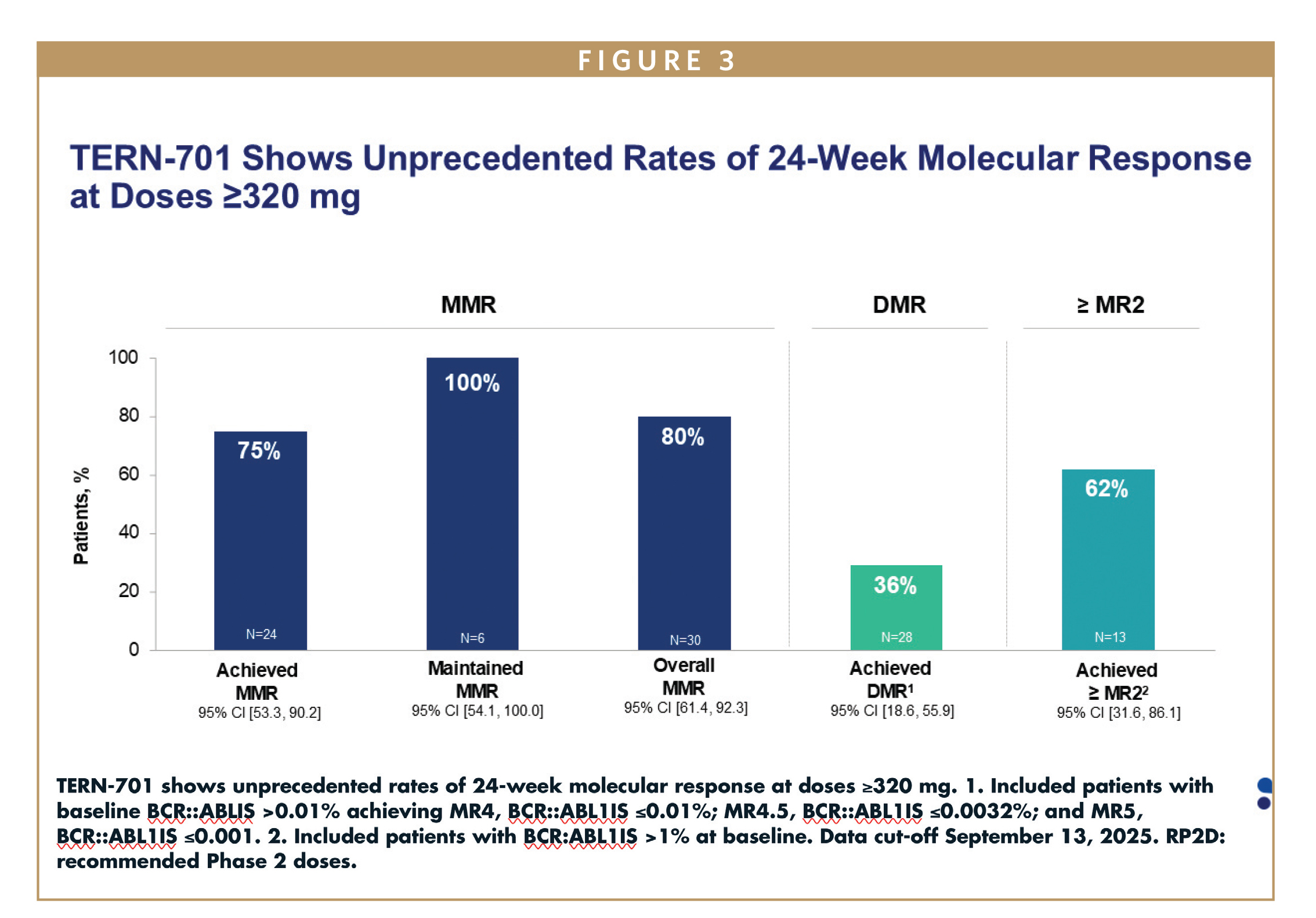
Clinicians assess efficacy in CML by measuring molecular response, which is the change in levels of BCR-ABL (measured as percentage) while on treatment. Decreases in BCR-ABL indicate that a drug is active. The proportion of patients whose BCR-ABL levels decrease to below 0.1% (called major molecular response or MMR) is a meaningful assessment of the overall efficacy of a TKI and is a regulatory approval endpoint in clinical trials.
Last year, in December 2025, unprecedented data from the Phase 1 CARDINAL trial were presented at the 67th American Society of Hematology (ASH) Annual Meeting.15 TERN-701 demonstrated a MMR achievement rate of 75% by 24 weeks at the recommended Phase 2 dose range of >320mg once daily, trending 2-3X higher than asciminib in Phase 1 and Phase 3 studies evaluating a 3L+ patient population. The overall (cumulative) MMR rate was 60% by 24 weeks in patients previously treated with asciminib, with 43% achieving MMR and 100% maintaining MMR. TERN-701 also led to a deep molecular response (DMR) achievement rate of 36% by 24 weeks. Results showed an encouraging safety profile, with no dose-limiting toxicities, the maximum tolerated dose was not reached, and the majority of treatment-emergent adverse events (TEAEs) were low grade with no apparent dose relationship. 87% of patients remained on treatment as of the data cut-off.
These data including MMR rates are highly encouraging. TERN-701 represents a best-in-disease therapy for CML patients with the potential to offer substantial improvement based on the faster, deeper responses compared to prior TKIs and encouraging safety and tolerability profile observed to date.
Since the positive ASH data readout, Terns announced in March 2026 a definitive agreement to be acquired by Merck,16 with the potential to accelerate efforts to advance TERN-701 to a pivotal trial and to patients in need.
INNOVATION FOR PATIENTS
As most patients may now live with CML for several decades and have a normal lifespan, advancing quality of life is a critical area of need. Next-generation allosteric TKIs such as TERN-701 are the next wave of innovation in the CML treatment landscape. Emerging potential differentiators include high target selectivity with excellent potency, high in vivo target coverage, and a wider therapeutic index compared to even asciminib, including for patients with relapsed or refractory CML. These attributes may translate into more effective and well-tolerated treatment options, helping patients maintain well-tolerated long-term disease control. As research continues to evolve, these therapies have the potential to redefine the standard of care and offer renewed hope for those living with CML.
REFERENCES
- Jabbour E, Kantarjian H. Chronic myeloid leukemia: 2025 update on diagnosis, therapy, and monitoring. Am J Hematol. Published online August 2, 2024. doi:10.1002/ajh.27443
- Soverini S, Bassan R, Lion T. Treatment and monitoring of Philadelphia chromosome-positive leukemia patients: recent advances and remaining challenges. J Hematol Oncol. 2019;12(1):39. doi:10.1186/s13045-019-0729-2
- Jabbour E, Kantarjian H. Chronic Myeloid Leukemia: A Review. JAMA. 2025;333(18):1618–1629.
- Bourne G, Bhatia R, Jamy O. Treatment-free remission in chronic myeloid leukemia. J Clin Med. 2024;13(9):2567. doi:10.3390/jcm13092567
- Masiello D, Gorospe G, Yang AS. The occurrence and management of fluid retention associated with TKI therapy in CML, with a focus on dasatinib. J Hematol Oncol. 2009;2:46. doi:10.1186/1756-8722-2-46
- Kim D, Goh HG, Kim SH, Cho BS, Kim DW. Long-term pattern of pleural effusion from chronic myeloid leukemia patients in second-line dasatinib therapy. Int J Hematol. 2011;94(4):361-371. doi:10.1007/s12185-011-0921-9
- Veltmaat L and Cortes J. Arterio-occlusive events among patients with chronic myeloid leukemia on tyrosine kinase inhibitors. Blood. 2024;143 (10): 858–865. doi:10.1182/blood.2023022403
- Abramson RG, Abramson VG, Chan E, et al. Complications of targeted drug therapies for solid malignancies: manifestations and mechanisms. AJR Am J Roentgenol. 2013;200(3):475-483. doi:10.2214/AJR.12.9049
- Mian AA, Schüll M, Zhao Z, et al. The gatekeeper mutation T315I confers resistance against small molecules by increasing or restoring the ABL-kinase activity accompanied by aberrant transphosphorylation of endogenous BCR, even in loss-of-function mutants of BCR/ABL. Leukemia. 2009;23(9):1614-1621. doi:10.1038/leu.2009.69
- Hu S, Yang X, Wu D, et al. A nomogram for predicting T315I-free survival in chronic phase chronic myeloid leukemia patients: a multicenter retrospective study. Sci Rep. 2025;15:89851. doi:10.1038/s41598-025-89851-y
- Manley PW, Barys L, and Cowan-Jacob SW. The specificity of asciminib, a potential treatment for chronic myeloid leukemia, as a myristate-pocket binding ABL inhibitor and analysis of its interactions with mutant forms of BCR-ABL1 kinase. Leuk Res. 2020;98:106458. doi: 10.1016/j.leukres.2020.106458
- Hochhaus A, Wang J, Kim DW, et al. Asciminib in newly diagnosed chronic myeloid leukemia. N Engl J Med. 2024;391(10):885-898. doi:10.1056/NEJMoa2400858
- Parsons B, Harish R, Quinn K, et al. CML-592: Characterization and Efficacy of TERN-701 in Pre-Clinical Models of Chronic Myeloid Leukemia. Clin Lymphoma Myeloma Leuk. 2025;25(Suppl 1):S569. doi:10.1016/j.clml.2025.08.019
- Terns Pharmaceuticals. Terns Pharmaceuticals announces positive early data from Phase 1 CARDINAL trial of TERN-701 for chronic myeloid leukemia. Published December 3, 2024. Accessed September 16, 2025. https://www.ternspharma.com/news/terns-pharmaceuticals-announces-positive-early-data-from-phase-1-cardinal-trial-of-tern-701-for-chronic-myeloid-leukemia
- Terns Pharmaceuticals. Terns Highlights Additional Positive Phase 1 Clinical Data Supporting TERN-701’s Best-in-Disease Potential in Relapsed/Refractory CML at the 67th ASH Annual Meeting. Published December 8, 2025. Accessed April 28, 2026. https://ir.ternspharma.com/news-releases/news-release-details/terns-highlights-additional-positive-phase-1-clinical-data
- Terns Pharmaceuticals. Merck to Acquire Terns Pharmaceuticals, Inc., Expanding Its Hematology Pipeline With TERN-701, a Novel Candidate for Chronic Myeloid Leukemia (CML). Published March 25, 2026. Accessed April 28, 2026. https://ir.ternspharma.com/news-releases/ news-release-details/merck-acquire-terns-pharmaceuticals-inc-expanding-its-hematology

Emil Kuriakose, MD, has served as Chief Medical Officer at Terns Pharmaceuticals since May 2023. He joined Terns with more than a decade of biopharmaceutical industry experience, leading clinical development strategy and execution of therapeutics across multiple indications. In his most recent role as Chief Medical Officer at Calithera Biosciences, Inc. Emil led the transition of two mid-stage clinical programs with subsequent rapid initiation of two Phase 2 studies. Previously, Emil served as Global Clinical Program Lead at Novartis Institutes for BioMedical Research (NIBR), where he was the global head of early development for MDM2 inhibitor (targeted therapy) and adenosine inhibitor programs in solid and hematologic malignancies. In this role, he was responsible for the development and execution of the clinical development for new oncology agents from the candidate selection process to clinical proof-of-concept stage and integrated development plan including design and execution of Phase 1 and 2 clinical trials of novel compounds in the oncology and immuno-oncology portfolio. Before that, he served as Medical Director at Novartis Oncology, where he led a cross-functional team in the design and execution of trials exploring novel immune-oncology and targeted therapy combinations and oversaw late-stage clinical development, strategy, and medical affairs program for farydak (HDACi), sonidegib (Hh inhibitor), and afuresertib (AKTi) in the United States. Earlier in his career, Emil served as a Hematology/Oncology Fellow at Weill Cornell Medical College and as a Research Fellow at Memorial Sloan Kettering Cancer Center.
Total Page Views: 1994