


Issue:May 2026
CAR-T CELLS - The Growing Benefits of CAR-T Cells in Cancer Research & Beyond
Key Points
- The development of ex vivo genetic engineering of patient-derived T-cells to express chimeric antigen receptors (CARs) and their subsequent re-infusion into the patient is a ground-breaking achievement and continues to evolve into ever more sophisticated “living drugs.”
INTRODUCTION
The development of ex vivo genetic engineering of patient-derived T-cells to express chimeric antigen receptors (CARs) and their subsequent re-infusion into the patient is a ground-breaking achievement and continues to evolve into ever more sophisticated “living drugs.” Successful management or even curing a growing range of severe diseases, often lacking sufficient treatment options, seems to be in reach using CAR-engineered immune cells.
MILESTONES IN AUTOLOGOUS CAR-T DEVELOPMENT
While still facing challenges, the establishment of protocols and related quality controls for cell preparation, selection, activation, transduction, expansion, harvest, and final formulation has enabled the clinical application of autologous CAR-T therapy, particularly in the realm of hematological malignancies, with remarkable efficacy in targeting CD19 in B-cell leukemias and lymphomas and BCMA in multiple myeloma. These therapies have achieved high response rates and durable remissions in patients with relapsed or refractory diseases where traditional treatments have failed. In the United States alone, the FDA has approved multiple CAR-T cell products targeting these antigens.1
First-generation CARs with only a CD3ζ signaling domain, named “T-bodies”, have evolved to second- and third-generation CARs incorporating costimulatory domains like CD28 and 4-1BB, signifying a crucial leap forward.2 The addition of these costimulatory molecules has led to greater CAR-T cell expansion, persistence, cytokine production, and antitumor activity in vivo, which underlies the remarkable success seen in B-cell malignancies. As research and investment continues in this area, science will continue to get a better understanding to maximize the benefits of CARs for a broader range of patients.
SIDE EFFECTS
While generally manageable in hematological settings, toxicities like cytokine release syndrome (CRS), immune effector cell-associated neurotoxicity syndrome (ICANS) and Immune Effector Cell-Associated Haematotoxicity (ICAHT), the latter frequently occurring and often long-lasting, remain a concern and can limit the applicability of CAR-T therapy, especially in patients with high tumor burden.3-5 Further research into mitigating these adverse effects is needed. The most recent FDA-approved CD19-directed CAR-T product leads the way in this respect as its exceptionally safe toxicity profile spares a Risk Evaluation Mitigation Strategy (REMS) program.6
A significant focus is on incorporating inducible safety switches into CAR-T cell designs which allow for the controlled elimination or inactivation of CAR-T cells in vivo upon administration of a specific drug.7 The dose-dependent sensitivity of some of these switches offers the potential to attenuate CAR-T function at lower drug concentrations to manage toxicities like excessive cytokine release while preserving the ability for remaining cells to re-expand if needed. Strategies like logic-gated CARs requiring the recognition of multiple antigens on tumor cells are being developed to minimize “on-target off-tumor” toxicities.8 Administering CAR-T cells directly to the tumor site is being explored to minimize systemic exposure and reduce the risk of widespread toxicities.
Improved Clinical Management Strategies for severe side effects also contribute to safer CAR therapies. Real-world studies have shown that early or even prophylactic use of growth factors like G-CSF for managing cytopenia due to ICAHT may be safe and beneficial without increasing the risk of severe CRS or ICANS.5 Risk scores like the CAR-HEMATOTOX score are being developed to identify patients at high risk for hematological toxicities, potentially guiding early interventions. Biomarker identification and monitoring methods are under development to better predict and manage toxic responses. The identification of key cytokines like IL-1 and IL-6 in the pathogenesis of CRS has led to the use of targeted therapies like tocilizumab (anti-IL-6 antibody) as a standard treatment.9 Furthermore, more sophisticated preclinical models that can better mimic the human physiological and immunological environment to improve the prediction of CAR-T cell-related toxicities are sought that can replicate the clinical signs of toxicity-related events to better assess CAR-T cell toxicity preclinically. Ongoing evaluation in clinical trials is crucial to further refining these strategies and ensure improved safety alongside efficacy. Research into the mechanisms of ICANS is also ongoing.
SOLID TUMORS
A major challenge is the limited efficacy of CAR-T cells against solid tumors. This is due to factors such as limited tumor trafficking and infiltration, the immunosuppressive tumor microenvironment (TME), tumor antigen heterogeneity and loss, and physical barriers like the extracellular matrix (ECM) and cancer-associated fibroblasts (CAFs). Strategies to address these include optimizing CAR constructs and CAR-T cells to overcome the TME, and targeting multiple antigens.10,11
Optimizing CAR structure includes tuning its single-chain variable fragment (scFv) affinity to balance stimulation and exhaustion, adjusting length and composition of the spacer toward the transmembrane domain for optimal target recognition and immune synapse formation as well as selecting the most effective intracellular signaling domain(s) to elicit an efficient killing and proliferative response while supporting persistence and memory formation.12
Hybrid CARs combine features from both T-cell receptors (TCRs) and CARs to enhance the targeting of cancer-specific antigens and reduce tonic signaling. They can recognize intracellular antigens presented by MHC molecules at ultra-low densities.13 Expressing CARs targeting multiple antigens (Tandem CARs, Bi-specific CARs) can address tumor heterogeneity and antigen escape, potentially leading to more durable responses. However, targeting multiple antigens might also increase the risk of “on-target/off-tumor” (OTOT) toxicity.11
To improve tumor infiltration and to counter the immune-suppressive TME, CAR-bearing cells can be “armored” with additional functionality (4th gen CARs, TRUCKS) such as the expression of chemokines, chemokine receptors and matrix-degrading enzymes (eg, Heparinase).14 Disabling of inhibitory checkpoints (eg, PD-1, TGF-β) through methods such as CRISPR editing, is also being explored to enhance CAR-T cell function in an immune-hostile environment.15 Furthermore, developing combination therapies (eg, with oncolytic viruses) has synergistic potential in fighting solid tumors with CAR-guided immune cells.11,16
ALLOGENEIC CAR-T CELLS
Allogeneic CAR-T cells have the potential to be manufactured in advance and stored, derived from healthy donors allowing for immediate availability to patients, including heavily pre-treated ones, without the delays, logistics and quality issues associated with autologous CAR-T cell production. This is particularly critical for patients with rapidly progressing diseases. The “off-the-shelf” nature of allogeneic products potentially can make CAR-T cell therapy accessible to a larger number of patients globally, including those in underprivileged communities or institutions lacking facilities for autologous CAR-T cell manufacturing. Centralized, scalable manufacturing of allogeneic CAR-T cells has the potential to significantly reduce the high costs associated with individualized autologous production, delivering more consistent CAR-T cell products with defined quality controls.1,12
A major concern with allogeneic CAR-T cell therapy is the potential for the donor-derived T-cells to recognize and attack the recipient’s healthy tissues, leading to graft-versus-host disease (GvHD) – a systemic disorder occurring when immune cells from transplanted tissue recognize the recipient’s body as foreign and attack its cells.
While the same safety measures as mentioned for autologous CAR-T cells can be applied, gene-editing techniques like CRISPR can be used to eliminate or modify the T-cell receptor (TCR) on allogeneic CAR-T cells, thus reducing their ability to recognize host antigens and cause GvHD. Furthermore, selecting donors with some HLA matching could potentially reduce GvHD risk in certain contexts.10,12
CAR-NK cells are highlighted as a promising alternative to allogeneic CAR-T cells, as they do not require HLA compatibility and exhibit low safety concerns regarding GvHD. CAR-NK cells uniquely leverage their innate ability to recognize and kill cancer cells through mechanisms like “missing self” recognition and ADCC with modifiable specificity, which can complement CAR-mediated killing.17
CARS BEYOND CANCER & T-CELLS
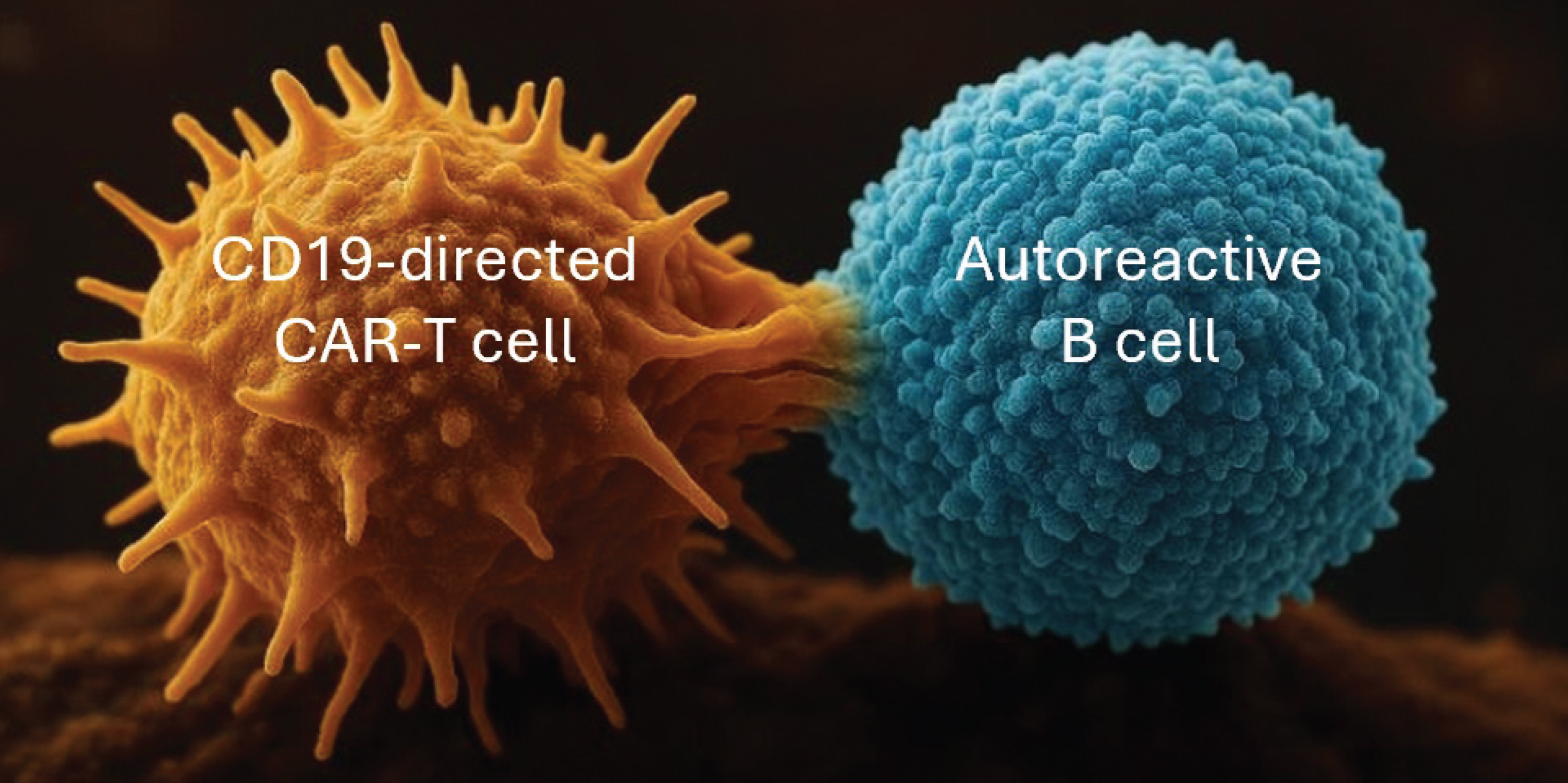
Beyond cancer therapy, CAR-engineered effector cells are a promising approach particularly in autoimmune diseases such as Systemic Lupus Erythematosus (SLE) and Rheumatoid Arthritis (RA). CD19-targeting CAR-T cells have shown promising results in preclinical SLE studies and in phase 1 open-label SLE clinical trials in humans. Sustained and more complete B-cell depletion by in vivo persistent CAR-T cells than by CD20-targeting monoclonal antibodies offers a new horizon for sustained remission in SLE. CAR-T cell therapy in autoimmune diseases may have a safer profile than in cancer due to the potentially smaller target population of autoreactive B-cells, reducing the risk of excessive proliferation and severe toxicities.18-20
CAR-Treg cells targeting autoreactive immune cells are being explored for their potential to regulate the immune system and inhibit autoreactive B- and T-cells. CAR-Treg cells utilize inhibitory cytokines and immune checkpoint pathways (CTLA4, LAG-3) to suppress activation and induce immune tolerance.20
Further autoimmune diseases under consideration for CAR-T/Treg-based therapeutic approaches are multiple sclerosis, type 1 diabetes (T1D), inflammatory bowel disease (IBD), and Sjögren’s syndrome.
Beyond CAR-T cells, several other effector cell types are being explored as the core of future therapeutic strategies to overcome some of the limitations associated with CAR-T cell therapy such as limited infiltration into solid tumors, inadequate persistence, systemic toxicities, and manufacturing insufficiencies.
CAR-NK cells, mentioned above already as an alternative to allogeneic CAR-T cells, are considered promising due to their inherent cytotoxic mechanisms against cancer cells and a potentially reduced risk of severe adverse events like cytokine release syndrome (CRS) and graft-versus-host disease (GvHD). NK cells can be derived from various sources, including adult peripheral blood and umbilical cord blood, and can be developed as “off-the-shelf” allogeneic products, which would address the limitations of autologous CAR-T cell manufacturing. While preclinical studies have shown effective cytotoxicity of CAR-NK cells against solid tumors, more research is needed to optimize NK cell expansion, mitigate exhaustion, and enhance post-adoptive transfer cytotoxicity and longevity.21
Macrophages (MΦ) possess inherent cytotoxic mechanisms and can interact with other cellular components of the tumor microenvironment. CAR-MΦ recognize and phagocytose tumor cells expressing CAR-specific antigens, subsequently presenting and activating T-cells, thus exerting anti-tumor effects.22
CAR-γδT cells can recognize target cells and mediate anti-tumor toxicity in a CAR-dependent manner but also via their innate receptors, such as their TCR and NK cell-associated co-receptors like NKG2D. CAR-γδT cells can augment the adaptive immune response via cross-presentation of tumor-associated antigens (TAAs) to CD8+ T cells. Limitations of γδT cells include their relatively minor fraction in PBMCs, necessitating substantial expansion, and lower persistence compared to αβT cells.22
iPSCs provide a renewable cell source that could streamline manufacturing and potentially lead to “off-the-shelf” ready-to-use CAR therapies. iPSC can be differentiated into T-cells, NK cells, and potentially other immune cell types expressing CARs.22
THE FUTURE OF CARS
CAR-based therapies can hold significant promise for the future of treating various diseases, particularly cancer and autoimmune disorders. The clinical impact of CAR-T cell therapy in hematological malignancies has already been revolutionary, with some patients achieving decade-long remissions. This success has spurred extensive research and development aimed at expanding the applicability and improving the efficacy and safety of CAR therapies. While complex manufacturing and conditioning regimens for the patient’s immune system have limited their accessibility and scalability to date, novel in vivo engineering strategies using targeted lipid nanoparticles (tLNPs) for messenger RNA delivery to specific T-cell subsets show promising results.23
Application of CARs in autoimmune diseases like systemic lupus erythematosus (SLE), multiple sclerosis (MS), and type 1 diabetes, with promising initial clinical results showing sustained elimination of autoreactive B-cells and disease control with minimal safety concern, might pave the way for CAR-engineered cells into standard therapies to treat even more common diseases,
REFERENCES
- Dagher OK, Posey AD Jr. Forks in the road for CAR T and CAR NK cell cancer therapies. Nat Immunol. 2023;24(12):1994-2007.
- Eshhar Z, Waks T. Gross G, Schindler DG. Specific activation and targeting of cytotoxic lymphocytes through chimeric single chains consisting of antibody-binding domains and the gamma or zeta subunits of the immunoglobulin and T-cell receptors. Proc Natl Acad Sci USA (1993) 90:720-724.
- Hughes AD, Teachey DT, Diorio C. Riding the storm: managing cytokine-related toxicities in CAR-T cell therapy. Semin Immunopathol. 2024;46(3-4):5.
- Han MW, Jeong SY, Suh CH, et al. Incidence of immune effector cell-associated neurotoxicity among patients treated with CAR T-cell therapy for hematologic malignancies: systematic review and meta-analysis. Front Neurol. 2024;15:1392831.
- Rejeski K, Jain MD, Shah NN, Perales MA, Subklewe M. Immune effector cell-associated haematotoxicity after CAR T-cell therapy: from mechanism to management. Lancet Haematol. 2024;11(6):e459-e470.
- Lee A. Obecabtagene Autoleucel: First Approval. Mol Diagn Ther. 2025;29(3):419-423.
- Duong MT, Collinson-Pautz MR, Morschl E, et al. Two-Dimensional Regulation of CAR-T Cell Therapy with Orthogonal Switches. Mol Ther Oncolytics. 2018;12:124-137.
- Nolan-Stevaux O, Smith R. Logic-gated and contextual control of immunotherapy for solid tumors: contrasting multi-specific T cell engagers and CAR-T cell therapies. Front Immunol. 2024;15:1490911.
- Schroeder T, Martens T, Fransecky L, et al. Management of chimeric antigen receptor T (CAR-T) cell-associated toxicities. Intensive Care Med. 2024;50(9):1459-1469.
- Peng L, Sferruzza G, Yang L, Zhou L, Chen S. CAR-T and CAR-NK as cellular cancer immunotherapy for solid tumors. Cell Mol Immunol. 2024;21(10):1089-1108.
- Maalej KM, Merhi M, Inchakalody VP, et al. CAR-cell therapy in the era of solid tumor treatment: current challenges and emerging therapeutic advances. Mol Cancer. 2023;22(1):20. Published 2023 Jan 30.
- Ali A, DiPersio JF. ReCARving the future: bridging CAR T-cell therapy gaps with synthetic biology, engineering, and economic insights. Front Immunol. 2024;15:1432799.
- Mog BJ, Dinapoli SR, Hwang MS, Nichakawade TD, Douglass J, Hsiue EH-C, et al. Abstract LB095: Hybrid TCR-CAR design surpasses conventional CARs and patient-derived TCRs in targeting an ultra-low-density neoantigen. Cancer Res. (2023) 83:LB095–LB.
- M. Chmielewski, H. Abken, TRUCKs: the fourth generation of CARs, Expert Opin. Biol. Ther. 15 (8) (2015) 1145–1154.
- Khoshandam M, Soltaninejad H, Hamidieh AA, Hosseinkhani S. CRISPR, CAR-T, and NK: Current applications and future perspectives. Genes Dis. 2023;11(4):101121.
- Gao X, Liu J, Sun R, et al. Alliance between titans: combination strategies of CAR-T cell therapy and oncolytic virus for the treatment of hematological malignancies. Ann Hematol. 2024;103(8):2569-2589.
- Liu F, Miao X, Han L and Song X (2024) Advances in CAR-NK cell therapy for lung cancer: is it a better choice in the future? Front. Oncol. 14:1390006.
- Abeles I, Palma C, Meednu N, Payne AS, Looney RJ, Anolik JH. B Cell-Directed Therapy in Autoimmunity. Annu Rev Immunol. 2024;42(1):103-126.
- Zhou J, Lei B, Shi F, Luo X, Wu K, Xu Y, Zhang Y, Liu R, Wang H, Zhou J and He X (2024) CAR T-cell therapy for systemic lupus erythematosus: current status and future perspectives. Front. Immunol. 15:1476859.
- Li YR, Lyu Z, Chen Y, Fang Y, Yang L. Frontiers in CAR-T cell therapy for autoimmune diseases. Trends Pharmacol Sci. 2024;45(9):839-857.
- Rafei H, Rezvani K. Advances and challenges in chimeric antigen receptor-natural killer cell immunotherapy for cancer. Br J Haematol. 2025;206(2):443-446.
- Tsiverioti CA, Gottschlich A, Trefny M, et al. Beyond CAR T cells: exploring alternative cell sources for CAR-like cellular therapies. Biol Chem. 2024;405(7-8):485-515.
- Hunter TL, Bao Y, Zhang Y, et al. In vivo CAR T cell generation to treat cancer and autoimmune disease. Science. 2025;388(6753):1311-1317.

Dr. Michael Kapinsky is a trained chemist who moved into the field of immunology for his PhD in 2002. He then transitioned into the life sciences industry at Beckman Coulter Life Sciences’ flow cytometry division where he evolved from field-based roles into strategic marketing responsibilities with a special focus on translational research.
Total Page Views: 4868