

2026 Sustainable Drug Development & Delivery eBook: Pharma Needs A Risk-Based Strategy Toward Sustainability
By: Cindy H. Dubin, Managing Editor
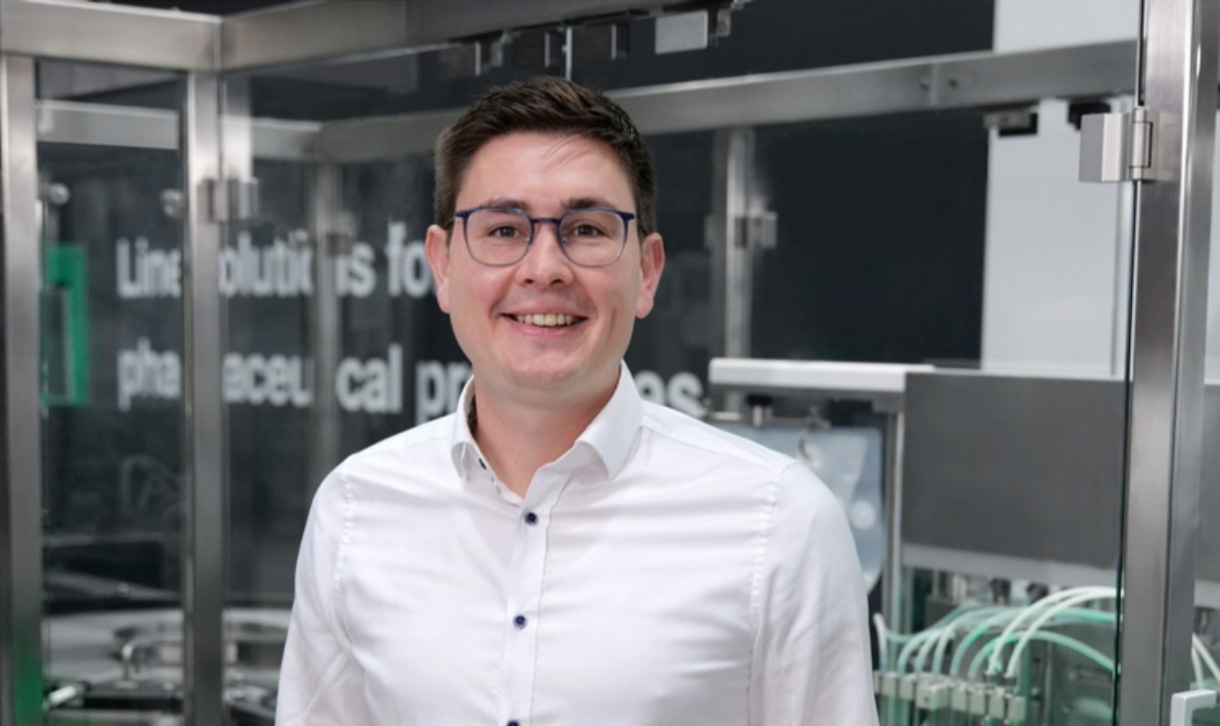
Markus Burkert, Product Manager Cartridge & Sustainability, Syntegon
In June, the World Health Organization (WHO) published a draft guidance to assist regulators and pharma companies in integrating environmental sustainability strategies and metrics into drug manufacturing. The guideline covers sustainable R&D, managing sustainable facilities and equipment, training, and cleaning and waste management. WHO also encourages sustainable design principles throughout drug development and tech transfer, including continuous manufacturing and lower-impact packaging.
With regard to the latter, Aptar Pharma Injectables division has undertaken an effort to identify the principal sources of emissions across its elastomeric closure solutions. In this ebook, Bruno Morchain, Innovation & Scientific Affairs Manager, Aptar Pharma Injectables, discusses Aptar’s life cycle-driven approach to sustainability.
Similarly, Bespak has taken steps to commercial-scale manufacturing of a low-carbon Pressurized Metered Dose Inhaler. Benedicta A. Bakpa, Head of ESG at Bespak describes how the company has worked with its supply chain partners to realize this accomplishment.
With the backdrop of regulatory expectations and sustainability requirements continuing to increase globally, Syntegon conducted a sustainability report to not only measure its own progress, but that of the industry as a whole. Markus Burkert, Product Manager Cartridge & Sustainability, Syntegon, tells Drug Development & Delivery what pharma is doing particularly well – and not so well – in its sustainability endeavors, and improvement can be made going forward, and how drug makers, CDMOs and equipment suppliers can work together towards a risk-based sustainability strategy.
Q: What is driving the trend toward more sustainable practices in the pharma industry?
A: Pharmaceutical manufacturers have their own sustainability targets, whether to meet international expectations or to improve the performance of their equipment. The latter is the most important goal: reducing product loss and waste to a minimum and thereby ensuring machine output. This is becoming increasingly important with highly potent and very cost-intensive drugs entering the market and development pipelines. At the same time, we are receiving more specific requests for data-based sustainability assessments of our equipment that align with our customers’ own sustainability strategies.
Equipment suppliers play a very important dual role here: We not only want to fulfill our own sustainability goals; we must also provide our customers with evidence that our equipment can support them in achieving their own targets. This is where our lifecycle assessments come into play, enabling us to calculate the carbon footprint of our machines. These assessments include the average service life of the equipment – from manufacturing, transport, and assembly through to operation and disposal at the customer’s end. Moreover, the impact of packaging materials such as ready-to-use (RTU) containers on waste and emissions can also be calculated.
Q: Where are pharma companies failing/succeeding when it comes to sustainability?
A: While sustainability is becoming increasingly important in the pharmaceutical industry, we observe significant differences between large pharmaceutical corporations and smaller pharmaceutical manufacturers and CDMOs. Many, if not all, major players have had a sustainability strategy in place for several years, while smaller companies are only now beginning to follow suit.
For many companies, sustainability is only gradually moving to the top of the agenda. The reasons are obvious: In a conservative, yet fast-paced and highly cost-intensive market, the main priorities must remain product quality as well as patient and operator safety. At the same time, it is not easy to reliably demonstrate the environmental impact of development or production equipment. Here again, the important role of equipment suppliers becomes evident: By providing carbon footprint calculations across the entire equipment lifecycle, we can support our customers in achieving their sustainability targets.
Q: What steps is pharma taking to be more sustainable within their organizations?
A: Both lifecycle assessments and total cost of ownership (TCO) calculations are increasingly being requested when it comes to equipment. Pharmaceutical manufacturers are, of course, also implementing their own measures to reduce energy consumption at their sites, both in administration and production. The most straightforward steps involve increasing the use of renewable energy and reducing overall energy and media consumption. These are measures that every company must implement for itself. On the shop floor, however, equipment suppliers can provide considerable support by delivering equipment that requires less energy, incorporates alternative operating concepts, or includes energy recovery measures from the outset.
Q: What sustainability steps are being taken in drug development? Drug packaging?
A: The amount of energy that can be saved in drug development is, of course, significantly lower than in commercial production. Nevertheless, pharmaceutical manufacturers can opt for laboratory and pilot-scale equipment that is already designed with a lower carbon footprint and can therefore be scaled up to series production using the same parameters.
Regarding drug packaging, an important trend is the shift from bulk to ready-to-use (RTU) packaging in liquid drug production. While initially only pre-sterilized syringes were available, vials and cartridges have also been on the market for more than ten years. The use of these packaging formats eliminates the need for pharmaceutical manufacturers and CDMOs to carry out upstream process steps such as cleaning and sterilization, which are carried out by the primary packaging manufacturer. At the same time, however, packaging waste increases due to the single use of tubs and nests.
This is where collaboration between different industry players is crucial. Equipment suppliers are already working closely with primary packaging manufacturers to determine the ideal RTU solutions and future machineability with a view to changing materials. Collaboration with drug developers and manufacturers is equally important in determining which solution is the most appropriate – and sustainable – for a specific product.
Q: What role is AI playing in sustainability?
A: Sustainability requires high availability and transparency of all machine data. The prerequisite is digitalization, which is, of course, already in use, but still to a lesser extent in the highly regulated and conservative pharmaceutical industry than in many other sectors. Once full digitalization is established, AI can help us progressively improve the quality of primary data and enable more in-depth evaluations. Digitalization can be used to extract all relevant data on the condition, or health, of a machine and enable companies to improve their daily operations.
Digital twins will also play an increasingly important role in the design of new equipment. By incorporating sustainability targets from the very beginning, every new machine can be developed to meet customer requirements more precisely and provide important insights into optimization potential. Here, AI greatly helps to accelerate development and evaluation processes, enabling energy efficiency and other sustainability-related engineering requirements to be considered at the earliest possible stage.
Q: Where do you see sustainability being implemented well in pharma where is it faltering?
A: As mentioned previously, the pharmaceutical industry is not particularly energy efficient. In fact, it is among the most energy-intensive sectors worldwide. However, I see substantial potential to advance sustainability efforts in the very near future. Some companies are already taking action, and others will soon follow. In addition to their own initiatives, equipment manufacturers are again crucial in supporting optimization and innovation.
Equipment suppliers can support their pharmaceutical customers by continuously optimizing their machines and developing new, more energy-efficient solutions. For example, “cold” WFI units produce up to 90% fewer CO2 emissions than established “hot” processes. Even membrane-based WFI generation with hot storage reduces emissions by more than 40% compared with hot WFI. Since the harmonization of the Chinese pharmacopoeia with other international pharmacopoeias in October 2025 – permitting the use of membrane-based WFI processes – the prospects of this more sustainable technology becoming the “new normal” have improved significantly.
Overall, the pharmaceutical industry needs a more risk-based strategy. Equipment suppliers, pharmaceutical manufacturers, and CDMOs should work together and be willing to try new approaches. For example, why not reduce temperatures in certain processes, or decrease air velocity in isolators? In my opinion, it ultimately comes down to collaboration, co-creating innovation, and remaining open to new or at least revised processes.
Download Sustainability Report: https://www.syntegon.com/sustainability-report

Advancing Sustainability in Parenteral Elastomeric Closures: A Life Cycle Approach to Lower-Carbon Injectable Packaging
By: Bruno Morchain
As biologics, vaccines, and other injectable therapies continue to expand, the closure solutions that are in direct contact with them—stoppers, plungers, tip caps, and rigid needle shields—sit at a critical interface between drug formulation and patient. These components must seal and maintain drug product integrity throughout shelf life, and their production carries an environmental footprint that feeds directly into pharmaceutical partners’ Scope 3 emissions. As pressure on drug manufacturers to reduce supply chain emissions grows, so does the responsibility of primary packaging suppliers to provide transparent, science-backed data and lower-impact alternatives. At Aptar Pharma, sustainability is a strategic driver for our business. Backed by science-based targets and life-cycle-driven approaches, the company is positioned to help our partners reduce their carbon footprint without compromising the regulatory and functional demands of parenteral applications.

Science-Based Commitments as a Foundation
Credible progress begins with aligned commitment. Aptar has validated its emission reduction goals with the Science Based Targets Initiative (SBTi), committing to reduce absolute Scope 1 and 2 greenhouse gas emissions by 82% and absolute Scope 3 emissions by 14% by 2030, both against a 2019 base year. In parallel, Aptar has committed to increasing its annual sourcing of renewable electricity from 57% to 100% by 2030. The company has also developed an ISO 14064-compliant energy management system to map global greenhouse gas emissions and support transparent carbon accounting and reporting.
Sustainable Manufacturing on the Ground
Targets are realized at the site level at our Aptar Pharma Injectable sites in Normandie, France. Our manufacturing sites are designed to meet ambitious sustainability objectives spanning energy, water, waste, and material sourcing. Measures include certified landfill-free operations, systematic recycling of vulcanized rubber scrap, electricity drawn from 100% renewable sources, and heat-collection systems that have reduced energy consumption. Site-specific initiatives at our Granville facility further address carbon footprint through energy optimization, solar panels, and water and waste management. Together, these measures can meaningfully reduce the manufacturing contribution to a component’s lifecycle footprint before any material-level innovation is considered.
Life Cycle Assessment: Knowing Where the Impact Lies
As our goals go beyond operational improvements and extend to product innovation, the Aptar Pharma Injectables division has undertaken an effort to identify the principal sources of emissions across our elastomeric closure solutions. We have built a customizable, cradle-to-gate Life Cycle Assessment (LCA) model for rubber components, following recognized standards including the EU Product Environmental Footprint (EF 3.1) and ReCiPe 2016, and assessing the impact of our product with regard to categories such as Global Warming Potential (GWP), freshwater consumption, land use, and primary energy demand.
The findings are consistent across our evaluated products: Aptar Pharma’s 20 mm bromobutyl stopper, 1-3 ml bromobutyl plunger, and our polyisoprene rigid needle shield. Raw materials, and the elastomer in particular, are the dominant contributor to our elastomeric closures’ GWP, while manufacturing, transport, and packaging remain comparatively moderate. This insight guides us, and our partners, on which levers to pull to reduce Scope 3 emissions most effectively.
Translating Insight Into an Eco-Design Strategy
Knowing that material is the principal hotspot shapes a disciplined eco-design strategy built around the “3R” framework – Reduce, Reuse, Recycle – adapted to the realities of parenteral packaging. Reuse is not yet an option for single-use sterile devices, and recycling is constrained by the infectious nature and material mix of the component. The most meaningful gains therefore lie in reduction: optimizing material volumes and compounding, lowering transport impact, and, most significantly, developing rubber formulations based on non-fossil sources.
The Promise of Bio-sourced Materials
The most compelling opportunity is the substitution of fossil-based elastomers with non-fossil-based alternatives. As an example, our LCA modeling indicates that the use of non-fossil-based rubber in place of synthetic IR rubber for rigid needle shield may offer the best potential for lower greenhouse gas emissions. Further potential lies in bio-based plastics for rigid shields and bio-based fillers for rubber compounds. Crucially, these alternatives must clear the same demanding bar for safety, functionality, and regulatory compliance, as innovation cannot come at the expense of performance.
Partnering for Lowering the CO2 Footprint of Injection Products
Reducing the CO2 footprint of injectable therapies is a shared industry endeavor. Aptar Pharma Injectables has implemented dedicated energy, water, and waste initiatives at the manufacturing level and is channeling that experience into material innovation aimed at reducing the CO2 footprint, without compromising the stringent requirements of parenteral applications. Underpinned by validated emissions reduction targets and an LCA model currently undergoing third-party review, our strategy gives partners a transparent, data-driven path to reducing Scope 3 emissions while keeping our sustainability objectives in mind.

*GWP calculated on an EF 3.1 (climate change, total), cradle-to-gate basis using Aptar’s LCA modeling; no third-party review was conducted.
To find out more about how Aptar Pharma can support your project developments with regard to sustainability, contact Bruno Morchain at bruno.morchain@aptar.com or visit aptar.com/contact-us.
 Bruno Morchain is the Manager of Innovation & Scientific Affairs for Aptar Pharma’s Injectables division. He holds a Mechanical Engineering degree from the University of Technology of Compiègne (France) and has over 20 years of experience in the injectable pharmaceutical industry, supporting new production capabilities implementation and elastomeric closure development. Since joining Aptar Pharma in 2012, Mr. Morchain has held various positions within the company’s R&D organization. He is a member of the Pharma Sustainability Council at Aptar Pharma and actively contributes to ISO committee TC76/WG4, focusing on elastomeric components for primary packaging in injectable drug delivery.

How Bespak is Shaping the Path to Net Zero
By: Benedicta Bakpa
Bespak® is the specialist inhalation contract development and manufacturing organization (CDMO) with sustainability at its core. Since its formation in 2024, the company has been driven by a singular goal: to be the trusted long-term innovation partner and sustainability leader in the transition to low Global Warming Potential (GWP) propellants for pressurized Metered Dose Inhalers (pMDIs).
At Bespak, sustainability is embedded in the company’s business strategy, and across operations. This commitment resulted in the achievement of several key milestones in 2025, including supporting the commercial-scale manufacture of the first low carbon pMDI and validation of the company’s science based near- and long-term greenhouse gas (GHG) emissions reduction targets.
These achievements reinforce Bespak’s position at the forefront of the transition to low carbon pMDIs. With the right expertise, partnerships and manufacturing capabilities in place, the CDMO is poised to lead the next phase of the green transition in 2026 and beyond, helping to shape a more sustainable future while maintaining patient access to life-saving medicines.

Leading a More Sustainable Industry
With approximately one billion pMDIs in use every year, evolving regulations and corporate sustainability goals are fuelling the transition to next-generation propellants. To support this shift, Bespak has worked closely with partners across the value chain, from propellant suppliers to clinical trial specialists, to lay the groundwork for a seamless transition.
Bespak has invested significantly in expanding manufacturing capacity to support commercial-scale production of low carbon pMDIs using both next-generation propellants, HFO-1234ze(E) and HFA-152a. In March 2026, the company also announced a partnership with Chiesi to increase manufacturing capacity to support the next phase of Chiesi’s Carbon Minimal Inhaler (CMI) program.
Alongside manufacturing investment, Bespak has continued to optimise the performance of its valves, actuators and dose counters for next-generation propellants. This includes its market-trusted BK357 pMDI valve, the first valve approved for use in a low carbon pMDI, a milestone achieved through more than five years of collaborative research and development.
Understanding Environmental Impact
Bespak’s market-leading position brings with it considerable responsibility to ensure its products are as sustainable as possible. To fully understand the environmental impact of its products and processes, and identify further opportunities for improvement, the CDMO conducted life cycle assessments (LCA) of several of its key components and devices key products – a cradle-to-gate analysis of the resources and impacts from raw material extraction (“cradle”) up to the point the product leaves the manufacturing site (“gate”). As LCAs are process and product agnostic, they offer the opportunity to inform and guide decision making in Bespak’s new product introduction (NPI) process to help inform more sustainable designs.
In May 2025, Bespak completed the LCA of its BK357 valve, which was verified by independent assessors. The assessment led to the development of a decarbonisation strategy, identifying opportunities to integrate lower carbon materials, optimise component design and reduce lifecycle emissions in pMDI products.
Building on this evidence-based approach to environmental stewardship, Bespak also published its first Biodiversity Report, in alignment with the Global Biodiversity Framework. This covered on-site biodiversity assessments at the Holmes Chapel and King’s Lynn sites, and supply chain biodiversity footprints (SCBF) to understand the direct and indirect impacts of our operations on biodiversity.
Bespak carried out a supply chain assessment to better understand the environmental impacts across its supplier base and identify priority areas for engagement. The assessment highlighted key hotspots for carbon emissions and biodiversity impacts, enabling the business to focus its efforts where they can deliver the greatest value. Building on these insights, Bespak hosted its first supplier engagement workshop, bringing together strategic suppliers to share the findings and discuss evolving sustainability expectations.
Advancing to a Net Zero Future
While enabling the transition to low carbon pMDIs remains a key priority, Bespak’s approach to sustainability also extends across its operations, products and partnerships.
Decades of technical expertise supporting sustainable innovation
- Holistic, end-to-end pMDI design, development and manufacturing services delivered at one site to improve supply chain efficiency
- Innovation-led development and testing to engineer optimal quality components and devices and reduce waste through computational modelling, AI simulation and a unique Injection Moulding Academy
Embedding responsibility across operations
- Setting GHG emissions reduction targets and obtaining validation from the Science Based Targets initiative (SBTi)
- Continued investment in energy efficiency projects, and ongoing testing and sourcing of recycled materials
Empowering people and building partnerships to deliver change
- Collaboration with customers and suppliers to reduce value chain emissions
- Supplier capacity building and engagement initiatives supporting upstream decarbonization
- Industry recognition for sustainability and collaboration, including:
- ISPE UK Industry Awards: Winner for Collaboration Project of the Year; Shortlisted for Sustainability Project of the Year
- 2026 edie Awards: Finalist in four categories: Team of the Year, Sustainability Leader of the Year, Nature and Biodiversity Project of the Year, and ESG Strategy of the Year
- Pharma Industry Awards: Shortlisted for Sustainability Initiative of the Year
Looking Ahead
From expanding manufacturing capabilities for low carbon pMDIs to reducing GHG emissions and rethinking product design to support sustainable innovation, Bespak continues to make measurable progress towards its net zero goals. Looking ahead, the specialist CDMO is well positioned to further advance the green transition by working closely with customers to commercialise more low carbon pMDIs while continuing to innovate in inhaler device design and manufacturing for more sustainable outcomes.
 Benedicta A. Bakpa is the Head of ESG at Bespak, bringing 15 years of experience in Environmental Management and Sustainability across multiple sectors. She specializes in Net Zero Carbon initiatives, helping organizations achieve their carbon reduction goals and contributing to a more sustainable future. She is a Fellow of the Institute of Environmental Management and Assessment (IEMA).
Total Page Views: 894