

Incorporating Self-Administered Drug-Device Combination Products Into Clinical Trials Can Bring Outsized Challenges & Outstanding Rewards

By: Laura Zurlinden
The self-administered injectable drug-device combination (DDC) product market finds itself in the beginning stages of unprecedented therapeutic advancements. And all easy pharma buzzwords aside – “revolutionary,” “breakthrough,” “dedicated expertise” – the overarching reason for this paradigm shift boils down to one word: Necessity.
This new dawn for DDCs is addressing healthcare’s horizon. And while it certainly may be revolutionary, first and foremost it is preparatory.

In the US alone, the number of people over 50 with at least one chronic disease is expected to nearly double over the next three decades, increasing from 71.5 million in 2020 to 142.7 million by 2050. Much of this is inevitable, as Baby Boomers and Gen Xers first enter their golden years, then live deeper into them.
Rarely is the economic principle of supply and demand so predictable. With demand for streamlined therapeutic solutions all but guaranteed to increase for the foreseeable future, it’s little wonder why those designing and supplying DDCs are responding with improvements in usability, convenience and safety. Fortunately, these advancements have guideposts, as established self-administration treatments for prevalent conditions such as diabetes inform therapies for more varied illnesses across smaller patient populations.
The current and projected market figures back this up – and then some. In 2023, the global drug-device combination products market was valued at approximately USD $138 billion; by 2030, the market is expected to nearly double to $252 billion, reflecting a 9.0% compound annual growth rate (CAGR). Considering this, self-administered injectable DDCs have emerged as a keystone technology toward upgrading drug delivery, enhancing patient compliance, and optimizing health outcomes.

Unsurprisingly, part of this effort involves incorporating DDCs into medication regimens right from the outset: during clinical trials. However, leveraging self-administered parenteral applications in clinical studies requires a strategic approach to address various design, regulatory, user-centric and scalability challenges.
Together from the Start: Clinical Trial Benefits of DDCs
Traditionally, single- or multi-use vials have been the primary container of choice for subcutaneous drug administration during preclinical and early-phase clinical trials. These vials offer significant flexibility in terms of fill volume and dosage, aligning with the primary objectives of early trials: establishing proof of concept, ensuring safety, and determining tolerated doses.
However, with growing emphasis on patient-centricity and the increasing prevalence of self-administration devices in treating chronic diseases, the industry is shifting toward less skill-dependent subcutaneous dosage forms. In this environment, prefilled syringes, passive safety needle devices and autoinjector delivery systems are becoming integral aspects of product portfolios. Promisingly, several prominent biopharmaceutical companies are actively investing in research and development to enhance device functionality, ensure compatibility with a wide range of drug molecules, and incorporate these devices into clinical trials earlier in the development process.
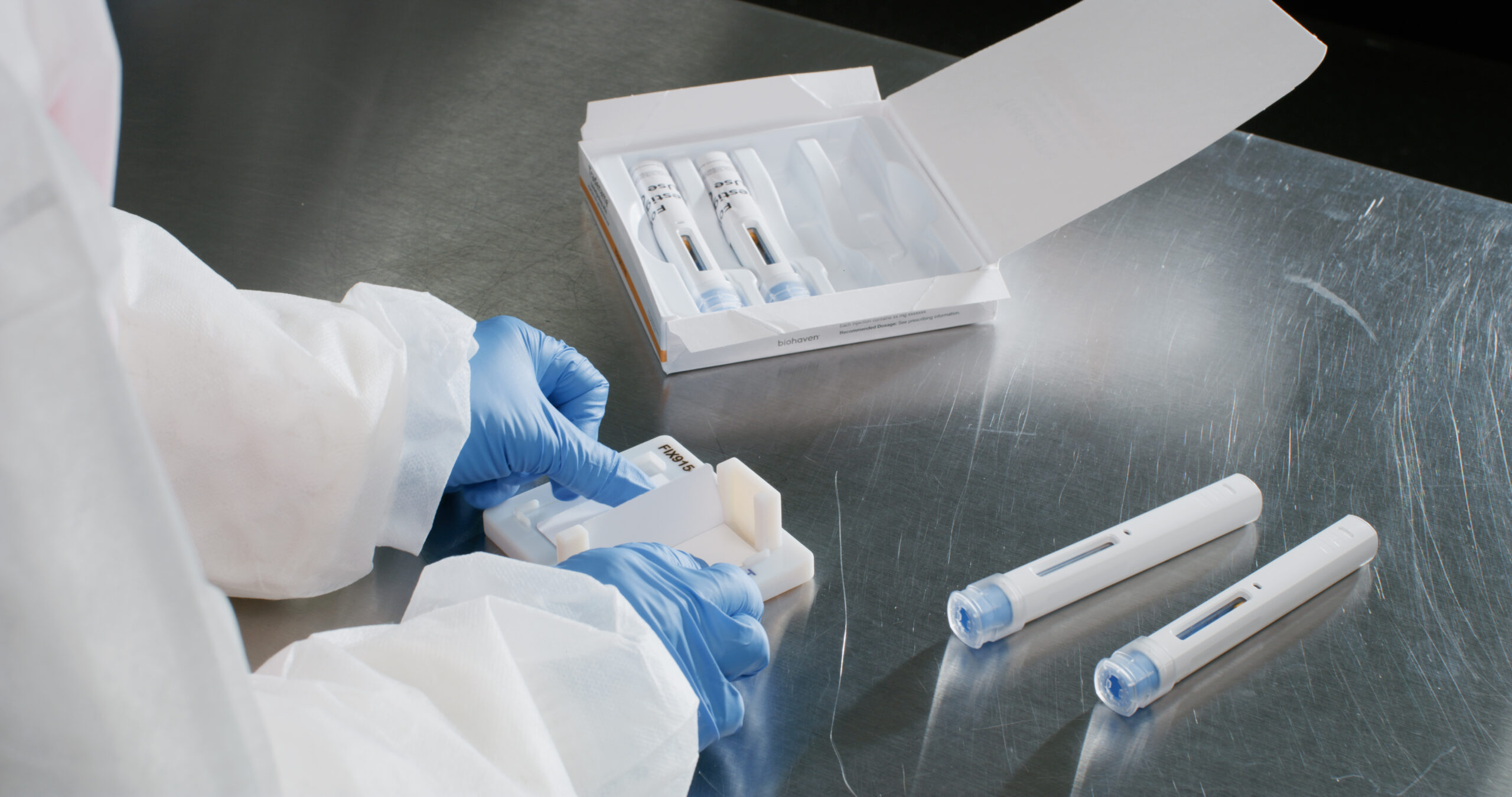
Of the myriad benefits to utilizing DDCs in clinical trials, improved patient compliance and retention may be the most substantial. Self-administration simultaneously reduces dependency on healthcare professionals and empowers patients to literally take matters into their own hands. Such convenience can increase adherence to trial protocols, particularly in long-term studies where frequent clinic visits might otherwise lead to elevated dropout rates.
Dosage standardization is another significant plus. Prefilled injectables deliver precise and consistent doses, minimizing human error associated with traditional syringe-based methods. Such commonality is crucial for ensuring accurate pharmacokinetic and pharmacodynamic data. And to offset any potential verification shortcomings stemming from unmonitored administration, many DDCs can be equipped with technology that captures dosing events, up to and including exacting timestamps.
Finally, DDCs uplift the overall clinical trial experience – for both patients and trial sponsors. For the former, user-friendly designs, minimal pain and reduced injection-related anxiety contribute to more positive experiences, fostering greater engagement throughout the trial. For sponsors, injectable DDCs provide real-world insights by mimicking post-market applications. Whereas conventional clinical trials offer a controlled environment for the drug, clinical trials incorporating DDCs do so for both the drug and its usage scenarios, providing real world data and evidence supporting regulatory decisions and improving patient care.
However, these advantages are earned rather than bestowed. Incorporating injectable DDCs into clinical trials requires meticulous, multifactor planning and evaluation. Implementing any sophisticated process brings a checklist of challenges, and clinical trials utilizing DDCs are certainly no exception.
DDCs for Clinical Trials: A Challenges Checklist
Any drug-device combination product intended for self-administration must be designed with laypersons in mind. This holds especially true for clinical trials, since participants often comprise varying levels of dexterity and familiarity with drug-device combination products.
For the sake of streamlining, let’s focus on autoinjectors for the moment. Concerning ergonomics, autoinjectors must be easy to handle and operate for diverse populations, including those with limited dexterity and vision impairments. Ideally, clinical trial participation should be seen as a subset of the ever-broadening push for inclusivity in medication accessibility.
Notably, ergonomics best practices should extend to the mind: intuitive operation is vital, with elements like two-step or three-step usage, audible clicks and visual and tactile feedback serving situation-specific roles. The simpler the self-administration, the more exacting the trial results.
A suitable device/drug pairing also is key. Devices should align with a drug product’s particular requirements regarding viscosity, dose volume and injection speed. For example, high-viscosity biologics require autoinjectors with sufficient force for effective drug delivery. And with any self-injecting device, stability testing must prove that its materials do not interact with the formulation, and work to maintain the drug’s stability throughout its intended shelf life.
Regarding delivery speed, assessments beyond overall drug-device compatibility should extend to more nuanced considerations, such as striking an ideal balance between patient comfort and optimized drug delivery. Crucially, in line with ISO 11608-5 standards the device also must consistently deliver the intended dose, especially for biologics where dosing precision is critical.
All totalled, such painstaking matchmaking exercises are reminders that the “C” in DDC stands for “combination.” Indeed, a drug and its vehicle must be viewed as inextricably intertwined, for the sake of both medication efficacy generally and reliable trial results specifically.
Of course, this commonsense approach to device selection should also extend to those using them – and often, considerations involving trial participants may differ from those concerning patients in commercial settings. Not only must trial sponsors account for demographic diversity, but also varying experience with (and psychological barriers to) self-injection. Optimizing DDCs in clinical trials means accounting for all of this, and all without sacrificing priority #1: safety.
Though addressed last in this section’s checklist, safety must always come first. Both in clinical trial settings and beyond, DDCs are sophisticated instruments frequently used by novices, exponentially increasing the importance of safety. To varying degrees, needle shields, automatic retraction elements and lock mechanisms all play uncompromising roles toward preventing accidental activation and needlestick injuries. Always, pharma companies and trial organizers must recognize the reality that participants are not trained healthcare personnel.
Regulatory Compliance
From a regulatory standpoint, incorporating self-injectable drug-device combinations often involves a more complicated approval process that, refreshingly, clears the way for streamlined commercialization.
The first step is device classification, which requires an understanding of a self-administered injectable device’s categorization within its specific regulatory jurisdiction. Most commonly, such solutions are designated combination products mandating integrated regulatory submissions covering both device and drug. Here, proof of compatibility between device materials and formulation is essential.
Human factors studies also come into play. To pass regulatory muster, detailed usability tests must convincingly and consistently demonstrate that a formulation can be self-administered safely and effectively in real-world conditions. This places a premium on holistic patient-centric design encompassing the entire DDC-related experience, including packaging, instructions for use and, of course, the physical self-administration process.
All this entails a convergence of corresponding, often cascading factors, so establishing robust mediation and risk management plans are critical for identifying and mitigating potential issues. This includes satisfying concerns related to drug product stability, device functionality, and potential adverse component interactions.
In many cases, conducting usability studies and integrating human factors considerations early in the design process can help identify potential issues and, from there, guide necessary design modifications. In all cases, human factors and usability engineering are integral components of regulatory submissions, essential for demonstrating a DDC’s short- and long-term viability and usability.
Envisioning Success: Manufacturability and Scalability
A sound, savvy plan for transitioning from clinical trials to commercial triumphs is a must-have with any drug; with drug-device combination products, such here-to-there roadmaps must be especially detailed.
Among other considerations, effective autoinjector development requires reliable sourcing, cost-benefit analyses, and strategic decisions that weigh differentiating exclusivity and customization against tried-and-true standardization. The interconnected nature of DDCs can make such manufacturing and sourcing concerns seem daunting compared to conventional scale-up scenarios.
First, the supply chain must never be scalability’s weakest link. Reliable sourcing of self-administered injectable device components is as vital post-approval as it is to avoid delays in clinical trial timelines. Sponsors should establish strong relationships with suppliers and CDMOs to implement risk mitigation strategies and have contingency plans in place to address potential disruptions.
Squaring best-possible solutions with cost considerations also should occur during trials. Here as with supply chain factors, a comprehensive plan accounts not only for unforeseen failures but entirely intended successes. The question then becomes: “What if I need to make millions – or even tens of millions – of these?”
As volumes increase, so does the need for marrying efficacy, functionality and cost-effectiveness. Among other factors, deciding between bespoke autoinjectors tailored to the trial drug or off-the-shelf devices, often with a limited set of available options, can impact both cost and speed of development. And on the production line floor, defining a low-volume starting point and expected commercial volume destination enables development of a cost-effective scaling strategy, eliminating excess costs for equipment, tooling and validations.
Conclusion
In the end, pharma companies deciding whether to incorporate self-administered injectable drug-device combination products into their clinical trials would be well-advised to heed this article’s lone italicized word: Necessity. Even if current projections fall short, the number of Americans with chronic diseases will soon climb precipitously – and with it, the need to treat such illnesses with streamlined therapies.
These mounting needs will not be met without complications. Injecting DDCs more broadly into clinical trial settings will require comparably high front-end resources, including device manufacturing costs, documentation efforts, and training for both trial sponsors and patients. But even if such investments weren’t in the name of necessity, the long-term value DDCs bring to clinical trials and eventual commercialization make the outsized challenges pale in comparison to the outstanding rewards.
About the Author
Laura Zurlinden is VP North American Business Development, Clinical Trial Services for PCI Pharma Services, a leading CDMO providing integrated end-to-end drug development, manufacturing and packaging capabilities that increase products’ speed to market and opportunities for commercial success. www.pci.com
Total Page Views: 67