

FORMULATION FORUM - Supercritical Carbon Dioxide (scCO2) for Improving Solubility & Oral Bioavailability of Drugs
Key Points
- This article will focus on SCF carbon dioxide used as solvent and antisolvent, for improving solubility and bioavailability of poorly soluble molecules. Let’s take a closer look into some of the antisolvent approaches for ASD.
INTRODUCTION
Supercritical carbon dioxide (scCO2) is a “solvent like no other”.1 It has gained considerable attention in the recent past for its ability to dissolve a number of poorly soluble compounds as a “solvent free” process for both pharma and industrial applications as well. In pharma most specifically, it has been used for addressing the challenges with highly crystalline drugs to improve the solubility and bioavailability in the amorphous state by offering several advantages including controlled processing conditions, good reproducibility, and environmental friendliness.2
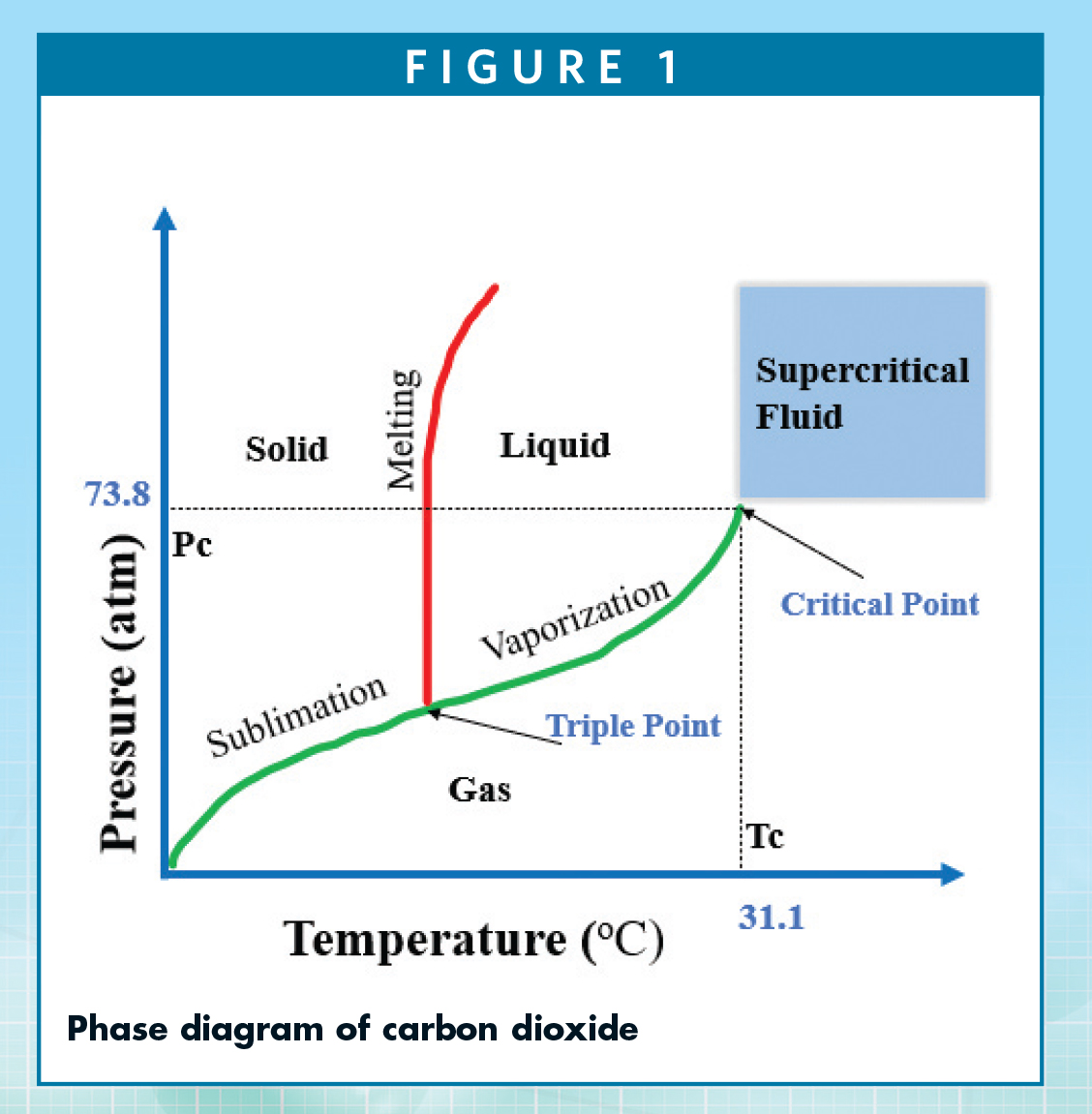
Carbon dioxide is a gas in air at atmospheric temperature and pressure, but it can be solidified as “dry ice” upon cooling under certain pressure. In addition, if the temperature and pressure both increased from standard temperature and pressure (STP), it can adopt at a “critical point” the properties between gas and liquid, and will behave as supercritical fluid (SCF) with density like liquid above its critical temperature of about 31.1oC and critical pressure of 73.8 atm for most commonly used scCO2, as shown in Figure 1.3 A substance is considered in a supercritical phase when temperature and pressure are above its critical point. Critical temperature is the highest temperature at which gas is converted to liquid by increasing pressure, and the critical pressure is the highest pressure at which liquid is converted to a gas by increasing temperature.4
SCF is chemically stable and non-flammable fluid and can be used either as antisolvent or solvent.5,6 The supercritical carbon dioxide (scCO2) has a low polarity with a low solubility parameter, around 15 MPa1/2 and therefore, its extraction ability for polar compounds from natural matrices is limited. To overcome this issue, polar co-solvents (methanol, ethanol, water) are often used in small amounts to increase the solubility of polar compounds in the supercritical mixture.7
PHYSICAL PROPERTIES OF SCFS
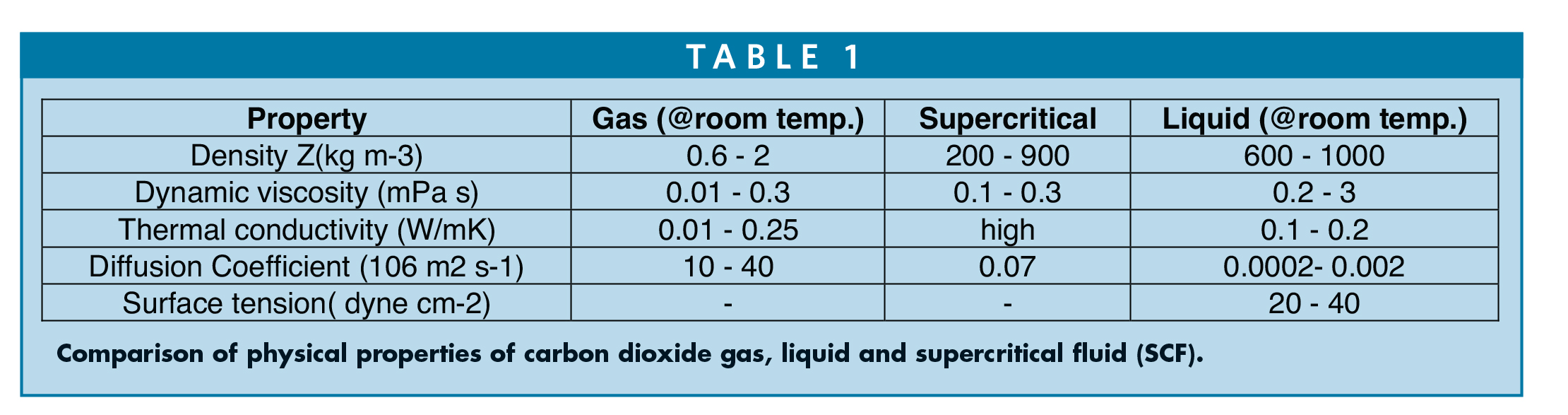
Physical properties of SCF are between gas and liquid. At a critical point (triple point in phase diagram), the properties of gas and liquid converge leading to only one phase system, a homogeneous super critical fluid with heat of vaporization zero. At temperature above the critical point, a liquid phase can’t be obtained by increasing pressure. A small increase in pressure around the critical point, can lead to increase in density of SCF. The density of SCF is similar to a liquid, and its viscosity is similar to a gas, and its diffusivity lies between gas and liquid, as shown in Table 1.7 While thermal conductivity remains high, SCF surface tension remains closer to zero as the gases but smaller than liquids. The solubility parameter (d) of SCF CO2 is 15 MPa½.8
SUPERCRITICAL CARBON DIOXIDE PROCESS
As stated, supercritical fluid (SCF), presents the properties between gaseous and liquid states under specific temperature and pressure, which can be used to produce amorphous solid dispersions (ASDs). In the process, polymer and drug are dissolved in scCO2 liquid phase and gaseous property of SCF aids in solid diffusion and solvent evaporation.9 The solvent evaporation is controlled by adjusting temperature and pressure. The low viscosity of SCF results in high diffusivity with faster solvent evaporation, leading to higher yields.10 In one category, the first step is the rapid expansion of supercritical solution (RESS) as the drug/polymer dissolved in SCF by sudden decompression. RESS is a single step process that does not require any organic solvent, but it may cause particle aggregation since many compounds possess poor solubility in SCF under moderate temperature (< 60oC) and pressure (<300 bar). 9 To overcome and improve the solubility of drug, solvents like methanol added, but the additional steps might be required to remove, which may pose some changes and could be costly as well.11
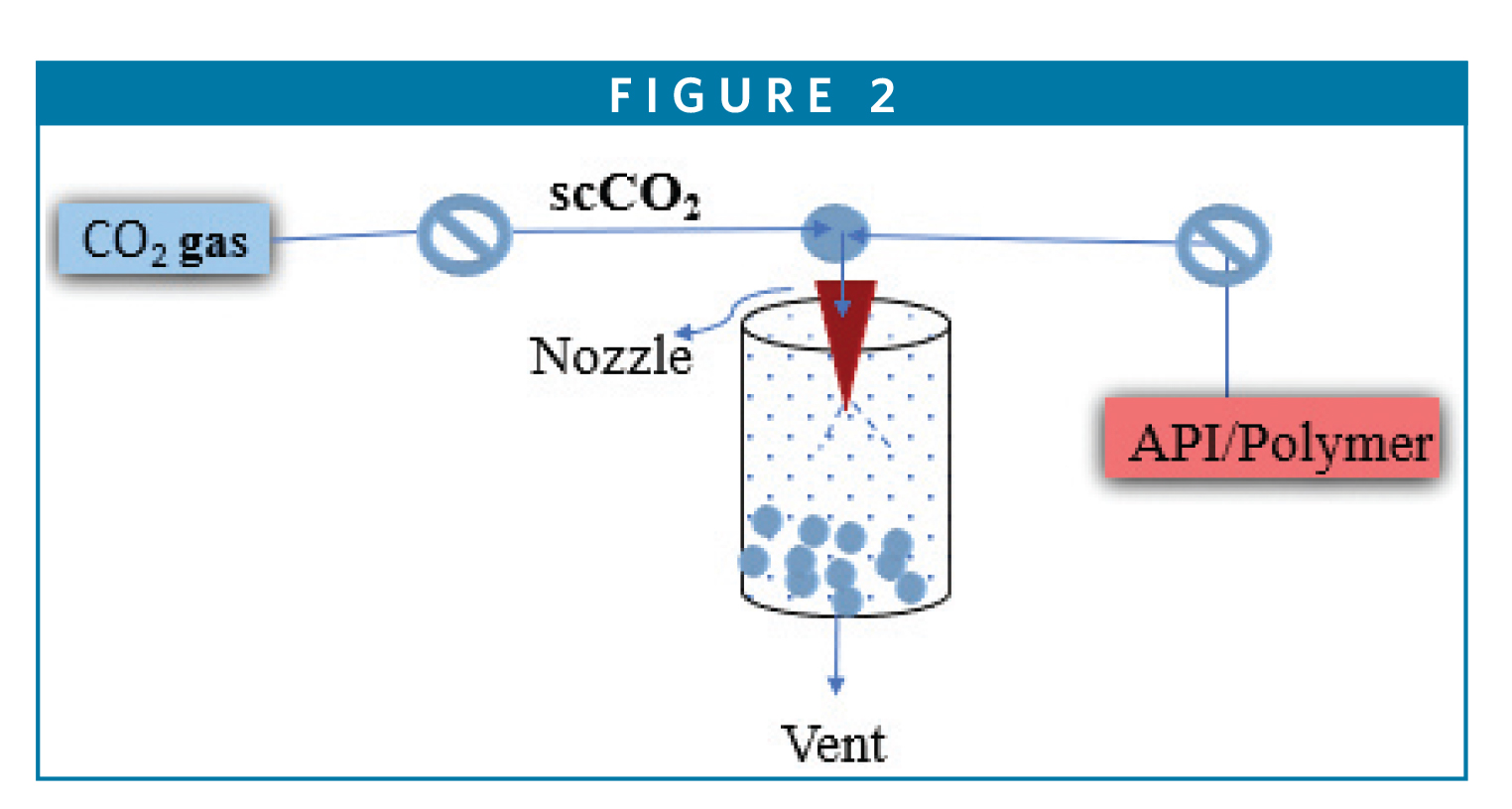
In second category, drug and polymer are dissolved in minimal amount of polar organic solvent and mixed with SCF which acts as antisolvent. On mixing, solubilization capability of organic solvent is decreased in SCF, leading to supersaturation and hence, precipitation. The precipitated particles are filtered and dried as an amorphous solid dispersion powder. For achieving the desired ASD, polymer and drug should be highly soluble in polar solvent, which is compatible and miscible with SCF. SCF can also be used as antisolvent for processes such as supercritical antisolvent (SAS), gaseous antisolvent (GAS), aerosol solvent extraction system (ASES), particle by compressed antisolvent (PCA), and solution enhanced dispersion by supercritical fluids (SEDS). In GAS, for example, drug and carrier are dissolved in solvents like ethanol, acetone, DMSO, and introduced into SCF CO2, which acts as an antisolvent, that leads to supersaturation in solution, causing to precipitate the drug/polymer. In SAS, on the other hand, the drug/polymer solution is introduced through an atomizing nozzle, and the powder with controlled particle size is collected at the bottom of the vessel, as shown in Figure 2.12
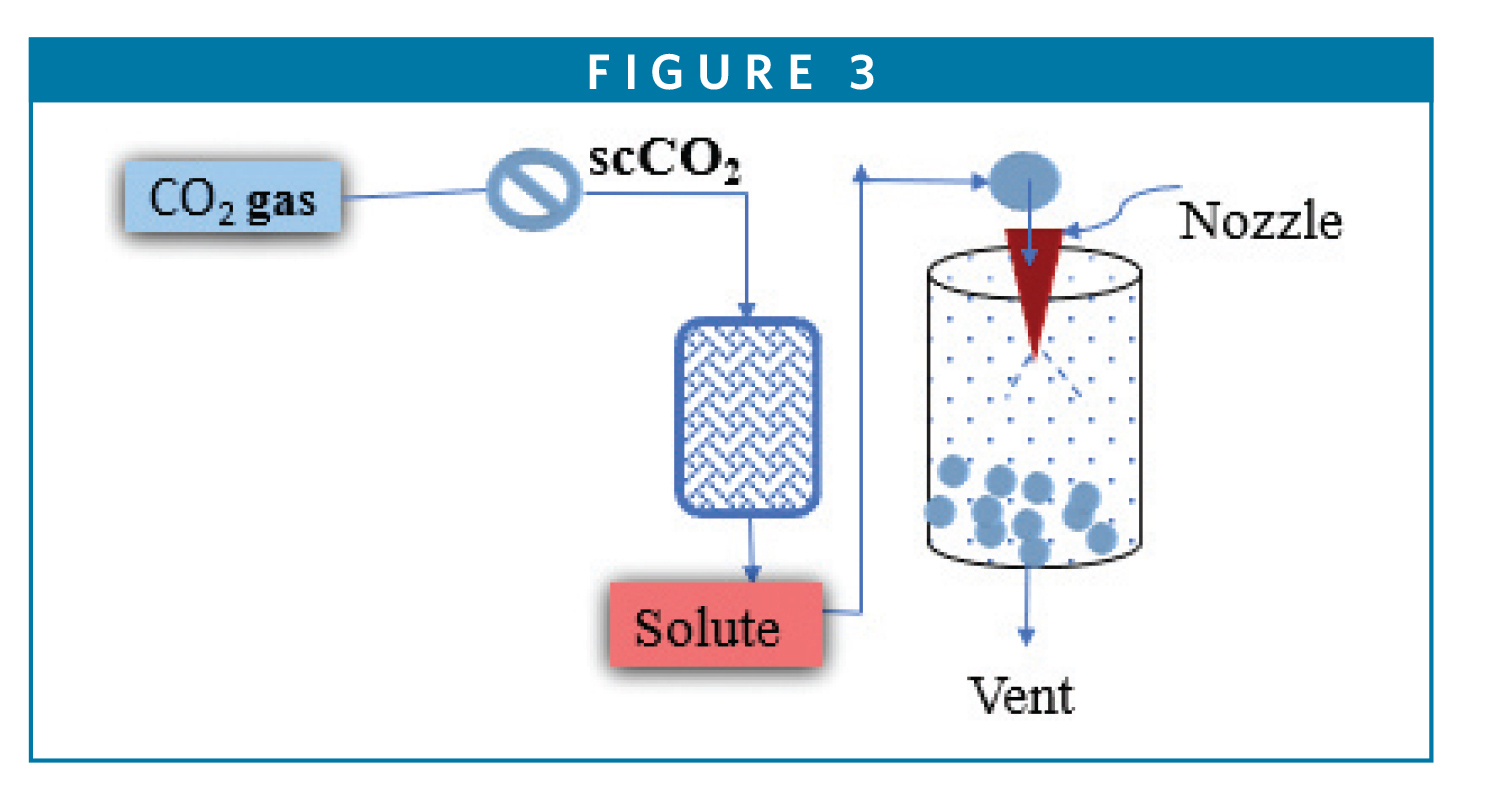
In third category, SCF acts as a solvent for processes such as rapid expansion of supercritical solution (RESS), particle formulation in gaseous saturated solutions (PGSS) and/or rapid expansion of a supercritical solution in a liquid solvent (RESOLV).13 In RESS process, the sudden drop in pressure leads to lower density and reduces solubility and eventually precipitation of solute in scCO2. As a result, the fine particles of solute are produced in single step on atomization under environmentally friendly process as opposed to traditional solvent precipitation, as shown in Figure 3.12 The particle size can be optimized based on adjusting pressure and temperature of SCF. Due to limited solubility of drugs in non-polar scCO2, a small amount of co-solvents and/or surfactants are added to improve solubilization in SCF CO2. This process has been used for small molecules and biologics in combination with 2nd or 3rd components which may further increase complexity.
SCF FOR POLYMERIC NANOPARTICLE FOR IMPROVING SOLUBILITY & BIOAVAILABILITY
As mentioned previously, SCF has been used to tackle the challenges with poorly soluble BCS II and IV molecules. This article will focus on SCF carbon dioxide used as solvent and antisolvent, for improving solubility and bioavailability of poorly soluble molecules. Let’s take a closer look into some of the antisolvent approaches for ASD.
SUPERCRITICAL ANTI-SOLVENT (SAS) METHOD
Park et al. used supercritical anti-solvent (SAS) to investigate the amorphization of a poorly soluble cephalosporine drug, cefdinir. Using spray drying in methanol and SAS techniques, the authors compared the amorphization and dissolution properties of drug, and used DSC, TGA, PXRD, FTIR, BET and SEM to fully characterize the amorphous powder. It was demonstrated that SAS improved the solubility and dissolution rate of cefdinir.13
Sui et al. investigated SAS for preparation of glycyrrhizic acid microparticles using drug concentration of 20 mg/ml in ethanol as solvent, and scCO2 as anti-solvent.14 The authors demonstrated that particle size increased from 119 nm to 205 nm as API concentration increased. Under optimized conditions with drug concentration of 20 mg/ml in ethanol and flow rate of 8 ml/min and 15 ml/min, temperature at 65oC and pressure at 250 bar with carbon dioxide flow rate of 8 ml/min and 15 ml/min, the mean particle size was 128 nm, with 64% yield. In vitro dissolution data demonstrated improved solubility as compared to free drug, and in vivo data in rats showed several folds improved oral bioavailability. The authors observed that microparticles formed on quickly spraying the ethanolic drug solution in scCO2 supercritical fluid (as anti-solvent) on immediate precipitation with controlled particle size in nanometer range and were characterized by scanning electron microscopy (SEM), x-ray diffraction (XRD), thermogravimetric analysis (TGA). SAS was also used to investigate zidovudine in poly (L-lactic acid) (PLA) solid dispersion aimed at improving solubility and permeability of a BCS III drug.15 With 40% drug loading and 92% yield, the permeability was about 10% in amorphous dispersion as opposed to 4% of free drug. The authors also observed the controlled release though PLA carrier diffusion. The authors observed that in the process when scCO2 is used as anti-solvent, the droplets lead to rapid diffusion on contact with SCF, resulting in phase separation and precipitation by supersaturation with the PLA carrier.
Supercritical antisolvent (SAS) was also used to evaluate valsartan in amorphous dispersion with several polymers including HPMC, HPC, PVP K30, PVPVA64, containing poloxamer 407, vitamin E-TPGS and Ryoto sugar acetate as surfactants.16 The valsartan-polymer particles were formed by spraying the drug solution in dichloromethane and ethanol (45:55) and carbon dioxide in a vessel at flow rates of 1 ml/min and 11 mg/ml at supercritical conditions of 40oC and 15 MPa. After spray drying the drug solution, scCO2 was introduced in vessel to remove residual organic solvents. Following depressurization to atmospheric pressure, fabricated valsartan loaded nanoparticles were collected from the vessel. The resulting amorphous dispersions derived from valsartan-polymers were characterized by DSC, XRD, and SEM. In vitro dissolution of ASD composite nanoparticles in HMPC containing poloxamer 407 in 7:1 (polymer/solubilizer) at 2% drug loading, for example, was carried out in simulated gastric pH 1.2. The data showed about 4-fold increase in solubility as compared to drug without poloxamer 407 over 24 hours (992 mg/m vs. 205 mg/ml). Other solubilizers like vitamin E-TPGS and Ryoto sugar ester L1695 were less effective as compared to poloxamer 407. Dissolution data suggests >90% release in 10 min, and the pharmacokinetic data shows that HPMC-Poloxamer 407 ASD formulation showed 7.2-fold higher oral bioavailability as compared to free drug (Cmax13.6 mg/ ml vs 1.9 mg/ml). On the other hand, the oral bioavailability of ASDs containing vitamin E-TPGS or L1695 was significantly lower than those containing P407.17
Gong et al. used SAS approach to investigate indomethacin in Povidone K30. Using temperature between 40oC and 90oC and pressure of 150-200 bar, especially at 75oC and 150 bar, the ASD powder was formed, and characterized by DSC, X-RD, SEM and for dissolution characteristics.18 The solvent free scCO2 SCF process produced completely amorphous porous indomethacin solid dispersions at PVP K30 as high as 80%, leading to rapid dissolution. Lowering of PVP led to increased crystallinity of indomethacin, suggesting that higher amount of PVP was critical for preparing the ASD. Co-precipitation of curcumin and povidone (as guest particles) was also investigated onto MCC, corn starch, and lactose as host particles by combining SAS and fluid bed configuration.19 The resultant particles ranging in nanometers on combining with polysorbate 80 as permeation enhancer improved the oral bioavailability.20 Sadeghi et al. investigated curcumin and HPMC by SAS and found the dissolution was improved significantly as opposed to free drug. This increase in solubility is due to increase porosity and decreased crystallinity of sponge like particles.21 The porosity of SAS based HMPC stabilized curcumin powder was 92% vs 74% by water based antisolvent curcumin, suggesting that optimum SAS process led to generation of smaller particles with large surface areas and greater porosity as compared to water based antisolvent samples. DSC and XRD further support reduced in crystallinity of curcumin led to increase in dissolution prepared by SAS versus water as antisolvent.
Potter et al. used indomethacin as model drug and compared hot melt extrusion vs scCO2 using Soluplus® and PVP K15. The data suggests that indomethacin at 50% in both polymers, scCO2 showed crystalline drug in g-polymorph, while at 30% drug loading, it was completely miscible in amorphous state.22 The in vitro dissolution suggests that drug maintained the supersaturated state for both processes, but SCF formulations performed better than HME formulations. Poloxamer 407 and PEG6000 were used as solubilizers to investigate solid dispersion properties of a BCS class II non-steroidal antiandrogen drug, bicalutamide (BCL) (logP 2.92), using supercritical fluid scCO2 at processing conditions of 50oC and 130 bar for PEG6000 and 60oC and 140 bar for Poloxamer 407 by allowing compressed carbon dioxide into a high-pressure reactor through a syringe pump.23 The ASDs of BCL-PEG6000 and BCL-Poloxamer 407 were characterized by SEM and laser diffraction, suggesting that those with poloxamer 407 were smooth surface, spherical with mean diameters (D50) of about 356 microns, and those derived with PEG6000 were irregular with D50 of 1120 microns. The dissolution data of ASD powder showed >75% release in first hour for both solid dispersions derived from PEG6000 and poloxamer 407 as opposed to <10% with free crystalline (polymorph I) drug. The dissolution profile of compressed tablets comprised of MCC, sodium starch glycolate, and Mg St, and each containing 50 mg (41.7%) of drug, weighing 163 mg, in first hour showed 80% and 56% release from PEG6000 and poloxamer 407, respectively. In contrast, the free drug showed 18% release under similar conditions. Yin et al. also used Poloxamer 407 in combination with HPMC and ascorbic acid for investigation of itraconazole (TZ) by SCF. ITZ obtained as porous ASD showed improved dissolution as compared to Sporanox® with Cmax of 423 ng/ml vs. 305 ng/ml and AUC0,1 4663 ng/ml.h vs. 3895 ng/ml.h) for reference drug.24
In RESS process where SCF carbon dioxide acts as a solvent offering limited solubility, the antisolvent SAS, is often used more frequently for drug encapsulation polymeric nano- and microparticles. In SAS, drug and polymeric carrier dissolved in organic solution is atomized in high pressure chamber into which SCF is co-injected. The SCF exposure leads to volume expansion of the atomized droplets that further leads to supersaturation and fast nucleation and subsequently co-precipitation of drug/polymer solute.25 Using this method, utilizing methylene chloride and acetone as solvents, paracetamol was encapsulated in PLA nano- and microparticles under controlled processing temperature and pressure to yield desired particles and with extended zero order release over 7-day period.26
AEROSOL SOLVENT EXTRACTION SYSTEM (ASES)
Lee et al. investigated itraconazole to improve the solubility and bioavailability in ASD derived from HPMC by ASES SCF method. In the process, HPMC and itraconazole dispersions were prepared at temperature at 45oC and pressure at 15 MPa with the particle size ranging between 100 and 500 nm. Solubility was 27-fold higher compared to free drug. ASD prepared at 60oC and 10 MPa showed 610-fold increase in solubility with respect to free drug. DSC and XRD also supported the formation of complete ASDs at both conditions. The pharmacokinetic data showed improved bioavailability with Cmax and AUC(0-24h) identical to commercially available Sporanox® capsule. Polymers like PLGA, PDLA, PLA and PHB have been used for formation of solid microparticles in ASES method. Polymers typically dissolved in organic solvents, sprayed into supercritical fluid carbon dioxide phase, resulting in formation of solid microparticles by extraction with diameters of 1-10 microns. ASES process, for example, was used for miconazole (MCZ) varied in compositions by spraying methylene chloride/methanol solution containing phosphatidylcholine, cholesterol, and Poloxamer 407.27 The data suggests that spherical, non-porous microparticles formation with mean diameters of 40 microns and with higher drug loading dependent upon pH.
PRECIPITATION WITH COMPRESSED ANTISOLVENT
Muhrer et al. studied an anticonvulsant drug phenytoin from precipitation with compressed antisolvent (PCA) process using a hydrophilic PVP K30 polymer and compared with neat phenytoin microcrystals prepared by gas antisolvent (GAS) method.27 In vitro dissolution data of co-processed phenytoin-PVP co-formulation prepared by PCA showed higher solubility compared to neat API derived from GAS and PCA precipitates of crystalline drug. The authors further demonstrated that oral bioavailability of co-processed PCA precipitates was better as compared to “spray dried” phenytoin-PVP ASD. Perrut et al. demonstrated that precipitation or recrystallization with a compressed antisolvent (PCA) and gas antisolvent (GAS) are most promising methods for particle formation using compressed fluids. High product quality, low residual solvents, robustness and scalability, particle and morphology controls are all important attributes for both PCA and GAS. PCA spray process was used to precipitate polylactic acid (PLA) in micro and nanoparticles from methylene chloride and carbon dioxide as antisolvent.28 PLA containing insulin PEG nanoparticles were produced by PCA processing from a mixture of DMSO and methylene chloride with encapsulation efficiency of 90% and higher hypoglycemic activities.29
SUMMARY & FUTURE PERSPECTIVES
Supercritical carbon dioxide (scCO2) technology has been recognized as a green technology for addressing the challenging molecules with poor solubility and bioavailability. SCF is highly versatile, inexpensive with the property that lies between liquid and gas in the supercritical phase as SCF. As more new chemical entities coming out of discovery are poorly soluble (BCS Class II and IV), the scCO2 is taking an aim to find the desired solutions to help improve the bottleneck in the industry. Besides its utilities in formulation and solubilization of poorly soluble molecules, SCF has been used in particle engineering of co-crystals, micronization of API powder with unform particle distribution ranging 15-30 microns or even significantly smaller ca. 0.5-3 microns. SCF is also utilized in processing of proteins and peptides, and nucleic acids, demonstrating an edge over lyophilization process. In addition, SCF can also be used as co-solvent for liposomal preparation by reverse phase solvent evaporation in anti-solvent process with higher drug loading for next generation of drug candidates, allowing more options for bringing the NCEs in clinical development. The scale up and GMP manufacturing remain challenging but with new equipment design and improved processing parameters, SCF can be used for manufacturing of commercial batches of drugs by single step process with controlled particle size, morphology and engineering, minimal or no residual solvents, and far greater therapeutic utilities as compared to conventional spray drying and freeze drying processes.
Ascendia offers four enabling solubilization technologies including AmorSol®, EmulSol®, NanoSol® and LipidSol® for the molecules across all modalities. These platforms offer seamless solutions for small and large molecules and biologics. As we continue to evaluate the new technologies for challenging molecules, we are taking a closer a look into scCO2 SCF.
REFERENCES
- J. Peach and J. Eastoe, Supercritical carbon dioxide: a solvent like no other, Beilstein J of Org. Chem., 2014, 10, 1878-1895.
- (a) P. Sheth and H. Sandhu, Amorphous Solid Dispersion Using Supercritical Fluid Technology, In Advances in Delivery Science and Technology ((ADST)), Springer, 2014, 579–591; (b) S. V. Bhujal, B. Mitra, U. Jain, Y. Gong, A. Agrawal, S. Karki, L. S. Taylor, S. Kumar and Q. Zhou, Pharmaceutical amorphous solid dispersion: A review of manufacturing strategies, Acta Pharma. Sinica B, 2021, 11, 2505-2536.
- Supercritical carbon dioxide phase diagram; https://novasterilis.com/services/
- P. B. Deshpande, G. A. Kumari, A. R. Kumar, G. Venkatesh Shavi, A. Karthik, M. S. Reddy, and N. Udupa, Supercritical Fluid Technology: Concepts and Pharmaceutical Applications, PDA Journal of Pharmaceutical Science and Technology, 2011, 65. 333-344; doi: 10.5731/pdajpst.2011.00717
- Y. Li , Y. Yu, H. Wang and F. Zhao, Effect of process parameters on the recrystallization and size control of puerarin using the supercritical fluid antisolvent process, Asian J. Pharm. Sci., 2016, 11, 281–291
- M. K. Riekes, T. Caon, J. da Silva Jr., R. Sordi, G. Kuminek, L. S. Bernardi, C. R. Rambo, C. Eduardo, M. de Campos, and D. Fernandes, Enhanced hypotensive effect of nimodipine solid dispersions produced by supercritical CO2 drying, Powder Technology, 2015, 278, 204-210.
- J. A. Mendiola, M. Herrero, M. Castro-Puyana and E. Ibanez, Supercritical fluid extraction, Chapter 6 In Natural Product Extraction – Principles and Applications by M. A. Rostagno and J. M. Prado, RSC Publishing, 2013; doi:10.1039/9781849737579-FP001
- J. Wang, Y. Li, X. Li, B. Zhang and H. Jin, Investigation of the solubility parameter of a supercritical carbon dioxide–cosolvent system by molecular dynamics simulation, Ind. Eng. Chem. Res. 2025, 64, 38, 18964–18975.
- I. Pasquali, R. Bettini and F. Giordano, Supercritical fluid technologies: an innovative approach for manipulating the solid-state of pharmaceuticals, Adv Drug Deliv Rev 2008;60:399e410
- P. Girotra, S. K. Singh, and K. Nagpal, Supercritical fluid technology: a promising approach in pharmaceutical research. Pharm Dev Technol., 2013;18:22e38.
- K. Mishima, M. Honjo, T. Sharmin, S. Ito, R. Kawakami, T. Kato et al. Gas-saturated solution process to obtain microcomposite particles of alpha lipoic acid/hydrogenated colza oil in supercritical carbon dioxide, Pharm Dev Technol 2016;21:737e48.
- P. Chakravarty, A. Famili, K. Nagapudi and M. Al-Sayah, Pharmaceutics, 2019, 11, 629.
- P. Tran and J. S. Park, Application of supercritical fluid technology for solid dispersion to enhance solubility and bioavailability of poorly water-soluble drugs, Int. J. Pharm. 2021, 610, 121247.
- J. Park, H. J. Park, W. Cho, K-h. Ca, Y-S. kang, and S-J. Hwang, Preparation and pharmaceutical characterization of amorphous cefdinir using spray drying and SAS process, Int. J. Pharm., 2010, 396, 239-245. DOI: 10.1016/j.ijpharm.2021.121247.
- X. Sui, W. Wei, L. Yang, Y. Zu, C. Zhao, L. Zhang L, et al. Preparation, characterization and in vivo assessment of the bioavailability of glycyrrhizic acid microparticles by supercritical anti-solvent process. Int J Pharm 2012;423:471e.
- V. M. Yoshida, V. M. Balca˜o, M. M. Vila, J. M. O. Junior, N. Aranha, M. V. Chaud et al. Zidovudine-poly (L-lactic acid) solid dispersions with improved intestinal permeability prepared by supercritical antisolvent process. J Pharm Sci 2015;104:1691e700.
- M. S. Kim and I. H. Baek, Fabrication and evaluation of valsartane polymer surfactant composite nanoparticles by using the supercritical antisolvent process. Int J Nanomed 2014;9:5167.
- K. Gong, R. Viboonkiat, I. Rehman, G.Buckton and J. Darr, Formation and characterization of porous indomethacin-PVP coprecipitates prepared using solvent-free supercritical fluid processing. J Pharm Sci, 2005;94:2583e90.
- R. L Matos, T. Lu, G. Leeke, V. Prosapio, C. McConville, and A. Ingram, Single step coprecipitation and coating to prepare curcumin formulations by super critical fluid technology, J. Supercritical Fluids, 2020, 159, 104758
- M. Anwar, I. Ahamd, M. H. Warsi, S. Mohapatra, N. Ahmad, S. Akhtar, A. Ali and F. J. Ahmad, Experimental investigation and oral bioavailability enhancement of nano-sized curcumin by using super critical anti-solvent process, Eur. J. Pharm. Biopharm., 2015, 96, 162-172.
- F. Sadeghi, H. Kamali, S. Kouhestanian, F. Hadizadeh, A. Nokhodchi and H. Garekani, Supercritical CO2 versus water an anti-solvent in the crystallization process to enhance dissolution rate of curcumin, Pharm. Dev. Tech., 2022, 27, 999-1008.
- C. Potter, Y. Tian, G. Walker, C. McCoy, P. Hornsby, C. Donnely, D. S. Jones, and G. P. Andrews, Novel supercritical carbon dioxide impregnated technique for the production of amorphous solid drug dispersions: A comparison to hot melt extrusion, Mol. Pharm. 2015, 12, 1377-1390.
- A. A. Rogoz, J. S. Szczesny, K. Chmiel, J. K. Kowalczuk, M. Kurek, K. Gawlak, V. P. Danesi, M. Paluch, and R. Jachowicz, How does the CO2 in supercritical state affect the properties of drug-polymer systems, dissolution performance and characteristics of tablets containing bicalutamide, Material, 2020, 13, 2848.
- X. Yin, L. S. Daintree, S. Ding, D. M. Ledger, B. Wang, W. Zhao, J. Qi and W. Wu, Itraconazole solid dispersion prepared by a supercritical fluid technique: preparation, in vitro characterization and bioavailability in beagle dogs, Drug Design, Dev. Therapy, 2015, 8, 2801-2810.
- L. Padrela, M. A. Rodrigues, A. Durate, A. M. A. Dias, M. E. M. Braga, and H. C. De Sousa, Adv. Drug Deliv. Rev., 2018, 131, 22-78.
- M. Kalani, R. Yunus, and N. Abdullah, Optimizing supercritical antisolvent process parameters to minimize the particle size of paracetamol nanoencapsulated in L-polylactide. Int. J. Nanomed. 2011, 6, 1101–1105.
- S. Kunastitchai, L. Pichert, N. Sarisuta and B. W. Müller, Application of aerosol solvent extraction system (ASES) process for preparation of liposomes in a dry and reconstitutable form, Int. J. Pharm., 2006, 316, 93-101.
- G. Muhrer, U. Meier, F. Fusaro, S. Albano, and M. Mazzotti, Use of compressed gas precipitation to enhance the dissolution behavior of a poorly water-soluble drug: Generation of drug microparticles and drug–polymer solid dispersions, Int. J. Pharm. 2006, 308, 69-83.
- M. Perrut, J. Jung, and F. Leboeuf, Enhancement of dissolution rate of poorly-soluble active ingredients by supercritical fluid processes: Part I: Micronization of neat particles, Int. J. Pharm., 2005, 288, 3-10.
- N. Elvassore, A. Bertucco, and P. Caliceti, Production of Insulin-Loaded Poly(Ethylene Glycol)/Poly(l-Lactide) (PEG/PLA) Nanoparticles by Gas Antisolvent Techniques, J. Pharm. Sci., 2001, 90, 1628-1636.

Dr. Shaukat Ali joins Ascendia Pharmaceutical Solutions as Senior Director of Scientific Affairs and Technical Marketing after having worked in the pharma industry for many years. His areas of expertise include lipid chemistry, liposomes, lipid nanoparticles, surfactant-based drug delivery systems, SEDDS/SMEDDS, oral and parenteral, topical and transdermal drug delivery, immediate- and controlled-release formulations. He earned his PhD in Organic Chemistry from the City University of New York and carried out his post-doctoral research in Physical Biochemistry at the University of Minnesota and Cornell University. He has published extensively in scientific journals and is inventor/co-inventor of several US and European patents.

Dr. Jim Huang is the Founder and CEO of Ascendia Pharmaceutical Solutions. He earned his PhD in Pharmaceutics from the University of the Sciences in Philadelphia (formerly Philadelphia College of Pharmacy and Sciences) under Joseph B. Schwartz. He has more than 20 years of pharmaceutical experience in preclinical and clinical formulation development, manufacturing, and commercialization of oral and parenteral dosage forms. His research interests are centered on solubility/bioavailability improvement and controlled delivery of poorly water-soluble drugs through nano-based technologies.
Total Page Views: 2867