

Single B Cell Antibody Discovery: Improving Therapeutic Candidate Selection in Drug Development
 By: Changchun Zha, Founder & CEO, Biointron
INTRODUCTION
Therapeutic antibodies now represent one of the fastest-growing classes of biologic drugs, with more than 100 monoclonal antibodies approved globally and hundreds more in clinical development.1 Despite this success, early stage antibody discovery remains critical in drug development. Programs frequently advance candidates that later fail due to insufficient specificity, suboptimal developability, or incomplete characterization of binding properties.2
Traditional antibody discovery methods, including hybridoma technology and display-based libraries, have contributed substantially to therapeutic innovation. However, these approaches often involve artificial heavy- and light-chain pairing, multi-step screening funnels, and extended timelines that can delay candidate optimization.
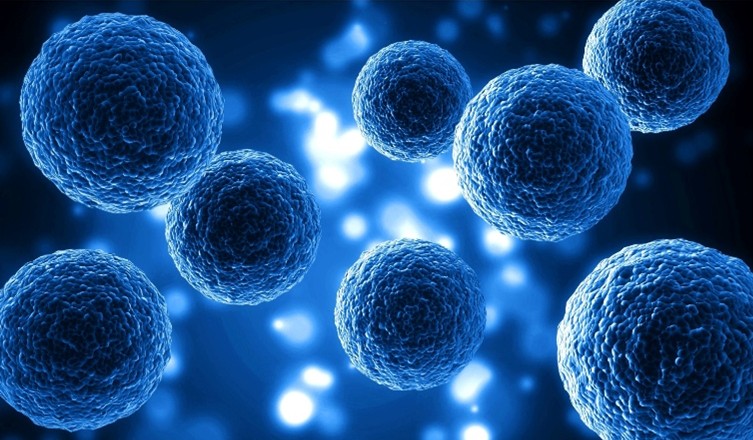
Single B cells as illustrated, representing immune cell isolation and analysis for antibody discovery in drug development.
As competitive therapeutic landscapes intensify, discovery platforms must do more than generate binders. They must enable early, sequence-defined, functionally relevant candidate selection that reduces downstream attrition.
Single B cell antibody discovery technologies address this challenge by directly isolating antigen-specific B cells and preserving their native heavy- and light-chain pairing. By capturing immune-selected clones at the single-cell level, these platforms improve molecular fidelity, accelerate recombinant expression, and strengthen confidence in early candidate selection.
LIMITATIONS OF CONVENTIONAL ANTIBODY DISCOVERY APPROACHES
Although hybridoma and phage display platforms remain widely used, they introduce structural and operational constraints that can affect translational predictability.
Hybridoma Technology
Hybridoma-based discovery relies on fusion between antigen-immunized B cells and immortalized myeloma cells, followed by clonal selection and expansion.3 While robust, this method may result in clonal loss during fusion and screening. In addition, hybridoma-derived antibodies are not inherently sequence-defined unless subsequent sequencing is performed, introducing risk of lot variability or long-term reproducibility challenges.
Display-Based Libraries
Phage, yeast, and ribosome display technologies allow screening of large combinatorial libraries in vitro.4 However, heavy and light chains are often paired artificially rather than reflecting natural immune selection. Artificial pairing can generate antibodies that bind in vitro but lack functional stability or developability in therapeutic contexts.
Moreover, multi-stage panning and enrichment steps may introduce bias toward high-affinity binders that are not necessarily optimal for in vivo performance. These factors can increase downstream engineering requirements and delay clinical advancement.
DIRECT CLONAL CAPTURE: THE PRINCIPLE OF SINGLE B CELL TECHNOLOGIES
Single B cell antibody discovery platforms isolate individual antigen-specific B cells using fluorescence-activated cell sorting (FACS), microfluidics, or droplet-based systems.5 Once isolated, paired heavy- and light-chain genes are amplified directly from each cell and cloned into recombinant expression vectors. This approach preserves the following:
- Native heavy/light chain pairing
- In vivo affinity maturation signatures
- Natural immune selection pressure
- Sequence traceability
Eliminating artificial pairing and hybridoma fusion steps, single-cell methods streamline discovery and reduce clonal ambiguity.
IMPACT ON EARLY THERAPEUTIC CANDIDATE SELECTIONS
Early candidate selection strongly influences downstream drug development success rates. Studies suggest that a significant proportion of biologic attrition occurs due to target biology uncertainty and molecular developability liabilities.6 Single B cell platforms strengthen early-stage confidence in several ways.
Sequence Definition From the Outset
Each recovered antibody sequence is defined at the genetic level before large-scale expansion. This reduces batch-to-batch variability and supports intellectual property positioning, regulatory documentation, and long-term reproducibility.7
Improved Developability Profiling
Because recombinant antibodies can be expressed rapidly after sequence recovery, early stage profiling can include:
- Aggregation propensity
- Thermal stability
- Expression yield
- Liabilities such as deamidation or oxidation
Early integration of developability assessment reduces the risk of advancing unstable candidates into costly preclinical programs.8
Functional Screening at the Single-Cell Level
Some Single B cell platforms allow secretion-based screening prior to gene recovery. This enables selection of clones based not only on binding, but on functional attributes such as blocking activity or receptor modulation.9
APPLICATIONS IN ONCOLOGY & IMMUNE-RELATED DISEASES
Single B cell discovery is particularly relevant in oncology and autoimmune disease programs, where antigen specificity and functional precision are critical.
Tumor-Associated Antigens
In cancer research, identifying antibodies that distinguish tumor tissue from healthy tissue is essential for minimizing off-target toxicity.10 Single B cell methods allow screening against complex antigens, including membrane proteins and conformational epitopes that are challenging for display systems.
Rapid Response to Emerging Targets
For emerging disease targets or rapidly evolving antigens, speed is a competitive advantage. Direct clonal capture shortens discovery timelines, enabling faster progression from immunization to recombinant candidate evaluation.11
Autoimmune & Inflammatory Targets
High-specificity antibodies are necessary to avoid cross-reactivity with structurally related proteins in immune-mediated disorders. Native pairing preservation increases the likelihood of physiologically relevant binding profiles.12
INTEGRATION WITH DEVELOPABILITY & CMC CONSIDERATIONS
Drug Development & Delivery audiences are increasingly focused on reducing Chemistry, Manufacturing, and Controls (CMC)-related risk early in development. Antibody discovery cannot be isolated from manufacturing considerations. Single B cell discovery supports:
- Early sequence analysis for manufacturability
- Humanization strategy planning
- Framework liability identification
- Reduced re-engineering cycles
Sequence-defined antibodies facilitate smoother transition into cell line development, process optimization, and scale-up.13 When discovery and developability assessment are integrated rather than sequential, the probability of late-stage failure decreases.
COMPETITIVE ADVANTAGE IN CROWDED THERAPEUTIC LANDSCAPES
In highly competitive areas, such as PD-1/PD-L1 targeting or HER2-directed therapies, differentiation often depends on subtle differences in epitope binding or functional modulation.14 Single B cell discovery can:
- Enable epitope diversity
- Capture rare clones
- Reduce screening bias
- Improve functional candidate diversity
Preserving immune-driven clonal selection, these platforms may uncover unique binders that are missed in artificial library systems.
TRANSLATIONAL IMPACT & RISK REDUCTION
Biologic development carries substantial financial risk. Industry analyses estimate that bringing a new biologic to market can exceed $1 billion in total investment.15 Reducing early stage molecular uncertainty is therefore a strategic priority. Single B cell antibody discovery contributes to risk reduction by:
- Improving molecular traceability
- Reducing re-engineering cycles
- Enabling earlier functional validation
- Supporting regulatory documentation with sequence clarity
These advantages align with increasing regulatory expectations for transparency and reproducibility in biologics development.16
ACCELERATING THE PATH FROM DISCOVERY TO CLINICAL SUCCESS
Advances in microfluidics, single-cell sequencing, and high-throughput screening are making antibody discovery faster and more precise. When paired with AI-supported sequence analysis, these tools help researchers identify promising candidates earlier, assess their potential with greater confidence, and reduce costly setbacks later in development.
As therapeutic pipelines become more complex, technologies that combine biological relevance with molecular accuracy are shifting from helpful additions to essential capabilities. Single B cell antibody discovery supports this transition by capturing naturally occurring antibodies, preserving native chain pairing, and producing sequence-defined candidates from the beginning.
Stronger clinical outcomes start with better discovery decisions. By enabling direct clonal recovery and early insight into developability, Single B cell platforms help teams focus on candidates with a higher likelihood of success. The result is a more efficient development process, reduced risk across programs, and a clearer path toward clinical advancement.
REFERENCES
- Kaplon H, et al. Antibodies to watch in 2023. mAbs.Hay M, et al. Clinical development success rates. Nat Biotechnol.
- Köhler G, Milstein C. Nature. 1975.
- Smith GP. Filamentous fusion phage. Science.
- Tiller T, et al. Efficient generation of monoclonal antibodies. J Immunol Methods.
- Paul SM, et al. Improve R&D productivity. Nat Rev Drug Discov.
- Bradbury ARM, Plückthun A. Standardize antibodies. Nature.
- Jain T, et al. Biophysical developability guidelines. PNAS.
- DeKosky BJ, et al. High-throughput single-cell antibody sequencing. Nat Biotechnol.
- Scott AM, et al. Antibody therapy of cancer. Nat Rev Cancer.
- Corti D, et al. Rapid monoclonal antibody isolation. Cell.
- Wardemann H, et al. Autoantibody selection mechanisms. Science.
- Shukla AA, Thömmes J. Downstream processing of monoclonal antibodies. Trends Biotechnol.
- Topalian SL, et al. Immune checkpoint therapy. Cancer Cell.
- DiMasi JA, et al. Innovation in pharmaceutical industry. J Health Econ.
- FDA Guidance for Industry: Therapeutic Protein Products.
- Zheng GX, et al. Massively parallel single-cell profiling. Nat Commun.
Author Bio
Changchun Zha is the Founder and CEO of Biointron, specializing in antibody discovery technologies, including Single B cell screening, hybridoma sequencing, and recombinant antibody production. With experience supporting therapeutic antibody programs across oncology and immune-mediated diseases, he focuses on improving molecular traceability and discovery efficiency in biologics development.
Total Page Views: 5170