|
|
|
|
|
|
|
|
|
|
|
|
|
|
|
|
|
|
|
|
 |
|
Drug Development & Delivery recently interviewed Josh Marsh, Bioavailability Enhancement and PBPK Lead Scientist at Lonza, to discuss the benefits of predictive tools and Lonza’s approach.
|
|
 |
|
Drug Development & Delivery recently interviewed Ofer Gonen, Chief Executive Officer of MediWound, to discuss the company’s innovative approach to debridement.
|
|
 |
|
Significant growth in the drug delivery sector is predicted for many areas, with headliners including cell and gene therapies and the GLP-1 blockbusters. Small molecule-based formulations still dominate innovator pipelines, but advanced biologics are also….
|
|
 |
|
Drug Development & Delivery recently interviewed Nathan Givoni, Co-Founder and CEO of Gelteq, to discuss challenges with traditional drug delivery and the company’s innovative ingestible gel platform designed for drug and nutrient delivery.
|
|
|
|
|
|
|
|
|
Mark Bleackley, PhD, says as time goes on, more companies will discover the benefits of drug repurposing – and how to successfully use such strategies to develop new, patentable drug products. In fact, repurposing could be exactly what’s needed to enable pharmaceutical and biotechnology companies to more swiftly develop treatments for indications with significant unmet medical needs.
|
|
|
Timothy Pas, PhD, and Vincent Levet, PhD, believe different solubility-enhancing technologies can be used by developers, and with different advantages and drawbacks, linked to payload, manufacturability, tolerability, and physical and chemical stability, effectively navigating solubility-enhancing solutions is multifaceted.
|
|
|
Shaukat Ali, PhD, and Jim Huang, PhD, focus on two aspects of drug delivery through ADCs. One, where an antibody is conjugated via a ligand with functionalized LNPs carrying cytotoxic drugs; and two, where an antibody is conjugated directly with drug through a linker at the specific site.
|
|
|
Richard Johnson, PhD, outlines the trends and challenges within the inhaled drug delivery market. Specifically, DPI delivery will be explored, including how the challenges with dry powder formulation can be overcome and what the future holds for DPIs.
|
|
|
|
|
|
|
|
|
As a premier, independently owned CDMO with over 65 years of sterile injectable manufacturing experience, Simtra BioPharma Solutions (Simtra) offers world-class cGMP sterile fill/finish, technical expertise, quality service, and a uniquely collaborative approach. Pharmaceutical and biotech companies partner with Simtra when they face formulation challenges, clinical supply hurdles, surges in demand due to market fluctuations, or risk mitigation concerns. Click here for more.
|
|
|
|
|
|
 |
|
Whether you’re involved in research, development, or quality control, this webinar will equip you with the knowledge and tools you need to enhance your analytical processes and ensure success in your LNP projects.
|
|
 |
|
In this video, the Lubrizol team together with the IMCD US team takes you through formulation aspects of Carbopol® polymers as well as the results of a case study on an Acetaminophen oral suspension formulation.
|
|
|
|
|
|
|
|
 |
|
ProPerma™ uniquely improves both permeability and bioavailability of BCS III and BCS IV compounds by deploying an innovative and bespoke combination of GRAS and novel enhancing excipients. Our “formulation toolbox” of excipients falls within the pharmaceutically accepted domain. Unlike other …
|
|
 |
|
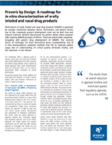
The Proveris by Design™ process offers a formalized approach to product development, all the while automating in vitro testing, and streamlining troubleshooting. It is an indispensable tool for successfully developing nasal spray and inhalation drug products as well as critical …
|
|
 |
|
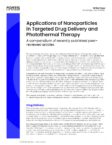
Nanoparticles offer multi-functional capabilities that include the ability to be tracked within the body, deliver a specific compound at a controlled rate, target a particular location, and remotely kill cells once in place due to which their use as drug …
|
|
 |
|
It is widely reported that 40% of New Chemical Entities (NCEs) in the pharmaceutical industry are poorly soluble, leading to inadequate bioavailablity. Spray drying is one of the most promising particle engineering technologies used to overcome solubility issues in active …
|
|
|
|
|
Upcoming eNewsletter Features:
November 6 – Drug Delivery
November 13 – Parenteral Contract Manufacturing
|
|
|
|
|
|
|
|

